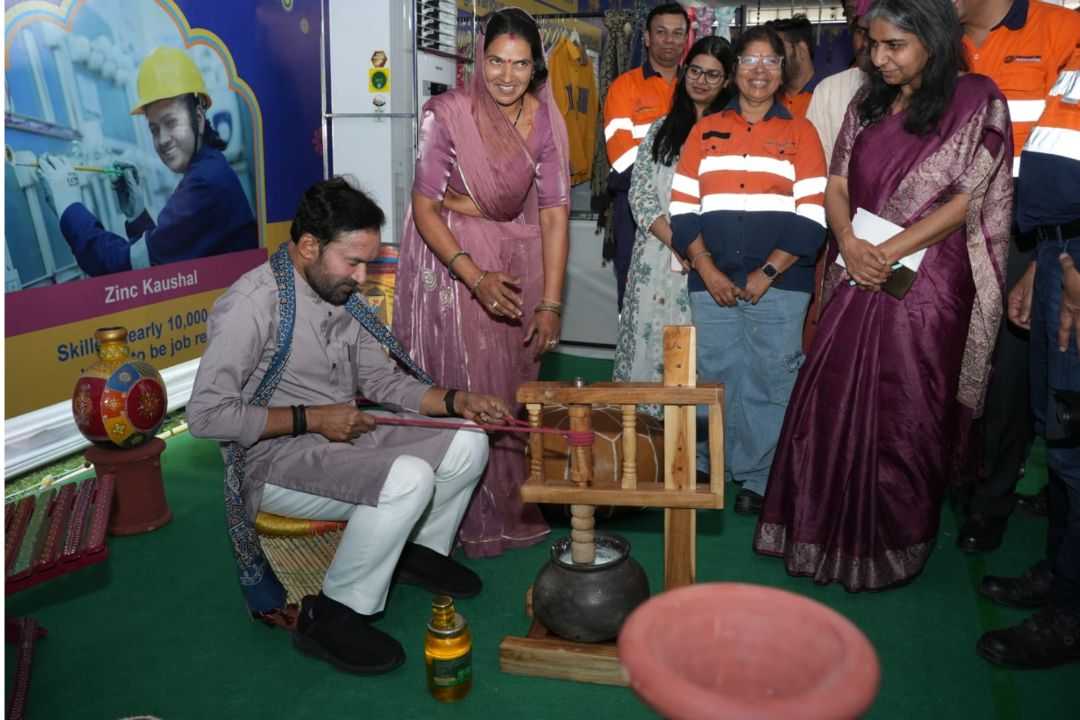
Hindustan Zinc Limited hosted G Kishan Reddy, Hon’ble Union Minister of Coal and Mines, Government of India, at its Rajpura Dariba Complex in Rajasthan, where the company showcased its integrated mining-to-metal operations, advanced underground mining technologies and community development initiatives. The visit included a detailed tour of the Sindesar Khurd Mine, among the world’s leading silver-producing underground mines, and the Dariba Smelting Complex, one of the company’s major integrated smelting facilities. The engagement highlighted the growing importance of India’s mining and metals sector in strengthening mineral security, domestic manufacturing and critical resource availability for infrastructure, renewable energy, defence and advanced industrial applications.
With an annual refined metal production capacity exceeding 1.1 million tonnes, Hindustan Zinc continues to play a significant role in India’s non-ferrous metals ecosystem. Zinc, lead and silver are increasingly critical for sectors such as steel galvanisation, electric mobility, electronics, renewable energy systems and defence manufacturing, aligning with India’s long-term industrial and self-reliance objectives under the Atmanirbhar Bharat vision.
The Hon’ble Minister was accompanied by Arun Misra, CEO of Hindustan Zinc, Vivek Bajpai, Joint Secretary, Ministry of Mines, and senior company executives. During the underground visit to Sindesar Khurd Mine, the delegation reviewed technology-enabled mining systems focused on safety, productivity and operational efficiency. The minister was briefed on tele-remote operations, paste-fill mining practices, digital monitoring systems and advanced safety infrastructure implemented across the underground operations.
A live demonstration by India’s first women mine rescue team formed part of the visit, highlighting the company’s focus on workforce inclusion, safety preparedness and capability development. The minister also interacted with contract workers, women mining engineers and operational teams at the mine site, recognising their contribution to India’s evolving mining sector.
At the Dariba Smelting Complex, Shri Reddy reviewed Hindustan Zinc’s integrated mining-to-metal capabilities, including its control room operations, cell house and cathode production facilities. He also met women leaders from the organisation and appreciated the company’s initiatives in workforce diversity and leadership development. Women currently account for more than 26% of Hindustan Zinc’s workforce, among the highest representations in India’s metals and mining industry.
During the visit, the minister reviewed several community development programmes undertaken by the company across Rajasthan. These included women empowerment initiatives under Sakhi, safe drinking water projects through RO Water ATMs, rural education support through Shiksha Sambal, healthcare outreach programmes and sports initiatives promoting football among girls from rural communities.
The delegation also interacted with beneficiaries of the Unchi Udaan programme, an education-focused initiative aimed at improving career opportunities for rural youth. Several beneficiaries have secured employment in leading public sector organisations, including Coal India.
Shri Reddy stated that India’s path towards Viksit Bharat 2047 would depend significantly on the strength of its mineral resources, domestic industrial capabilities and future-ready mining operations. He noted that Hindustan Zinc’s technology-led, responsible and integrated operations reflected the transformation underway in India’s mining sector and its growing contribution towards industrial growth, mineral security and long-term economic resilience.
Hindustan Zinc, part of the Vedanta Group, remains one of the world’s largest integrated zinc producers and among the top global silver producers. The company supplies products to more than 40 countries and continues to focus on sustainability, renewable energy integration, circular economy practices, and low-carbon metal production initiatives.