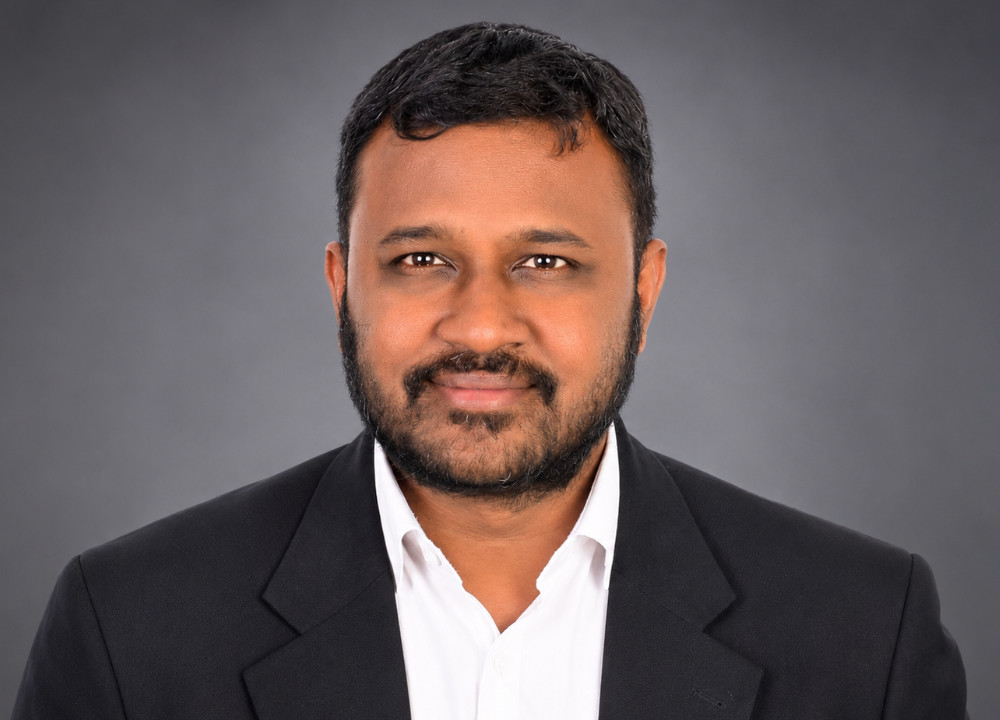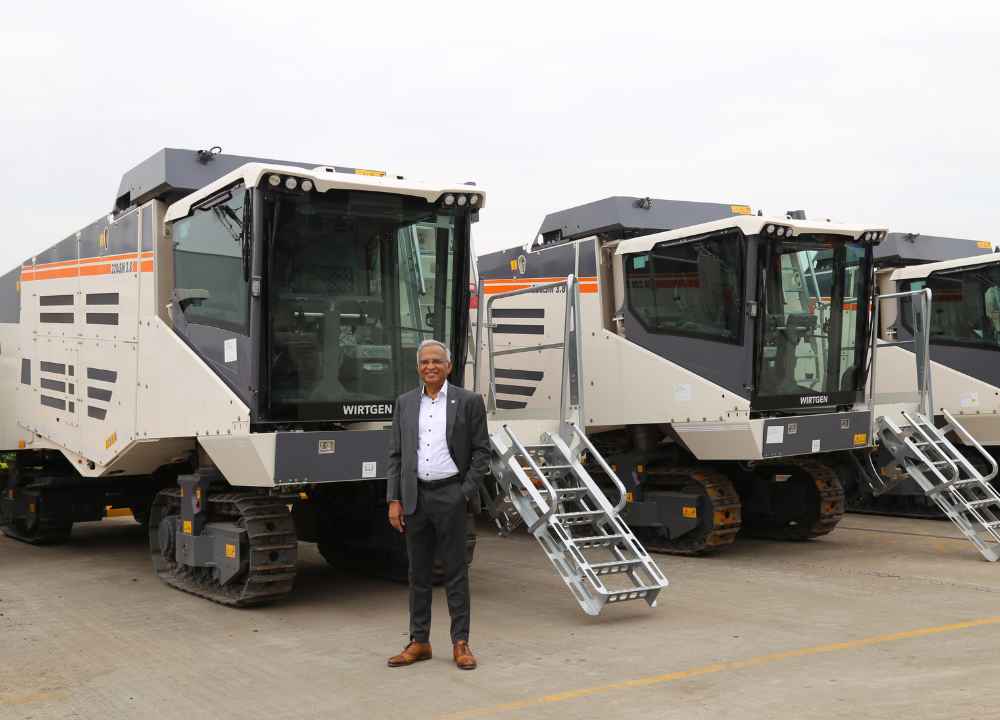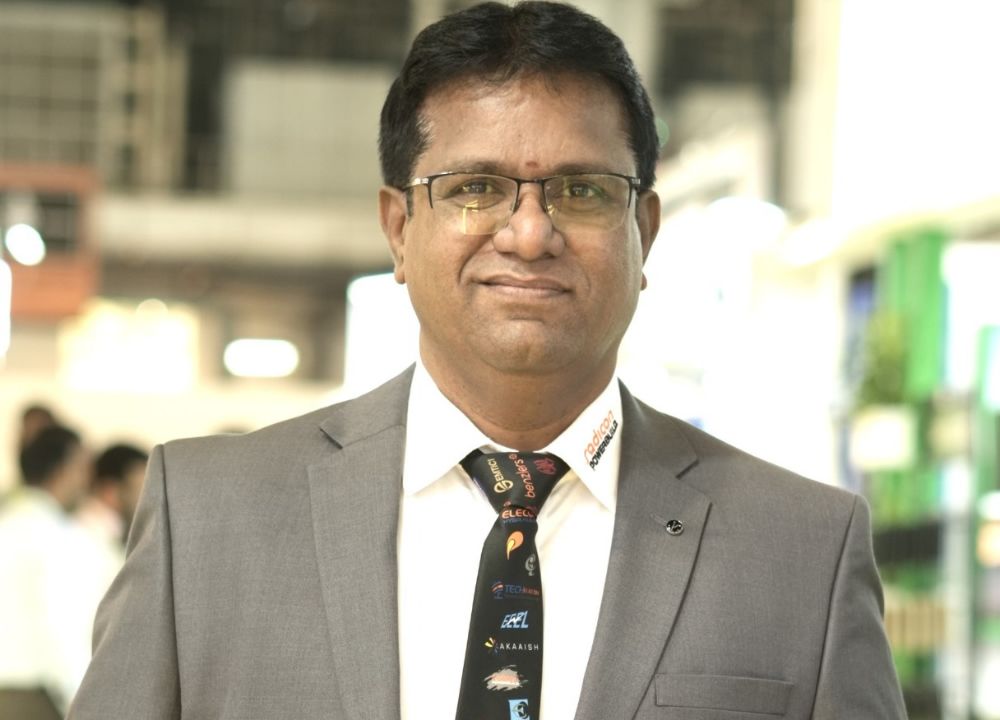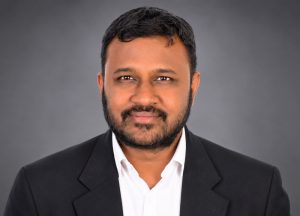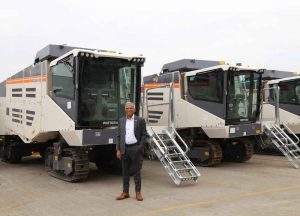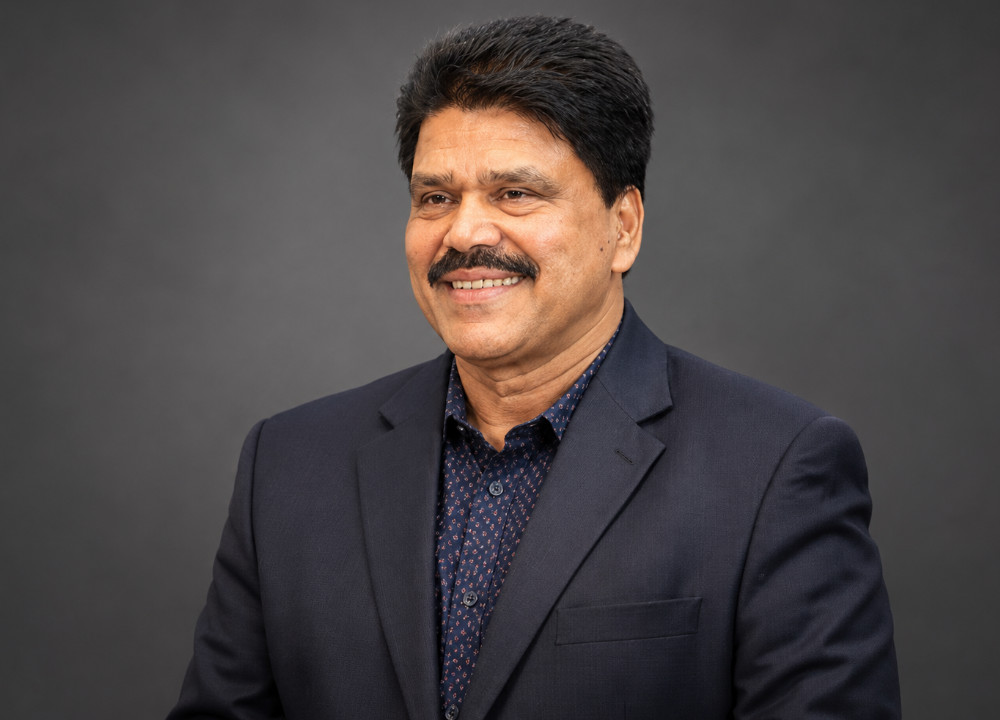
Jacob Crasta does not tell his story often, but when he does, a hall full of entrepreneurs listens in complete silence. Speaking at RISE 2026, the conclave organised by Istruzione Technologica LLP on the growth challenges of Indian MSMEs, the Founder Chairman of CM Envirosystems Pvt Ltd (CME), Bengaluru, walked the audience through five decades of his life. It is the journey of a Kannada medium village boy who could not speak English when he entered college, gave up a lecturer’s job for a salesman’s salary in Mumbai, and went on to build a company whose chambers, he says, have tested the Agni, Prithvi, Akash and BrahMos missiles. Machine Maker was in the audience, and this story is drawn from that talk, a story every first generation entrepreneur in India should read at least once.
A village, a grandmother and a dream
Before he became an industrialist, Jacob Crasta was a farmer’s son. “Basically, I am an agriculturist. My culture is agriculture. My parents and the whole family is an agricultural family,” he told the audience, with the pride of a man who has never forgotten where he came from. He grew up in a joint family in a village, studied in a church managed school, and learnt everything in Kannada up to his SSLC. When he reached pre university college, the medium of instruction changed overnight. “When we got into PUC, we didn’t know English,” he recalled, and the room understood exactly what that meant.
The home he grew up in had its own hard realities. The school was about ten kilometres away, and in those days the women of the family were not sent that far to study, so all of them remained unlettered while the men went out to work. There was no one at home who could sit with a young boy and help him with his lessons. So on holidays and weekends, he walked another ten kilometres to his mother’s family home, where he sat with his cousins and studied. All his cousins on both sides of the family were girls, and he was the only boy among them.
It was his grandmother who noticed how seriously the boy took his books. “She was very interested and said, see how nicely you study. You study more and become a big man,” Dr Crasta remembered. That one sentence, repeated again and again by an old woman who had never been to school herself, settled somewhere deep in his mind. He went on to college in Mulki and then to the University of Mysore, where he completed his post graduation in Organic Chemistry, specialising in alkaloids, terpenoids and steroids. Few in that village could have imagined where that chemistry degree would one day take him.
Today the same man sits on the Prime Minister’s Council on Micro, Small and Medium Enterprises and has served as President of the Federation of Karnataka Chambers of Commerce and Industry (FKCCI), the Karnataka Small Scale Industries Association (KASSIA) and the Peenya Industries Association. He has been Co-Chairman of the ASSOCHAM Southern Council and a board member of the Government Tool Room and Training Centre and the Karnataka State Small Industries Development Corporation. He serves on the Advisory Board of Acharya Leadership and Research Institute, Bengaluru, the Advisory Council of the Indian Institute of Plantation Management, Bengaluru, and the Governing Councils of Ramaiah Technology Business Incubator and GM Institute of Technology, Davanagere. The profile read out before his talk ran to four or five pages, and the moderator admitted that summarising it had been a herculean task.
From the lecture hall to the streets of Mumbai
After his post graduation, a family connection opened his first door. His father was in Bengaluru, and through their parish he came to know of a vacancy for a chemistry lecturer at St Aloysius College in Cox Town. With a letter of recommendation in hand, he was appointed. But the students there came from English medium schools, and the young lecturer quickly felt he did not fit. “I said, this is not my brand. I had to change,” he said. He moved to another college for a year, still only about 22 years old, and managed his classes on the strength of that first year’s experience.
The real turning point came in Mumbai. His uncle lived in the same building as a businessman who manufactured laboratory equipment, and the two were introduced. The equipment matched his chemistry background perfectly, and he was keen to join. There was only one problem. As a lecturer he was earning Rs 1,400 a month in 1972, and the businessman told him plainly that he could not pay that much. If he wanted to join as a marketing man, the salary would be Rs 500. Jacob Crasta took the job anyway, because, as he said, he was passionate about the work.
What followed was an education no business school could have given him. Travelling by local train and city bus, he met 30 to 35 clients every single day across Mumbai. “Within three months, I finished the entire sales and marketing survey,” he said. Decades later, after travelling to more than 70 countries, he still holds Mumbai as his greatest teacher. “The business acumen what you learn in Mumbai is huge. You can’t learn anywhere in the world,” he told the young entrepreneurs in the hall, and advised them that if they ever got the chance, they should go and learn business in Mumbai.
His employer soon sent him south to manage the business across southern India. Here, his old classmates came to his help, because many of his post graduate batchmates were now working at the Indian Institute of Science, Bangalore University and other institutions that needed laboratory equipment. Within a short time, the southern business overtook Mumbai’s turnover. Impressed, his boss decided to start a manufacturing unit in Bengaluru, and it was Jacob Crasta who built that facility from the ground up. According to the company’s own history, the unit started in 1981 in a 5,000 sq ft shed in the Peenya Industrial Area.
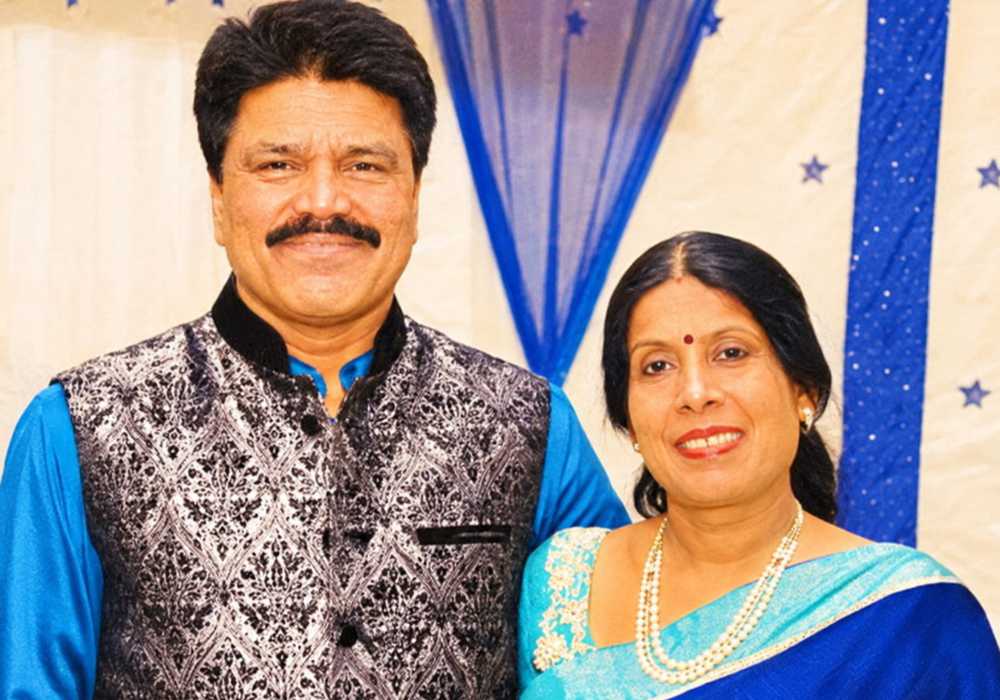
Success, however, brought its own trouble. “If somebody is flying high, cut his tail. Same thing happened,” he said, without bitterness. He had built the entire infrastructure, and leaving would have meant starting again from zero, so he chose to stay quiet and wait. When his employer passed away some years later, Jacob Crasta took over the company. Since a private limited company could not run with a single director, he made his wife a director. “The boss even today is a boss at home, boss in the office,” he said, and the hall broke into laughter.
Kargil and the birth of a testing company
The next challenge arrived with the opening of the Indian economy in 1991. Once imports were allowed, Dr Crasta knew that his laboratory equipment would have to compete with the best in the world, and that simply carrying on as before was not an option. Once again, he asked himself the question that runs through his entire life: change to what? The answer came from the battlefield. During the Kargil conflict, Indian soldiers fighting at high altitude found that some of their equipment did not perform in the extreme cold. Testing equipment that could have checked such systems before deployment had to come from Germany, Japan and the US, and after the Pokhran nuclear tests, sanctions had shut those doors.
For most people this was news. For Jacob Crasta it was a calling. “If testing equipments are not available here in India, why don’t I do it?” he asked himself. His elder son Prajwal Crasta had just finished engineering, and the father put a simple choice before him: join the business, or go for post graduation. When the son asked what he should do after post graduation, the father said he should join the business. “Then why should I do post graduation? Please come tomorrow,” he recalled telling him. Father and son sat down, did a careful analysis of strengths, weaknesses, opportunities and threats, and decided that environmental testing was the gap India needed to fill.
The first breakthrough came through the Indian Institute of Science, which had an environmental test chamber made by Weiss Technik of Germany. The CME team took the chamber completely apart, studied every element of its technology, and built their own fully indigenous version. Machine Maker’s earlier reporting records that CME launched its Environmental Test Chamber by the end of 1999, priced at about one third of what foreign competitors charged. “I am proud to tell you today, Agni, Prithvi, Akash, BrahMos, these missiles are tested in our chambers,” Dr Crasta said, and the pride in his voice was unmistakable.
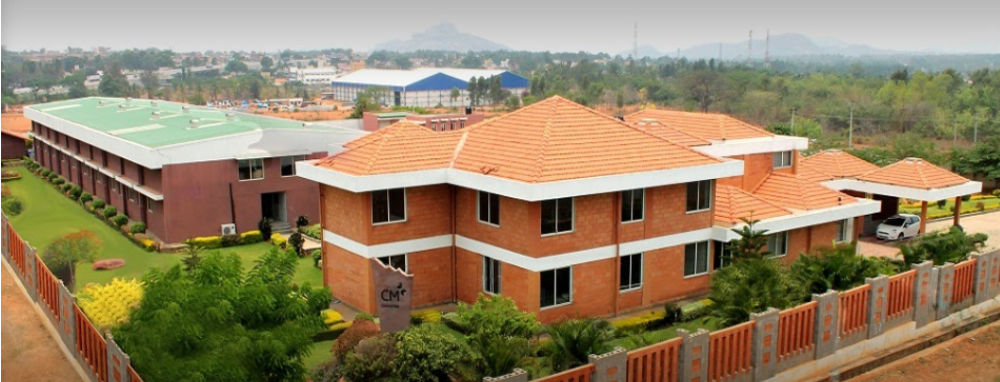
He went on to describe what these chambers can do. According to him, CME can create temperatures from minus 80 to 250 degrees Celsius, humidity from five to 90 percent, and conditions equal to 1,50,000 feet above sea level, along with vibration across multiple axes, so that a product can be checked under the harshest conditions before it reaches the field. For a truck manufacturer, CME built a room large enough to hold an entire Tatra truck and bring it down to minus 40 degrees, to check whether the engine would still start. For armoured vehicles, rooms are created where storms of sand and dust are blown over the machine to see whether it keeps working. In 2008, CME opened a 1,80,000 sq ft plant at Dobbaspet on the outskirts of Bengaluru to meet the growing demand.
The impact is visible even on India’s roads. Dr Crasta reminded the audience of the old Ambassador and Fiat cars that would begin to rust within months, especially in coastal towns. CME’s salt spray chambers changed that by allowing manufacturers to test painted components before they reached the market. As he explained, if a painted part survives 96 hours in the chamber, the car will typically resist corrosion for about two years, and a part that lasts 186 hours points to roughly five years on the road. “Today, any coastal area car doesn’t get corroded. We have supplied the salt spray and corrosion test chambers,” he said. Over the years CME has served automotive names such as Tata Motors, Toyota, TVS and Bosch, as well as testing laboratories like SGS and TUV Rheinland.
Watchman to chairman, everything online
For a man who started his career with a notebook and a bus pass, Dr Crasta is today an evangelist for digital management. “We have factories in five different places. Not required to go. Everything is done online. Completely, watchman to chairman, digitised,” he told the audience. On the shop floor there is no separate inspector and no general manager. The worker at the next stage is the inspector of the previous stage, and he certifies whether the job has been done right. At every stage a photograph is taken and recorded, and the software flags any deviation automatically.
The status of every chamber in every bay appears on a board that anyone can read at a glance. “If it is white, fine. If it is amber colour, trouble. If it is red, it goes to the board,” he explained. Only the red items need the attention of top management, and the rest of the factory runs on its own. He then turned to the audience and asked how many of them used AI tools such as ChatGPT. When many hands went up, he asked whether their companies could run for 15 or 30 days without them. When the answer was no, he asked them what, then, they were really using these tools for.
Alongside technology, he spoke with feeling about cleanliness and quality, and he used a simple story from home to make his point. In a joint family of 30 or 40 people, he said, everyone uses the same milk, the same coffee powder and the same sugar, yet everyone wants coffee made by one particular person, usually the grandmother. The difference is perfection: of ingredients, of heat, of timing. In the same way, when a buyer from a multinational company walks into a small factory and sees dust and waste lying around, he assumes the product will be just as careless. “Even if it gives you first order, second order will not give you,” he warned. Any multinational visitor to CME’s factory at Dobbaspet, he added proudly, will not find dust anywhere.
Dr Crasta also spoke about trust, which he believes is the biggest missing ingredient in Indian MSMEs. The group today has seven companies, and he joked that he blames his wife for giving him only two sons for two industries, because someone has to manage the rest. The solution, he said, was to find trustworthy people, give them challenges and make them managing directors of individual companies. As part of CME’s succession plan, Dr Crasta became Chairman and handed over the running of the company to his sons Prajwal and Praveen Crasta.
A son’s college project becomes a second business
The group’s second big business came from an unlikely place: his younger son’s engineering project. Praveen Crasta had worked on paper honeycomb structures, and when his father saw the project, he found it interesting enough to turn into an enterprise. The idea borrows from nature. A honeybee builds its comb in a hexagonal shape because every wall supports the next and the shape gives the highest volume for the material used. Lsquare Eco Products Pvt Ltd converts waste kraft paper into exactly that hexagonal structure, layered with veneer on the top and bottom.
The strength of the product surprised even its buyers. According to Dr Crasta, a one metre by one metre panel can take a load of one tonne. To prove its value as packaging, the team bought a Godrej refrigerator, packed it in their honeycomb solution, and dropped it from the third floor alongside a refrigerator in conventional packaging. Their refrigerator survived without damage, while the other one was crushed. The customer asked them to start supplying immediately, and as the business grew, Lsquare set up plants close to its customers, including in Pune, with more locations following.
Dr Crasta sees a larger opportunity ahead for eco friendly packaging. Disruptions in global oil supply, he said, have created trouble for thermocol makers, and customers are now looking for alternatives. Plants are planned in the NCR region as well, and all of this, he said with a smile, is managed from home. Lsquare has been making its HonECOre paper honeycomb products since 2007.
The message for India’s MSMEs
Dr Crasta came to the conclave with a clear message: Indian MSMEs must transform or they will not survive. He pointed out that the number of MSMEs in India has grown from about 6.3 crore a decade ago to more than 11 crore today, but almost all of them remain micro enterprises, and very few grow into small, medium or large companies. The reason, he said, is that the founder ends up doing everything himself. “He is a production manager. He is a sales manager. He is an administrative manager. He is an accounts manager. He does everything. So how do you transform? Because he doesn’t trust anybody,” he said. “And if he doesn’t transform, trust me, next step is in the graveyard.”
He reminded the audience of the shocks small businesses have faced in recent years, from the global meltdown to the shift from commercial tax to GST, demonetisation and then the pandemic. In his estimate, 30 to 35 percent of MSMEs, especially those that ran on cash purchases and cash sales, could not survive these blows. During Covid, he said, there were cases where the industry survived but the entrepreneur did not, leaving families with no one to run the business and collateral homes in the hands of bankers. That, he said, is why every entrepreneur needs to identify a trustworthy and dedicated person and develop that person’s talent.
To explain talent, he turned to the Mahabharata. Abhimanyu, he reminded the audience, learnt how to enter the Chakravyuha while still in his mother’s womb, listening to Krishna, but never learnt how to come out of it because his mother fell asleep before the story was finished. In the same way, he said, our talents and our wish to become something are formed very early in life, and each person must go back to what he does best and do it to perfection. In aerospace, he added, even an error of 0.0001 cannot be allowed, because otherwise a flight would fall every day.
He also spoke about why so many children of entrepreneurs do not join the family business. “If there is no honey in the flower, no honeybees will come,” he said. When a tired entrepreneur comes home and talks only about problems over dinner, the children in the next room are listening, and they decide that their father’s business is not for them. An IT job paying lakhs a month then looks far more attractive. If entrepreneurs want the next generation to carry their enterprise forward, he said, they must first create the honey in the flower.
Looking ahead, Dr Crasta spoke about India’s journey from a 2 trillion dollar economy to about 4.3 trillion dollars today, and the ambition of a far larger economy by 2047, the hundredth year of Independence. The children who are in school today will be running businesses in that economy, he said, and the question is whether their parents are preparing them and their enterprises for it. Behind every number he quoted was one simple idea, that the country’s growth will be built by MSMEs that are willing to change.
As he concluded, he returned to where he began: the village boy who had nothing to start with. “Those days, nothing was available. Not even a paper, not even a transistor, not even information. From that area to this area, if at all I have come, why not you?” he asked the audience. It was not a boast but an invitation, from a man who has spent his whole life asking himself “change to what?” and then finding the answer. For the entrepreneurs in that hall, and for many more who will read his story, that question may be the most valuable thing Jacob Crasta has to give.