The global CNC machine market, valued at USD 100.61 billion in 2024, is expected to record strong growth in the coming years. The market is projected to expand at a compound annual growth rate (CAGR) of 8.7% from 2025 to 2032, reaching nearly USD 196.1 billion by 2032. This forecast reflects increasing investments in factory automation, smart manufacturing systems, and precision production methods across industries such as automotive, aerospace and defence, electronics, healthcare, energy, and industrial machinery.
Computer Numerical Control (CNC) machines use programmed software to control machining operations and tool movement with high precision. Unlike conventional manual machining, CNC technology enables manufacturers to achieve higher accuracy, consistent repeatability, and improved efficiency while reducing dependence on manual intervention. CNC machines are widely deployed for milling, turning, drilling, grinding, laser cutting, and electrical discharge machining, making them essential equipment in advanced manufacturing environments.
The market is being reshaped by the broader adoption of Industry 4.0 and the integration of AI-enabled analytics, Industrial IoT (IIoT), digital twin platforms, and advanced CAD/CAM solutions. These upgrades are transforming CNC systems into connected production assets capable of real-time monitoring, predictive maintenance, and process optimisation. North America continues to account for a significant share of the CNC machine market due to its mature industrial base, strong aerospace and defence demand, and early adoption of automation technologies. Asia Pacific and Europe also remain key regions, driven by industrialisation, export-based manufacturing growth, and technological leadership in precision engineering.
Environmental sustainability is becoming a decisive influence on manufacturing investment decisions, supporting demand for modern CNC equipment. Compared to conventional machining processes, CNC systems reduce material waste through optimised tool paths, precision cutting, and automated controls. Newer CNC technologies also offer improved energy efficiency through upgraded servo drives, regenerative braking systems, and more sustainable coolant options. As manufacturers seek to lower carbon emissions and comply with tighter environmental requirements, CNC systems are increasingly viewed as a practical pathway to cleaner and more efficient production.
Policy support and corporate digital initiatives are also strengthening market momentum. Government programmes promoting industrial automation, domestic production, and digital manufacturing ecosystems—including Make in India, Made in China 2025, U.S. re-shoring and near-shoring measures, and Europe’s Industry 4.0 and Green Deal roadmaps—are encouraging increased investment in advanced machine tool infrastructure. At the company level, manufacturers are investing in digital factories, workforce training, and automation partnerships to improve productivity, maintain quality consistency, and reduce long-term operating costs.
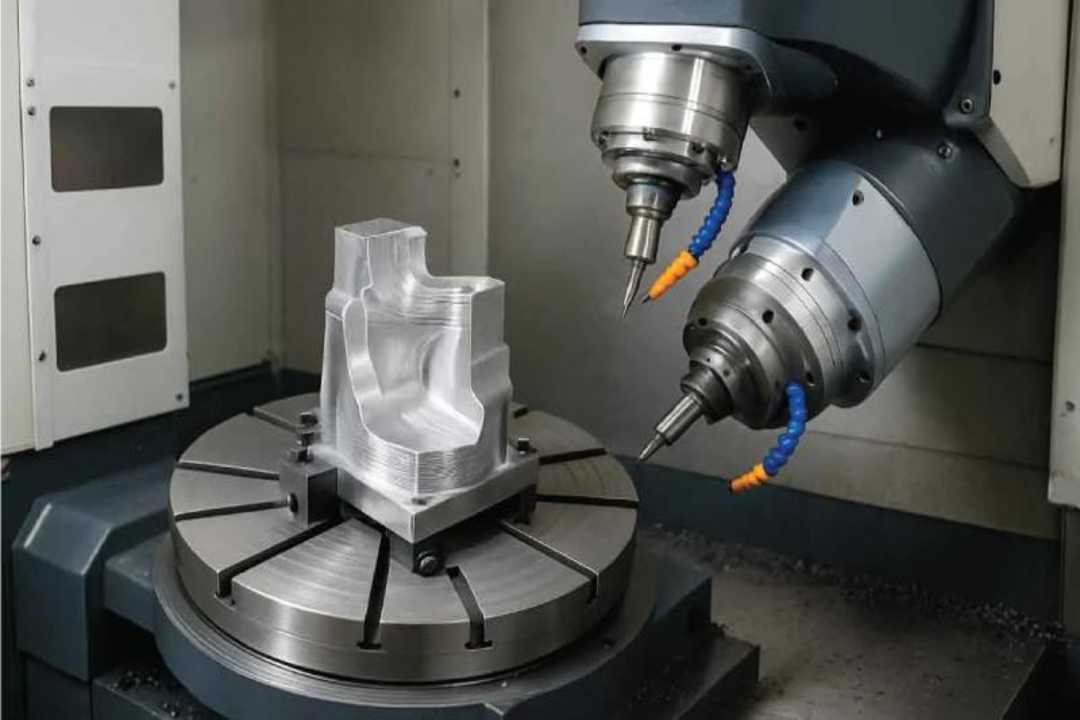
Technological advancement remains a central growth factor. AI, machine learning, and IoT integration now allow CNC machines to detect tool wear, forecast component failure, and automatically optimise machining parameters. At the same time, demand for 5-axis and multi-axis CNC machines continues to rise, particularly in aerospace, defence, and medical production where complex geometries and tight tolerances are required. Cloud-based monitoring and simulation technologies are also helping manufacturers cut time-to-market and improve production planning.
Despite these positives, the market continues to face challenges, including high equipment and ownership costs. Advanced multi-axis machines with AI and IoT features require significant upfront investment, limiting adoption among small and medium-sized enterprises. Maintenance demands are another concern, as CNC machines operate in high-stress conditions and require ongoing servicing to ensure reliable output. In several developing economies, gaps in infrastructure and skilled operator availability continue to restrict large-scale adoption.
Leading manufacturers such as DMG MORI, Yamazaki Mazak, Haas Automation, FANUC, Siemens AG, and Okuma Corporation remain focused on connected production solutions and energy-efficient CNC platforms. Innovation in AI-powered CAM software, cloud-linked machine monitoring, modular CNC designs, and energy-saving drive technologies continues to improve machining efficiency and flexibility. Recent industry activity highlights this direction, including CloudNC’s U.S. launch of AI-based CAM Assist software in June 2025, energy-efficiency driven retrofit initiatives in Germany in March 2025, and partnerships in Asia such as Mitsubishi Electric India’s collaboration with SolidCAM to support advanced machining workflows.