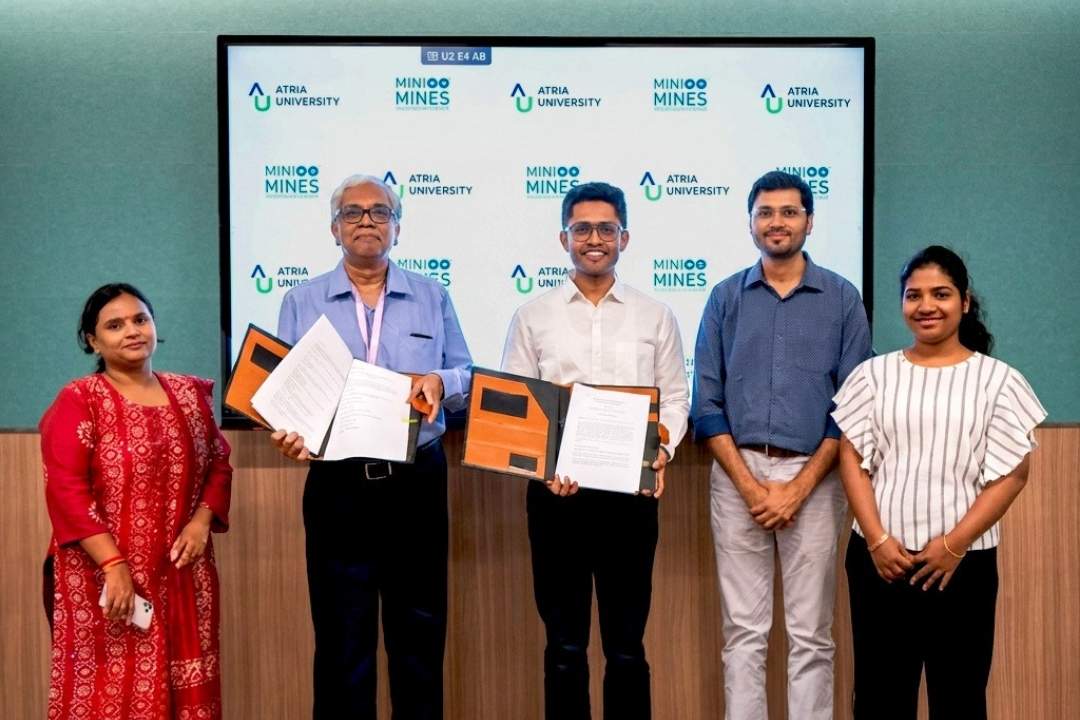
Atria University and MiniMines Cleantech Solutions have joined hands to establish the MiniMines-AU Laboratory for Sustainable Resource Recovery, a dedicated research facility focused on developing advanced technologies to recover critical minerals from spent lithium-ion batteries using artificial intelligence and synthetic biology. Located at Atria University’s Bengaluru campus, the new laboratory will combine the university’s strengths in artificial intelligence, life sciences and biotechnology with MiniMines’ expertise in battery recycling, critical mineral recovery and process commercialisation. The collaboration aims to accelerate the development of sustainable solutions that can support India’s growing demand for critical minerals required for clean energy technologies.
The partnership comes at a time when global demand for minerals such as lithium is expected to rise sharply over the coming years. As domestic mining projects require significant time to become operational, recovering valuable materials from end-of-life batteries offers an immediate opportunity to strengthen India’s supply chain for strategic minerals. The initiative aligns with the Government of India’s BioE3 policy and the National Critical Minerals Mission, both of which encourage innovation in sustainable manufacturing and resource security.
During its initial phase, the laboratory will focus on recovering lithium from used lithium iron phosphate (LFP) batteries while preserving high-quality iron phosphate, a material that is often damaged during conventional recycling processes. Researchers, faculty members and students will work together on microbial cultivation, bioleaching studies and laboratory-scale validation to develop efficient recovery methods.
Dr Madhavan Nair Rajeevan, Vice-Chancellor, Atria University, said securing critical minerals is vital for India’s clean energy ambitions and industrial growth. He noted that the partnership demonstrates how academic research and industrial expertise can work together to develop technologies that move beyond laboratory research and support national priorities.
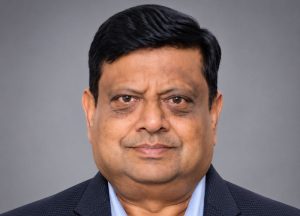
Arvind Bhardwaj, Chief Technology Officer of MiniMines Cleantech Solutions, said the future of battery recycling will depend on combining advanced metallurgy, artificial intelligence and biological sciences. He added that the partnership with Atria University will help develop scalable technologies that promote resource efficiency and strengthen the circular economy.
The new laboratory will operate under Atria University’s SynBioAI initiative, which uses artificial intelligence to accelerate synthetic biology research. The AI platform supports scientists in developing high-performing microbial strains more efficiently, reducing the time required for biological research and process development.
MiniMines will also assess the commercial feasibility and scalability of technologies developed through the collaboration, enabling promising research outcomes to be integrated into industrial recycling operations. The partnership reflects a shared commitment to building sustainable technologies that support India’s critical mineral security while advancing innovation in artificial intelligence, life sciences and clean energy.