Alstom has signed a contract with Mexico’s Railway Transport Regulatory Agency (ARTF) for the supply of 47 Diesel Multiple Unit (DMU) passenger trains—33 for long-distance services and 14 for short-distance routes. The trains will operate on the Mexico City–Querétaro–Irapuato and Saltillo–Monterrey–Nuevo Laredo corridors. The award was announced on 15 December during a public session of the agency, which operates under the Ministry of Infrastructure, Communications and Transportation.
The project forms part of Mexico’s National Development Plan 2025–2030 and supports the revival of passenger rail services by improving connectivity between key regions in central and northern Mexico. The contract is valued at approximately MXN 20.2 billion (around EUR 920 million) and includes a five-year maintenance programme, the development of maintenance depots, inspection and refuelling facilities, staff training, and full commissioning of the trains.
A significant portion of the project will be executed locally, with 76.6 percent of the train content manufactured in Mexico. According to Maite Ramos, General Manager, Alstom North Latin America, this level of localisation will strengthen domestic supply chains, support technical skill development, and generate employment across engineering, manufacturing, and project management roles.
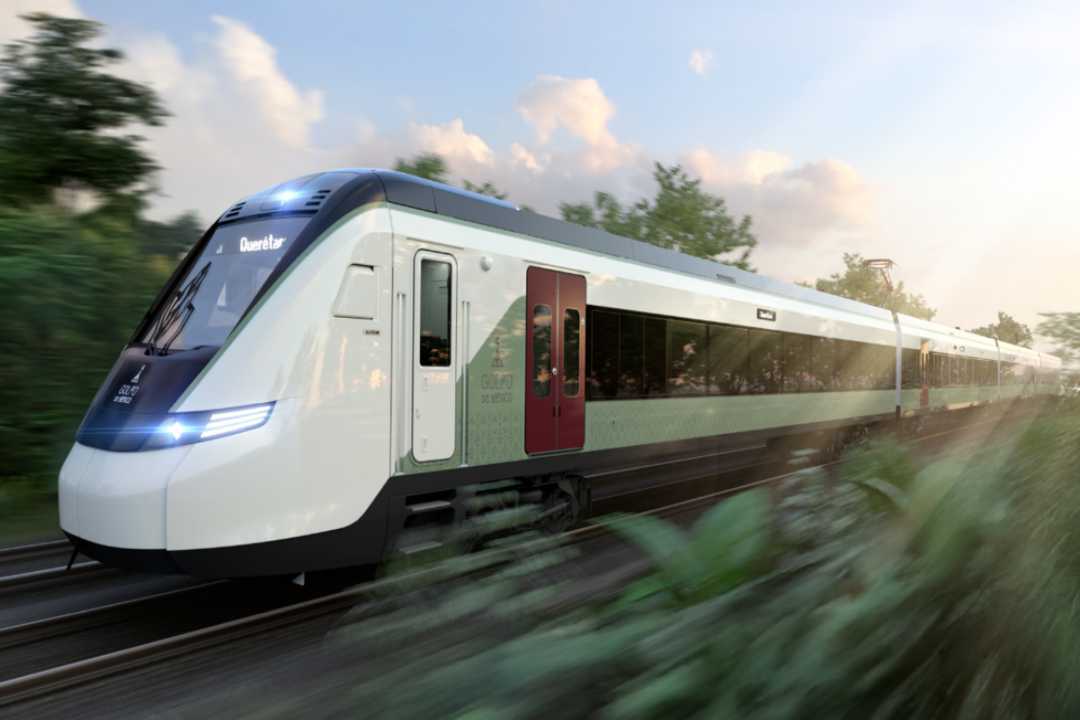
The trains, locally known as Trenes del Norte, will be based on Alstom’s Adessia Stream platform for catenary-free operation. Designed to meet international standards, the trains will reach speeds of up to 165 km/h and offer flexible configurations through double coupling. Passenger capacity will range from approximately 300 passengers on long-haul services to up to 600 on short-haul routes. The trains will feature full accessibility for passengers with reduced mobility, real-time passenger information systems, and modern safety and comfort features.
Design elements draw inspiration from Mexican cultural heritage, incorporating references to the Nahuatl language and the Codex Boturini. Exterior styling includes colour palettes inspired by natural earth tones, while the train front design reflects the strength and agility of the puma, creating a distinctive visual identity.
Manufacturing will take place at Alstom’s Ciudad Sahagún facility in the state of Hidalgo, the company’s largest manufacturing site in the Americas. The plant has produced more than 2,000 locomotives and 3,500 rail cars and holds international certifications for advanced aluminium and stainless-steel fabrication. In 2025, the facility received the official “Made in Mexico” designation, recognising products designed and manufactured domestically to high quality and innovation standards.
Alstom has operated in Mexico since 1952 and has played a central role in the development of metro systems, commuter rail, signalling, and maintenance services across the country. The company continues to support major national projects, including the Mayan Train, reinforcing its long-term commitment to sustainable mobility and rail innovation in Mexico.