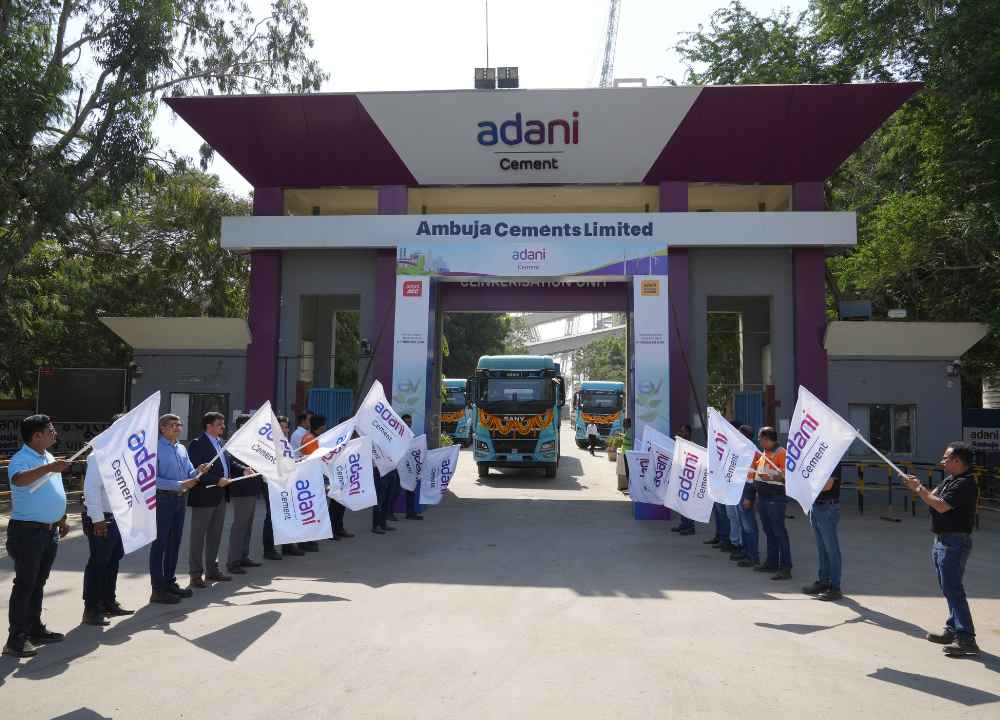
Adani Cement, part of the Adani Portfolio and one of India’s leading building materials solutions providers, has flagged off heavy-duty electric trucks at its Sanghi Plant in Gujarat, marking the company’s first deployment of electric vehicles for cement and clinker transportation. The initiative represents a significant milestone in its sustainability strategy and efforts to decarbonise logistics operations.
The company plans to deploy 410 electric trucks by March 2027 as part of the first phase of its electric mobility programme. The fleet is projected to reduce more than 25,000 tonnes of CO₂ emissions annually while displacing approximately 11 million litres of diesel consumption every year.
The deployment is part of Adani Cement’s broader strategy to transition towards cleaner and more efficient transportation. The company aims to route 10% of its road logistics volume through electric trucks by 2030, with plans to deploy more than 2,000 electric vehicles across its operations.
Vinod Bahety, CEO – Cement Business, Adani Group, said, “The deployment at Sanghi is just the beginning. We have identified multiple routes across India for EV-based transport of clinker and cement. Every truck we electrify reduces our carbon footprint and insulates our logistics cost base from diesel price volatility. This is smart sustainability — it benefits the people, planet and the balance sheet. This is our commitment in action — to build a greener, more competitive cement company that serves India’s growth while protecting its future.”
The adoption of heavy-duty electric trucks comes amid favourable changes in the economics of electric mobility. Over the past decade, diesel prices have increased by 60%, while lithium-ion battery pack costs have declined by approximately 70% and solar tariffs have fallen by 47%, strengthening the commercial viability of electrifying freight transportation.
Diesel-powered trucks generate approximately 0.7375 kg of CO₂ emissions per kilometre. Electric trucks powered by renewable energy can eliminate up to 100% of these freight emissions, making logistics electrification an important contributor to Scope 3 decarbonisation.
Renewable-energy-powered electric trucks will enable Adani Cement to reduce transportation-related emissions while improving operational efficiency and managing exposure to diesel price fluctuations. The initiative is expected to contribute to the company’s broader sustainability commitments and net-zero ambitions.
India, the world’s second-largest cement producer, relies on extensive transportation networks for moving limestone, clinker and finished cement across its supply chain. These logistics operations represent a significant source of emissions. Adani Cement’s electric truck deployment addresses this challenge by introducing cleaner transportation solutions across its manufacturing and distribution network.
Beginning with the Sanghi Plant in Gujarat, the company plans to progressively expand electric truck deployment across additional plants and transportation routes, advancing its green logistics strategy while supporting India’s transition towards lower-carbon Adani Cement is the building materials arm of the Adani Group, encompassing the trusted brands Ambuja Cements and ACC. As the world’s ninth-largest cement producer, it has an installed capacity of around 107 million tonnes per annum, supplying roughly 30% of the cement used in India’s infrastructure and housing sectors.
The company’s product range includes all-purpose and specialised cement and concrete solutions designed for diverse applications. Backed by advanced R&D facilities and a strong sustainability focus, Adani Cement continues to lead innovation in green materials, low-carbon concrete, and performance-enhancing additives. Its mission is to build a stronger, more sustainable nation by delivering quality, reliability, and innovation across all construction segments.