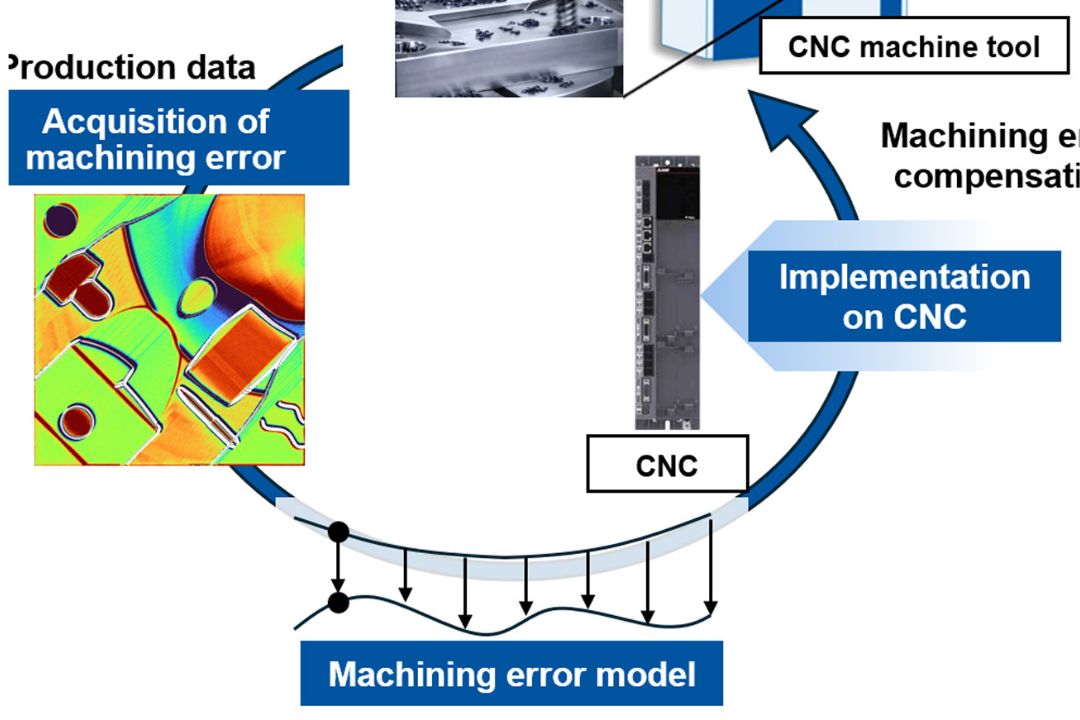
Mitsubishi Electric Corporation has announced the development of a new digital twin technology designed to enhance precision in CNC (computer numerical control) machine tools. Created in collaboration with RWTH Aachen University in Germany, the innovation enables real-time correction of machining errors, improving production quality and operational efficiency.
The technology addresses a common challenge in machining processes, where cutting forces can cause slight deformation in workpieces, leading to inaccuracies. By using a digital twin—a virtual representation of the physical machine—the system continuously monitors and predicts these deviations, allowing immediate adjustments during operation.
Joint research conducted between April 2023 and March 2026 focused on integrating high-speed edge computing capabilities with advanced modelling techniques. The result is a compact digital twin model capable of analysing large volumes of data, including axis movement, electrical currents, and cutting forces, captured at high sampling rates.
Unlike conventional systems that rely on post-process inspection, this solution feeds real-time insights directly back into the CNC control system. This closed-loop approach enables instant compensation for deviations, reducing machining errors by up to 50 percent during testing.
The impact of this advancement extends beyond accuracy. By minimizing defects and ensuring consistent surface quality, manufacturers can significantly reduce material waste and improve productivity. The technology also contributes to more sustainable operations by lowering resource consumption and reducing the need for rework.
Mitsubishi Electric noted that the digital twin model has been engineered for efficiency, using a streamlined set of equations derived from extensive operational data. This allows high-speed processing without compromising accuracy, making it suitable for deployment in industrial environments where responsiveness is critical.
The collaboration with RWTH Aachen University, known for its expertise in digital engineering, played a key role in refining the system’s modelling and computational capabilities. The partnership highlights the growing importance of academia-industry collaboration in advancing manufacturing technologies.
As industries increasingly adopt automation and smart manufacturing practices, solutions like real-time digital twins are expected to play a central role in improving production reliability and efficiency. Mitsubishi Electric continues to focus on developing technologies that support next-generation manufacturing systems. The company plans to further refine and expand the application of this technology, aiming to support a wide range of machining processes and industrial use cases in the future.