Ziehl-Abegg has reached a significant milestone with the nomination of its newly developed elevator motor for the Hermes Award 2026, one of the most respected honours in global industry. The recognition comes for a breakthrough drive technology that eliminates the need for rare-earth materials while maintaining the performance standards required for modern elevator systems.
The Hermes Award, presented annually at Hannover Messe since 2004, recognises innovations that demonstrate exceptional technological advancement and deliver measurable value for industry, society and the environment. For Ziehl-Abegg, this year marks the first time in its history that one of its technologies has been shortlisted for the award.
An independent panel comprising leading representatives from business, science, politics and media selected the finalists. The jury is chaired by Professor Dr-Ing Holger Hanselka, President of the Fraunhofer-Gesellschaft. From a large number of global submissions, the panel shortlisted three companies: Ziehl-Abegg, Festo and Schaeffler.
The final winner will be revealed during the official opening ceremony of Hannover Messe on April 19, 2026. The award will be presented by Dorothee Bär, Germany’s Federal Minister for Research, Technology and Space.
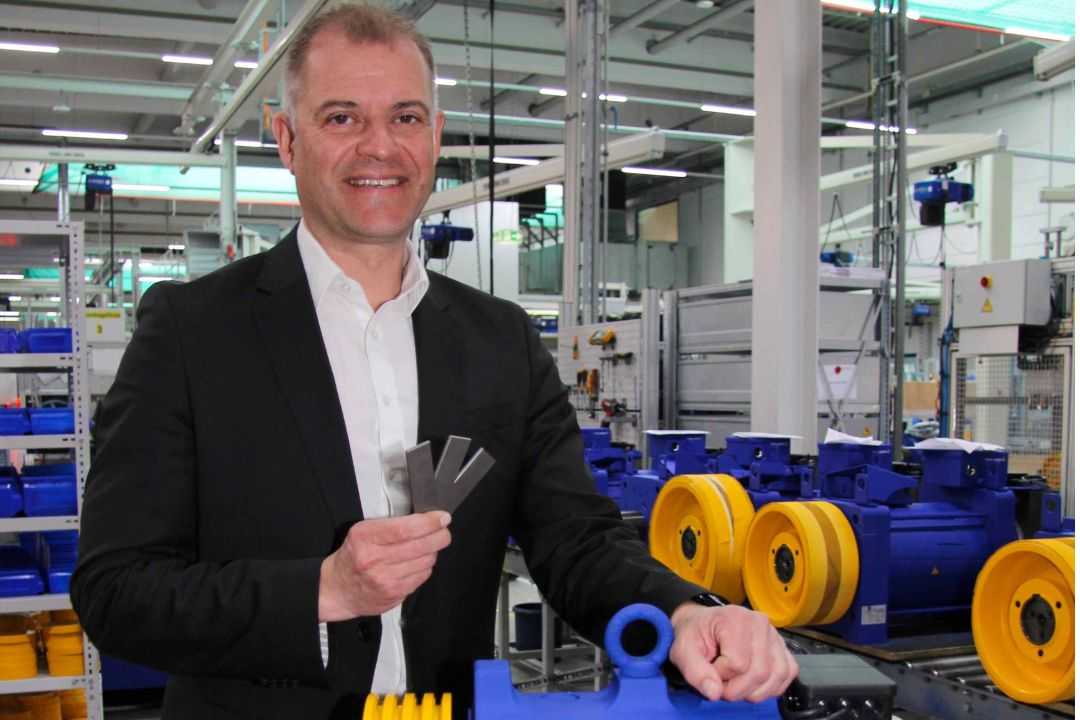
Ziehl-Abegg’s nominated innovation is an electric synchronous elevator motor that operates without rare-earth magnets. Traditionally, compact high-performance elevator drives have relied on magnets containing rare-earth elements such as neodymium and dysprosium. These materials, while effective, are associated with supply risks and geopolitical dependencies due to their limited global sources.
The newly developed motor replaces these materials with ferrite magnets, which are widely available worldwide. Despite the change in material, the motor delivers the same output and efficiency as existing rare-earth-based systems while maintaining identical dimensions. This compatibility offers an important advantage for lift manufacturers and building operators, as the motor can be integrated into existing designs without requiring additional installation space.
Joachim Ley, Chief Executive Officer of Ziehl-Abegg, described the development as both a technological and strategic achievement. According to Mr Ley, removing reliance on critical raw materials allows the company to reduce exposure to volatile supply chains while ensuring long-term production stability.
Professor Hanselka highlighted the broader relevance of the nominated technologies. He noted that the three shortlisted innovations address pressing challenges facing modern industry and society, ranging from automation and robotics to sustainable materials and more efficient production processes.
Alongside Ziehl-Abegg’s elevator drive system, the Hermes Award jury also nominated two other technological developments. Festo earned recognition for a compact, multi-layer fluid control manifold capable of dosing, mixing and regulating liquids while simultaneously collecting sensor data. Schaeffler was shortlisted for a platform of integrated actuators designed specifically for the joints of humanoid robots, enabling greater efficiency and flexibility in robotic movement.
For Ziehl-Abegg, the nomination itself represents an important moment in the company’s long history. Founded more than a century ago, the company has built a reputation for innovation in drive technology, ventilation systems and control engineering. The nominated lift motor will be showcased at Ziehl-Abegg’s stand in Hall 13 during Hannover Messe. Serial production is scheduled to begin in the second half of 2026.
Headquartered in Künzelsau, Germany, Ziehl-Abegg is a global leader in ventilation, control and drive technologies. The company pioneered the external rotor motor concept in the 1950s, a design that continues to influence fan drive technology worldwide.
Today, Ziehl-Abegg employs approximately 3,000 people at its manufacturing sites in southern Germany and around 5,800 employees worldwide. The company operates 17 production facilities, more than 30 subsidiaries and over 110 sales locations across the globe.
Its portfolio includes around 30,000 products distributed in more than 100 countries, generating annual revenues exceeding one billion euros. Founded in 1910 in Berlin by Emil Ziehl as a manufacturer of electric motors, the company relocated its headquarters to southern Germany after World War II. Ziehl-Abegg remains a privately held, family-owned enterprise.