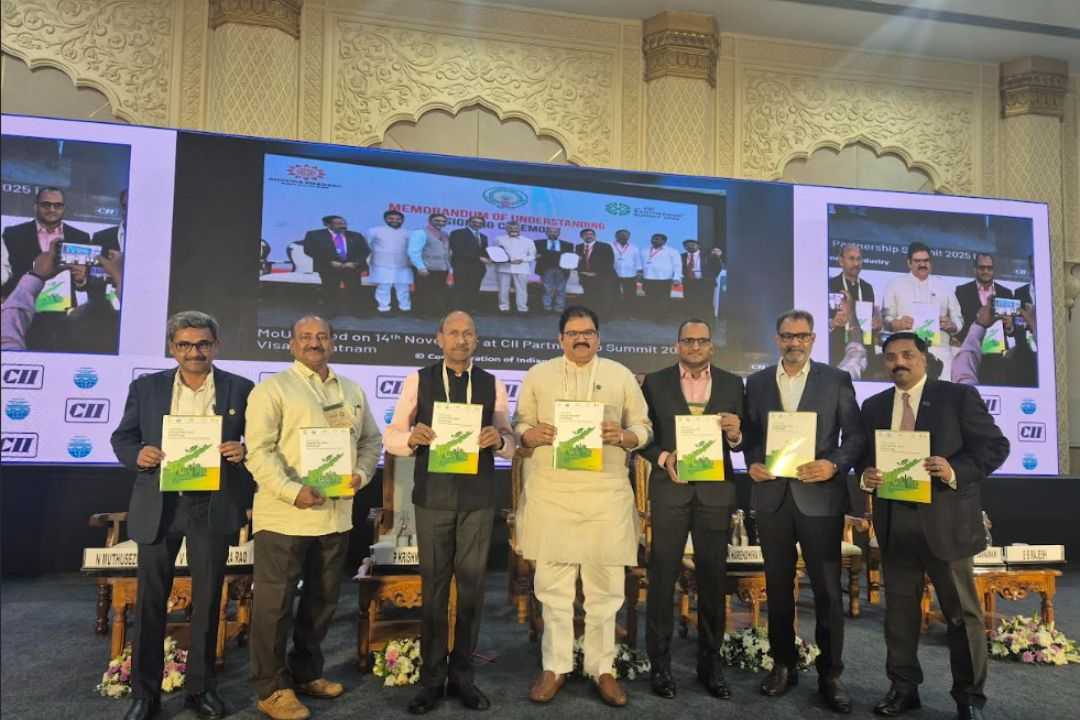
At the APPCB–CII Andhra Pradesh Conference on “Circular Economy & Green Industry: Strategies for Sustainable Growth and Resource Efficiency,” the Andhra Pradesh Pollution Control Board (APPCB) unveiled a structured package of recognition-based incentives and regulatory facilitation measures to encourage industries to adopt the GreenCo Rating System.
The initiative signals a transition from a compliance-focused regulatory approach to a performance-oriented environmental governance model. Industries that demonstrate measurable improvements in energy efficiency, water stewardship, waste minimisation, and circular economy practices through GreenCo ratings will be eligible for formal recognition and facilitative support from the Board.
Dr P Krishnaiah, IAS (Retd), Chairman of APPCB, stated that the Board aims to create a differentiated regulatory environment that acknowledges environmental leadership. He emphasised that linking GreenCo performance with regulatory facilitation would motivate industries to move beyond statutory requirements and embed sustainability into core business operations.
The announced framework includes streamlined regulatory processes for higher-rated GreenCo industries, enhanced public recognition, and structured platforms to enable replication of best practices across industrial clusters. These measures are designed to reduce procedural uncertainty, promote transparency in environmental performance, and encourage constructive competition among industries.
Pattabhi Ram, Chairman of Swachh Andhra Corporation, highlighted the importance of industry participation in advancing circular economy goals. He noted that credible rating systems such as GreenCo strengthen accountability in areas such as waste reduction, recycling, and material recovery. Linking environmental performance to regulatory facilitation, he added, transforms sustainability from a compliance obligation into a strategic advantage.
N Muthusezhiyan, Deputy Executive Director of CII Green Business Centre, underscored the technical depth of the GreenCo framework. He explained that the system enables industries to benchmark and improve performance across energy productivity, renewable energy adoption, water efficiency, waste management, material conservation, and green supply chains. Andhra Pradesh’s move to formally integrate environmental performance into regulatory engagement, he said, sets a precedent for performance-based governance.
The GreenCo Council, an initiative of the Confederation of Indian Industry, has onboarded over 1,500 industrial units across 27 sectors. Among 600 rated companies, the framework has delivered substantial environmental and financial gains, including significant reductions in energy use, water consumption, carbon emissions, and material waste, alongside cost savings running into thousands of crores annually.
The conference reaffirmed Andhra Pradesh’s commitment to embedding circular economy principles within mainstream industrial regulation while fostering globally competitive and resource-efficient industries. The CII GreenCo Council, an initiative of the Confederation of Indian Industry (CII), serves as a key platform advancing environmental responsibility across Indian industry. Through the GreenCo Rating System—India’s first globally acknowledged framework for evaluating and enhancing green performance—the Council supports organisations in embedding sustainability within their core business strategies.
The GreenCo framework provides a structured approach to improving performance across critical parameters such as energy efficiency, water stewardship, renewable energy adoption, waste minimisation, material conservation, and product responsibility. By aligning operational efficiency with environmental priorities, the system enables companies to strengthen long-term competitiveness while reducing ecological impact.
Since its inception, more than 1,500 industrial units across 27 sectors have joined the GreenCo movement. Among the first 600 companies that have achieved GreenCo ratings, measurable environmental and financial gains have been realised. These include annual savings of 604 million kilowatt-hours of electricity, conservation of 194 million kilolitres of water, reduction of 5.7 million tonnes of carbon dioxide emissions, and preservation of 22 million tonnes of materials. Collectively, these efficiencies translate into annual cost savings of approximately ₹5,136 crore.
Through flagship initiatives such as the GreenCo Summit, technical capacity-building workshops, and collaborative multi-stakeholder platforms, the Council continues to accelerate India’s transition toward resource-efficient and low-carbon industrial growth, contributing to national net zero objectives.
The Indian Green Building Council (IGBC), established by CII in 2001, has been instrumental in promoting sustainable construction practices across the country. With 32 chapters nationwide, IGBC brings together stakeholders from across the construction value chain, including corporates, government bodies, architects, developers, product manufacturers, and academic institutions. The Council also collaborates with domestic authorities and international partners such as the World Green Building Council to advance green building principles in India.
India’s green building footprint now exceeds 15.52 billion square feet, with more than 18,850 projects adopting IGBC’s 33 Green and Net Zero rating systems. Today, nearly 90% of the country’s green building projects are aligned with IGBC standards, positioning India as a global leader in the development of sustainable built environments.