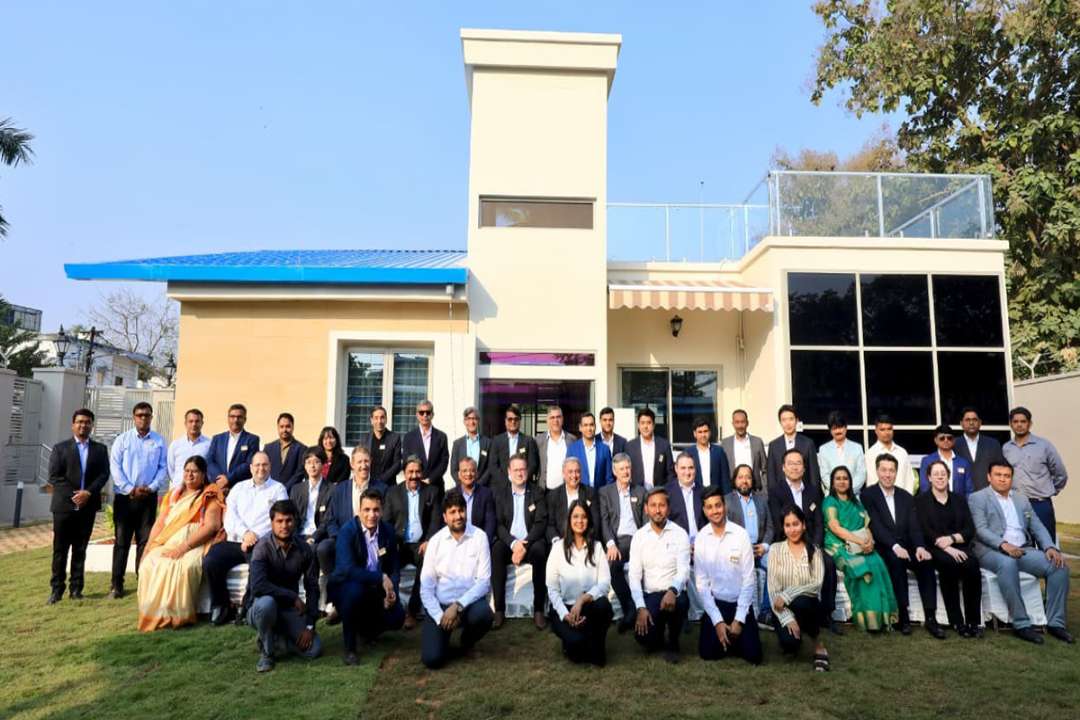
Tata Steel, in collaboration with constructsteel, the steel construction market development initiative of the World Steel Association, has inaugurated a state-of-the-art steel-based Zero Energy Building in Bhubaneswar, Odisha. The facility marks an important milestone in advancing sustainable construction practices in India through the use of modern steel technologies.
The 1,836 square foot building was inaugurated by T V Narendran, Chief Executive Officer and Managing Director of Tata Steel, in the presence of Dr Edwin Basson, Director General of the World Steel Association. Completed in a construction period of just three and a half months, the project demonstrates how innovative building methods can significantly reduce construction time while meeting high standards of energy efficiency and environmental performance.
The structure has been developed using Light-Gauge Steel Frame technology, a construction method in which precision-engineered steel components are assembled to form a strong and efficient framework. This approach enables superior insulation performance, minimal air leakage, and reduced energy loss, resulting in a tightly sealed building envelope. The use of steel also makes the building lighter in weight, faster to erect, and highly durable, while offering the advantage of recyclability at the end of its life cycle.
Speaking at the inauguration, T V Narendran said that steel-based zero energy buildings represent the future of sustainable construction. He added that the collaboration with constructsteel highlights how low-carbon, energy-efficient building solutions can be scaled up and integrated into mainstream infrastructure development across the country.
The building has been designed to generate as much energy as it consumes on an annual basis. It achieves this through a combination of ultra-low energy demand and on-site renewable energy production. Key design features include high-performance glazing, well-insulated wall and roof systems, and the use of natural ventilation wherever feasible. Clean energy generation is enabled through rooftop solar panels as well as building-integrated photovoltaic systems.
In addition to energy efficiency, the facility incorporates water conservation measures such as rainwater harvesting systems and low-flow plumbing fixtures to reduce overall water usage. Together, these features make the project a practical example of climate-resilient and net-zero infrastructure that can be replicated for commercial and institutional buildings across India.
Tata Steel is one of the world’s leading steel producers, with an annual crude steel capacity of about 35 million tonnes and a highly diversified global footprint. The group operates across five continents with manufacturing and commercial presence worldwide and reported a consolidated turnover of approximately US$26 billion for the financial year ended March 31, 2025.
A Great Place to Work®–certified organisation, Tata Steel Limited and its subsidiaries, associates, and joint ventures together employ more than 76,000 people globally. The company has set ambitious sustainability goals, including achieving Net Zero emissions by 2045, reinforcing its long-term commitment to responsible growth.
The company is also advancing a multi-year, digital-led transformation aimed at becoming a leader in digital steelmaking. This effort has earned Tata Steel Global Lighthouse recognition from the World Economic Forum for its Jamshedpur, Kalinganagar, and IJmuiden plants, along with the ‘Digital Enterprise of India – Steel’ Award 2024.
Tata Steel has been recognised as a Global Diversity, Equity and Inclusion Lighthouse by the World Economic Forum and has been part of the DJSI Emerging Markets Index since 2012, consistently ranking among the top ten steel companies in sustainability assessments. Its Jamshedpur plant was India’s first to receive ResponsibleSteel™ certification, followed by Kalinganagar and Meramandali, with over 90% of its Indian steel production now certified. The company has also received numerous national and global honours across sustainability, ethics, risk management, financial reporting, branding, and sports promotion, reflecting its strong performance across business, governance, and social impact.