In a landmark announcement during the inauguration of India Maritime Week 2025, Hon’ble Prime Minister Narendra Modi unveiled a ₹4,000 crore modernization programme for the Dredging Corporation of India Limited (DCIL), as part of the government’s Maritime Amrit Kaal Vision. DCIL operates under a consortium of four major ports — the Visakhapatnam Port Authority (VPA), Paradip Port Authority (PPA), Jawaharlal Nehru Port Authority (JNPA), and Deendayal Port Authority (DPA) — all functioning under the Ministry of Ports, Shipping & Waterways (MoPSW).
The initiative aims to enhance India’s dredging capacity, efficiency, and global competitiveness by upgrading DCIL’s fleet, incorporating advanced technology, and adopting green and automated dredging solutions. The ₹4,000 crore modernization initiative focuses on transforming India’s dredging capabilities through a comprehensive upgrade of infrastructure and technology.
The investment will drive fleet modernization and capacity expansion to strengthen the nation’s dredging ecosystem, while also promoting the construction of new dredgers in Indian shipyards under the ‘Make in India’ initiative. Additionally, the programme emphasizes the adoption of digital, automated, and sustainable dredging technologies to ensure environmentally responsible operations. A key aspect of the initiative also includes skill development and upskilling of technical personnel to align with global performance and safety standards.
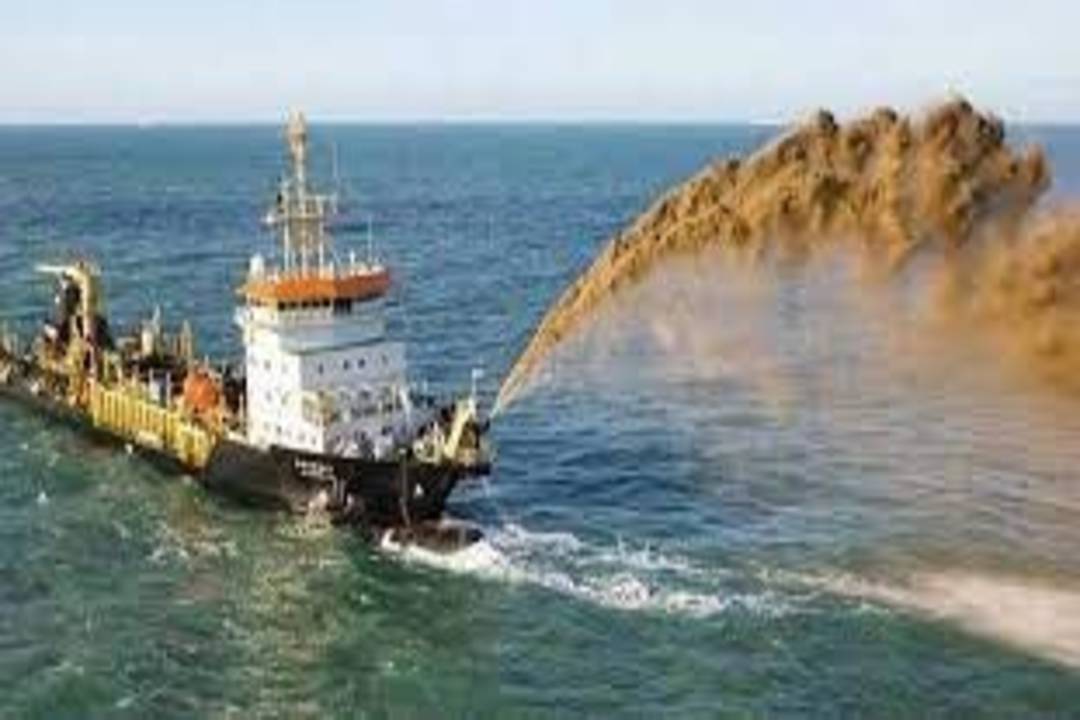
The Ministry of Ports, Shipping & Waterways has already approved the procurement of three new Trailer Suction Hopper Dredgers (TSHDs) as part of this effort. Among them, DCI Dredge Godavari, a 12,000 cubic meter capacity TSHD, was ordered in March 2022 and successfully launched on 18 October 2025. The vessel is expected to be delivered by July 2026, marking a significant milestone in DCIL’s modernization roadmap.
Building on this momentum, orders for another 12,000 CuM TSHD and an additional dredger are scheduled to be placed in the coming months. DCIL also plans to expand its fleet further with the acquisition of one Cutter Suction Dredger, one Water Injection Dredger, one smaller-capacity TSHD for shallow-draft operations, and six Beaver dredgers designed for inland waterways and canal projects. These additions will collectively enhance DCIL’s ability to undertake diverse dredging assignments across ports, coastal regions, and inland water networks with greater efficiency and precision.
This comprehensive modernization programme — covering the procurement of 11 new dredgers and associated technological initiatives — will position DCIL as a leader not only in maintenance dredging, where it already holds a dominant market share, but also in capital dredging and inland waterway development, key focus areas under the government’s maritime vision.
Expressing gratitude to the Prime Minister and the Ministry, Dr M Angamuthu, IAS, Chairman of DCIL, Chairperson of Visakhapatnam Port Authority and Mumbai Port, said “Under the Hon’ble Prime Minister’s dynamic leadership, this modernization initiative will transform India’s dredging landscape, positioning DCIL as a technologically advanced and globally competitive enterprise.”
Capt S Divakar, Managing Director & CEO (A/C) of DCIL, highlighted that the roadmap will enable the corporation to undertake complex dredging and reclamation projects with international precision and efficiency. He noted that DCIL currently operates a fleet of 10 Trailer Suction Hopper Dredgers with a combined hopper capacity of about 60,000 cubic meters, capable of handling 50–60 million cubic meters of dredging annually. This represents nearly 55% of India’s total dredging demand, estimated at 110–120 million cubic meters per year.
DCIL plays a pivotal role in maintaining navigable waterways, supporting port development, and contributing to the expansion of India’s maritime infrastructure. With this modernization drive, the company is set to reinforce its leadership in the domestic market while expanding its capabilities to compete at the global level.