

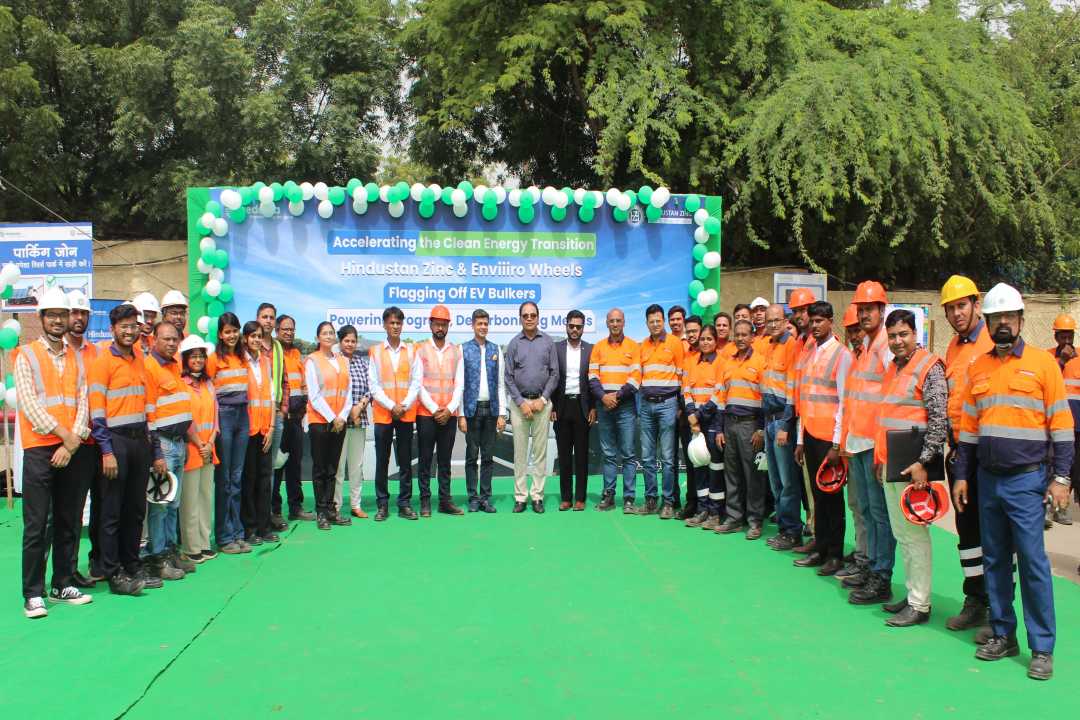
Hindustan Zinc Limited, India’s leading zinc producer and a major player in the global silver market, has launched the first phase of its electric vehicle (EV) bulker fleet at its Zinc Smelter in Debari, Rajasthan. A total of 40 electric bulkers will be introduced under a long-term partnership with Enviiiro Wheels Mobility , with the first 10 vehicles already in operation and the remainder scheduled for deployment in stages.
The electric trucks will handle the transport of calcine, a granular by-product of zinc production, from Debari to the Chittorgarh smelter complex—the world’s largest integrated zinc-lead facility at a single location. The transport contract spans eight years, marking a shift in the company’s logistics model toward low-emission alternatives.
This development forms part of the company’s broader shift toward lower-carbon operations, complementing earlier steps such as the use of LNG and battery-powered vehicles, energy-efficient upgrades, and renewable energy procurement. The company expects the transition to improve transport reliability, reduce emissions, and enhance safety performance.
Arun Misra, CEO of Hindustan Zinc, said “We are working to modernize and decarbonize our logistics network with solutions that reduce environmental impact while improving performance. This EV bulker initiative reflects that approach and contributes meaningfully to our long-term operational goals.”
Alongside the EV bulkers, Hindustan Zinc has signed a new memorandum of understanding (MoU) with Enviiiro Wheels to introduce electric buses for employee transport at the Debari plant. The shift from diesel-run vehicles is intended to lower Scope 3 emissions—indirect emissions from sources not directly controlled by the company.
Praveen Somani, CEO of Enviiiro Wheels Mobility, said “We are glad to support Hindustan Zinc in its move toward low-emission logistics. These steps show how large industrial operations can adopt cleaner alternatives without compromising on reliability or efficiency.”
The deployment of EVs is part of Hindustan Zinc’s ongoing efforts to reduce its carbon footprint across all areas of operation. The company has signed a 530 MW round-the-clock renewable energy supply agreement, with energy delivery already underway. It has also undertaken upgrades to its captive power plants, adopted variable frequency drives, and transitioned parts of its fuel mix to cleaner energy sources.
The company’s approach also extends to innovation in energy and water management. EcoZen, a low-carbon zinc product launched recently, is produced using renewable power and carries a carbon intensity of under 1 tonne CO₂e per tonne of zinc—roughly 75% below the global average.
Hindustan Zinc was the first Indian metals company to set emissions reduction goals through the Science Based Targets Initiative (SBTi) aligned with the 1.5°C climate target. In 2025, it became the first Indian member of the International Council on Mining and Metals (ICMM), joining global mining companies that adhere to high environmental and social standards.
For two years in a row, Hindustan Zinc has been listed in the Top 1% of companies globally in the S&P Global Sustainability Yearbook and is currently ranked among the top 66 firms across 62 global sectors. The company is also among India’s Top 10 CSR contributors, with social initiatives benefiting more than 2.3 million people.
Hindustan Zinc Limited, a subsidiary of the Vedanta Group, is the world’s largest fully integrated zinc producer and ranks among the top five silver producers globally. It supplies zinc to over 40 countries and holds approximately 77% market share in India’s primary zinc segment. Recognised for its environmental, social, and governance (ESG) performance, the company is also a certified 3.32x Water-Positive business and is targeting net-zero emissions by 2050 or earlier. As a supplier of key metals essential to clean energy systems and infrastructure, Hindustan Zinc plays a strategic role in enabling sustainable industrial development in India and abroad.
Bottom of Form









