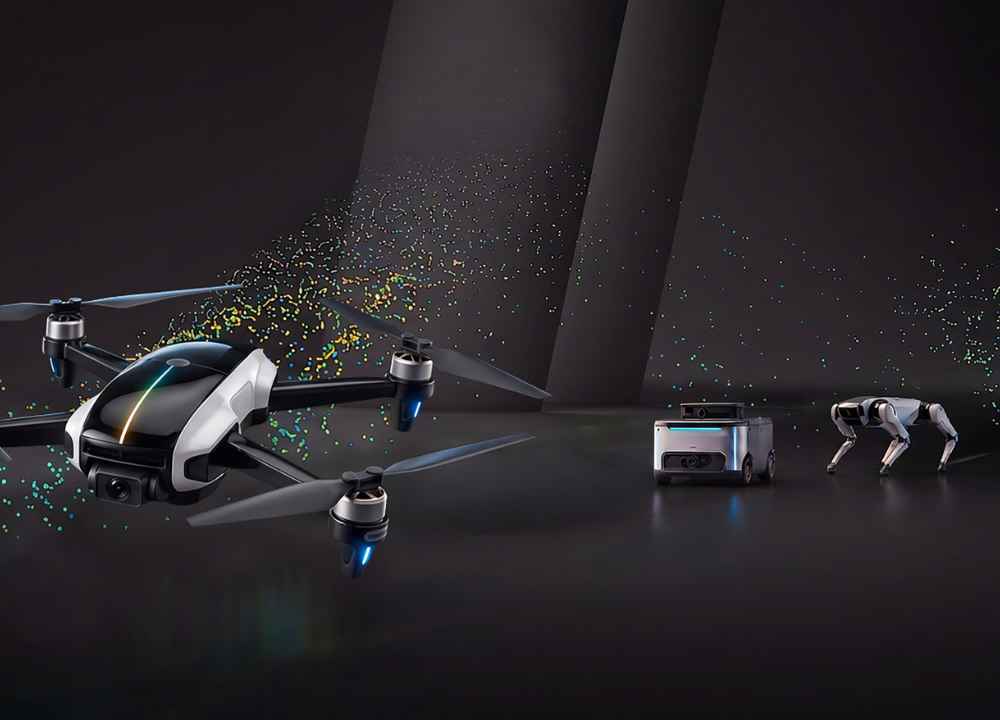
NXP Semiconductors NV (NASDAQ: NXPI) has introduced a unified robotics platform built on its neural axis architecture, providing developers with an integrated hardware and software foundation for designing and deploying trusted physical AI systems. The platform brings together artificial intelligence, connectivity, motor control, security and energy management to simplify the development of robotic applications.
The platform combines an open-source, modular software development kit (SDK) with ready-to-use reference designs and pre-validated, interoperable subsystems. It enables developers to move from evaluating individual functions to building complete autonomous systems through a single validated development environment. By reducing integration and testing requirements, NXP aims to shorten development cycles from several months to days or weeks.
The unified robotics SDK includes supported drivers, middleware integration, reference applications, configuration tools and reusable software components. It is designed to work with established open-source frameworks, including PX4, Zephyr and ROS 2. The platform also provides a secure hardware foundation incorporating deterministic real-time control and safety-ready system architectures.
“ As autonomous robots increasingly move beyond controlled environments and into the spaces where people live and work, trust becomes a prerequisite for adoption,” said Jerome Legros, Vice President and General Manager, Robotics, NXP Semiconductors. He added that the platform brings together security, functional safety, real-time control and lifecycle reliability in a scalable architecture.
Industry partners also highlighted the benefits of the platform. James McClearen, CTO of blueflite, said the ready-to-build foundation would help drone developers evaluate ideas, prototype faster and bring new solutions to market more efficiently. Srdjan Kovačević, CEO and Co-Founder of Orqa, noted that reliable communication, predictable behaviour and low latency are essential for high-performance robotic systems.
The first reference designs focus on drones and combine autonomous computing, flight control, sensor networking and motor control. These include the NavQ95, powered by the i.MX 95 applications processor; the Tropic VMU/FMU, based on the i.MX RT1064 crossover MCU; the 100Base-T1 Sensor Node, built on the MCX N947 MCU; and an AM32-compliant electronic speed controller using the MCX A13 MCU.
Supported by the robotics SDK, these designs enable developers to achieve initial drone functionality within 30 minutes of setup. Each incorporates security and safety capabilities associated with its primary processor. The platform is designed to expand beyond drones to service robots, autonomous mobile robots and other autonomous systems requiring perception, navigation, connectivity, motor control and safe real-time operation. NXP’s unified robotics platform, including its drone reference designs and supporting SDK, is available now. Further enablement for additional autonomous systems is expected in the second half of 2027.
NXP Semiconductors NV (NASDAQ: NXPI) develops solutions for the automotive, industrial and IoT, mobile, and communications infrastructure markets. Its “Brighter Together” approach combines technology and expertise to make the connected world better, safer and more secure. The company operates in more than 30 countries and reported revenue of US$12.27 billion in 2025.