India’s next manufacturing gains may depend less on discovering breakthrough materials than on improving how material decisions are made. Choices taken before a product is locked into production create the best opportunity to evaluate whether a different material or process can improve performance, simplify manufacturing or lower lifecycle cost.
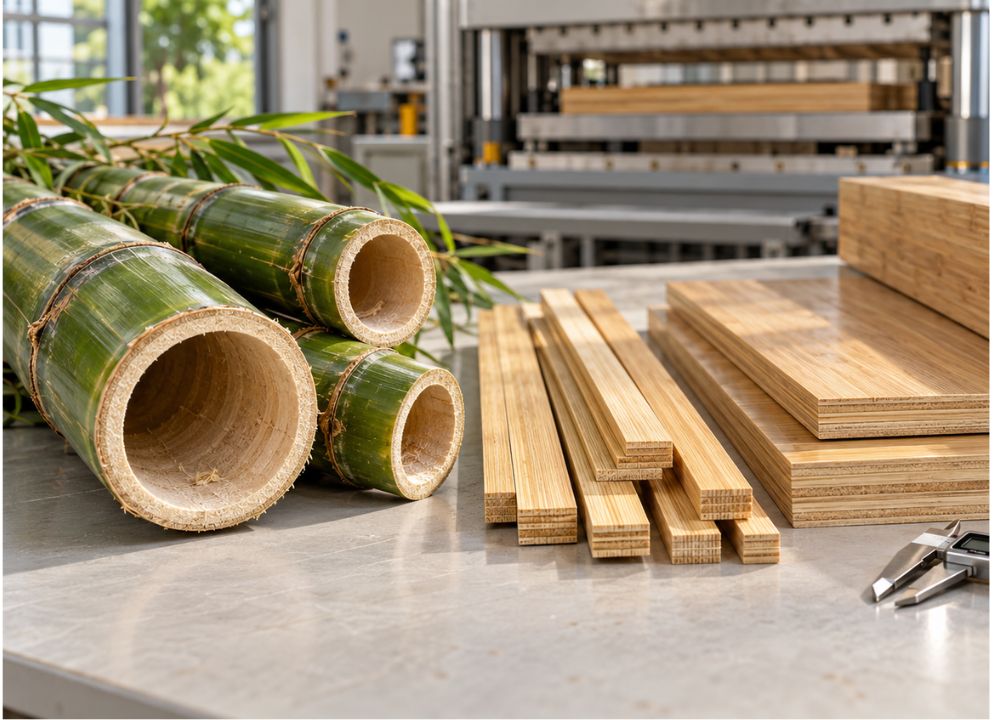
In this context, “advanced materials” is a broad working category: engineered metal powders, high-performance alloys and composites whose composition or structure is tailored for a particular application. They are not automatically superior to conventional materials. Their value depends on the problem being solved, the production volume, the operating environment, and the economics across the product’s life.
Start With the Application
Early collaboration changes the question from “Which new material should we buy?” to “What must this component do, and how should it be made?” A team might examine whether an automotive part can be redesigned to reduce weight without sacrificing fatigue life, or whether an industrial component can gain wear resistance and require less maintenance. The answer may be a powder-based route, a specialist alloy, a composite-or no material change at all.
This discipline matters because material selection affects tooling, tolerance, heat treatment, machining, energy use, repairability and end-of-life recovery. Decisions made late can add cost or force compromises. Decisions made during design allow geometry, material, and process to be evaluated as one system.
A Practical Example: Powder Metallurgy
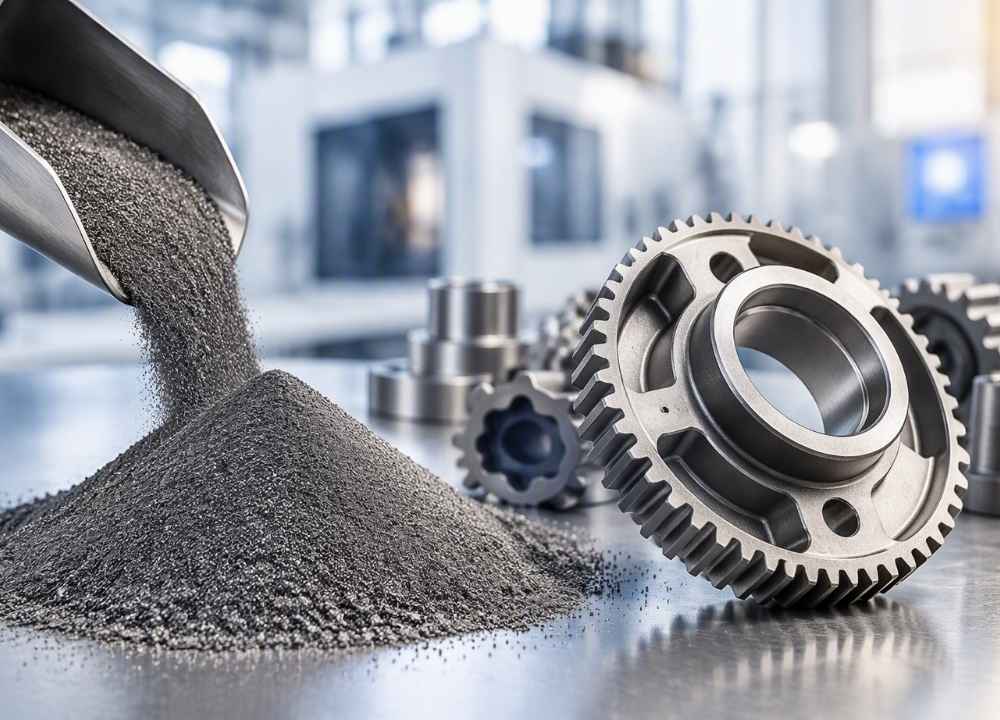
Powder metallurgy shows how collaboration can translate into manufacturing efficiency. Metal powders are compacted and sintered to form near-net-shape components, which can reduce or eliminate some subtractive machining for suitable geometries and production volumes. A manufacturing text published by the Metal Powder Industries Federation cites a benchmark in which about 97% of the starting powder is converted into product. This is not a universal production result: secondary operations, rejected parts and powder production itself still affect material use and the overall footprint.
The practical test is whether near-net-shape production creates measurable value for the component under review. Teams should compare tooling requirements, production stability, secondary operations, and lifecycle economics before deciding whether powder metallurgy offers an advantage over other routes. Such advantage should be measured in terms of part performance and total cost.
From Process Choice to India’s Manufacturing Opportunity
Manufacturing accounted for 14.8% of India’s gross value added at current prices in 2025–26, according to the Ministry of Statistics and Programme Implementation’s provisional estimates. Globally, industry represented nearly 40% of final energy demand in 2024, according to the International Energy Agency. These figures establish the scale of manufacturing’s economic and energy footprint; whether a particular material improves yield, product life or process efficiency must still be demonstrated at the application level.
India’s Perform, Achieve and Trade scheme provides one example of a measurement-based approach to industrial efficiency. Administered by the Bureau of Energy Efficiency, it sets specific energy-consumption targets for designated energy-intensive users. In its first cycle, the scheme recorded energy savings of 8.67 million tonnes of oil equivalent, against a target of 6.686 million tonnes. That is the kind of quantified outcome against which manufacturing interventions should be judged.
Measure the Outcome
The same measurement principle should apply to sustainability claims about materials and processes. Assessment should cover raw material inputs, production energy, scrap, operational performance, durability, and end-of-life recovery. Relevant measures may include material utilisation, machining avoided, energy used per component, service life, repair frequency, and recoverability. A gain in one measure should not conceal a loss elsewhere.
Measurement becomes useful when the people responsible for design, production, materials, and customer requirements interpret it together. Designers define function; production teams understand process constraints; materials specialists explain trade-offs; and customers clarify operating conditions. Bringing those perspectives together early allows alternatives to be evaluated against shared criteria and results to be documented before production choices become difficult to change.
Advanced materials could contribute to India’s manufacturing competitiveness, but not simply because they are new. Their value will depend on using powders, alloys, and composites selectively, with evidence and a clear view of the complete manufacturing system. Companies that make collaboration the first step, and measurement the final test, will be better placed to translate material innovation into durable industrial value.