For a long time, electric mobility was predominantly a hardware story – better batteries, stronger motors, more range. But the real shift is happening elsewhere. Software, data, and connectivity are increasingly determining who wins, how vehicles are built, and how people use them. Vehicles are turning into platforms. And when that happens, the entire value chain feels it – OEMs, Tier-1s, Tier-2s, and the system integrators tying it all together.
Vehicle architecture is evolving – Quietly, but fast
Traditional vehicle designs were packed with ECUs. One for braking, one for infotainment, another for body functions, and so on. This approach was well-suited to an era where almost everything was locked in at the factory, built the car, shipped it, and moved on.
However, that model does not hold up well for EVs. Customers expect updates after purchase. Driver assistance capabilities continue to evolve. Energy systems need to react in real time. The industry cannot keep bolting new modules onto an already crowded architecture and calling it progress.
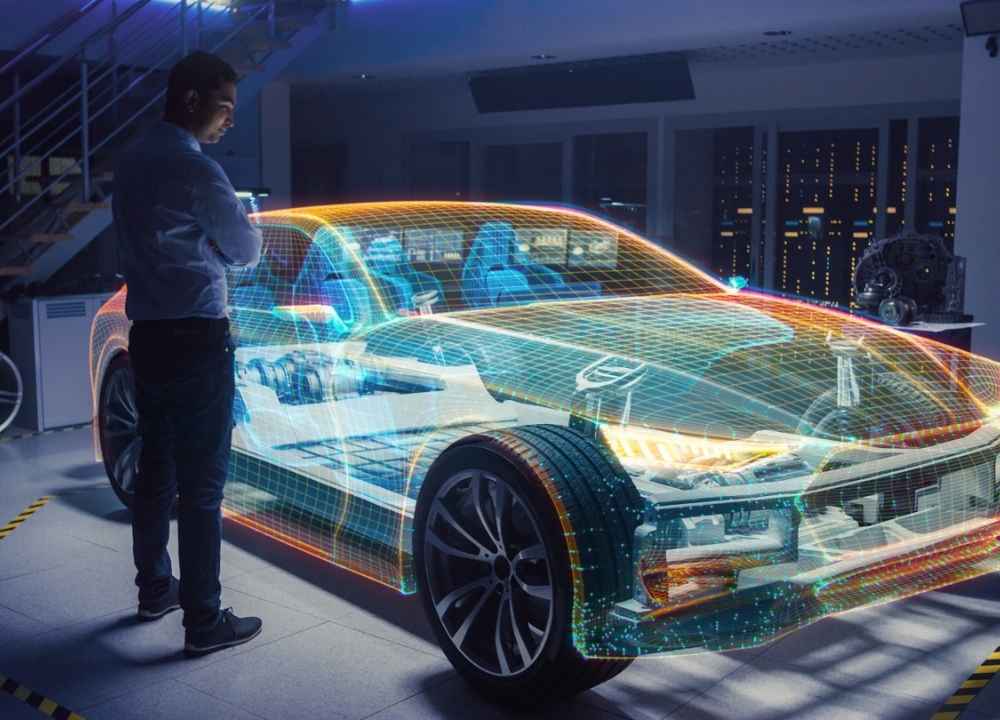
As a result, the industry is simplifying. Fewer high-performance computing units sit at the center. Zonal controllers handle local work. The result is what the industry refers to as a software-defined vehicle – not because the hardware disappears, but because software starts shaping how the vehicle behaves over time.
In EVs, this manifests in range management, regenerative braking, charging decisions, and maintenance timing. Much of that is driven by software today. The vehicle still compromises metal, motors, and batteries, but underneath, it looks more like a connected computer that happens to drive.
Why Telematics matters more than it used to
Telematics used to mean fleet tracking or an emergency call button. Useful, but limited. Today, it sits much closer to the core of the business.
A connected vehicle constantly transmits useful signals: where it is, how the battery is performing, how it is being driven, what needs attention, and when it was last charged. That data supports remote diagnostics, OTA updates, smarter energy planning, and services that were hard to offer before. Fleet operators leverage it to keep vehicles on the road. Everyday drivers benefit from remote preconditioning, charge scheduling, and digital keys.
There is also energy dimension. Smart charging and vehicle-to-grid concepts only work if the car, charger, utility, and cloud can communicate with one another reliably and securely. If the connected stack is weak, the entire proposition stalls. That is precisely why telematics is no longer a peripheral add-on; it is becoming the backbone of electric mobility.
Shared mobility needs software to work at scale
Shared mobility makes this even clearer. Ride-hailing, car sharing, subscription fleets, and last-mile services – all of them depend on knowing what is happening with each vehicle at any given moment.
Is it available? How much does it have remaining? Does it need service before the next trip? Can a user unlock it from their phone? These are operational questions, and software is what answers them.
Behind the scenes, platforms connect booking, payments, vehicle access, charging, and fleet management. Telematics enables keyless entry and condition checks between rides. Predictive tools help operators charge more efficiently and identify problems before a vehicle goes offline.
Shared EVs also endure more wear, necessitating faster turnaround cycles and the ability to diagnose issues remotely. In many cases, OEMs and mobility operators are designing these offerings collaboratively. Hardware still matters. But the software lifecycle – updates, support, integrations, is now part of the product.
What this means for the players involved
OEMs
For OEMs, the mandate is expanding. Selling the vehicle is only the starting point. The relationship after delivery – through apps, updates, charging services, and digital features, is becoming equally important.
This puts pressure on skills that manufacturers did not always need in-house: software development, cloud platforms, cybersecurity, and digital partnerships. Some build these internally; others acquire or partner. Either way, brand value is shifting toward experience and services, not just sheet metal and range specifications.
Tier-1 suppliers
Tier-1s are in a more complex position than it may appear. They still need to maintain strength in electrified hardware – inverters, battery systems, ADAS, and cockpits. At the same time, buyers demand middleware, APIs, and software that can be updated post-deployment.
Domain controllers, zonal electronics, and integrated e-axles open new opportunities. However, those opportunities come with new expectations around systems engineering, safety, and security. A Tier-1 that only ships hardware risks being squeezed on price. Those that can support platforms over the long term are significantly harder to replace.
Tier-2 suppliers
Tier-2 suppliers – providers of sensors, chips, connectors, modules, and other specialized components, are being pulled closer to system-level conversations. It is no longer enough to deliver a high-quality component in isolation. Latency, security, safety compliance, and software compatibility all matter more than ever before.
Demand remains robust for compute, power semiconductors, and connectivity modules. The challenge, however, is consolidation higher up the chain, which can leave pure component players with less room. Many Tier-2s are responding with firmware, reference designs, and earlier engagement in development cycle.
System integrators
System integrators may not build the vehicle, but they often make the ecosystem functional and scalable. Their work sits between vehicle platforms, enterprise systems, cloud services, charging networks, fleet tools, and mobility applications.
In practice, that means ensuring telematics backends, identity layers, OTA pipelines, and operations dashboards function cohesively – without creating another pilot that never scales. As more players enter the ecosystem, that bridging role becomes increasingly valuable.
Where this leaves the industry
The next chapter of electric mobility will not be decided by hardware alone. Companies that treat the vehicle as part of a wider software and energy network will move faster than those still thinking in parts and platforms separately. Across OEMs, Tier-1s, Tier-2s, and system integrators, the advantage goes to those who can keep systems secure, connected, and continuously improving after the vehicle leaves the factory. Batteries and motors still matter. They always will. But software and connected technologies are shaping what electric mobility becomes next.