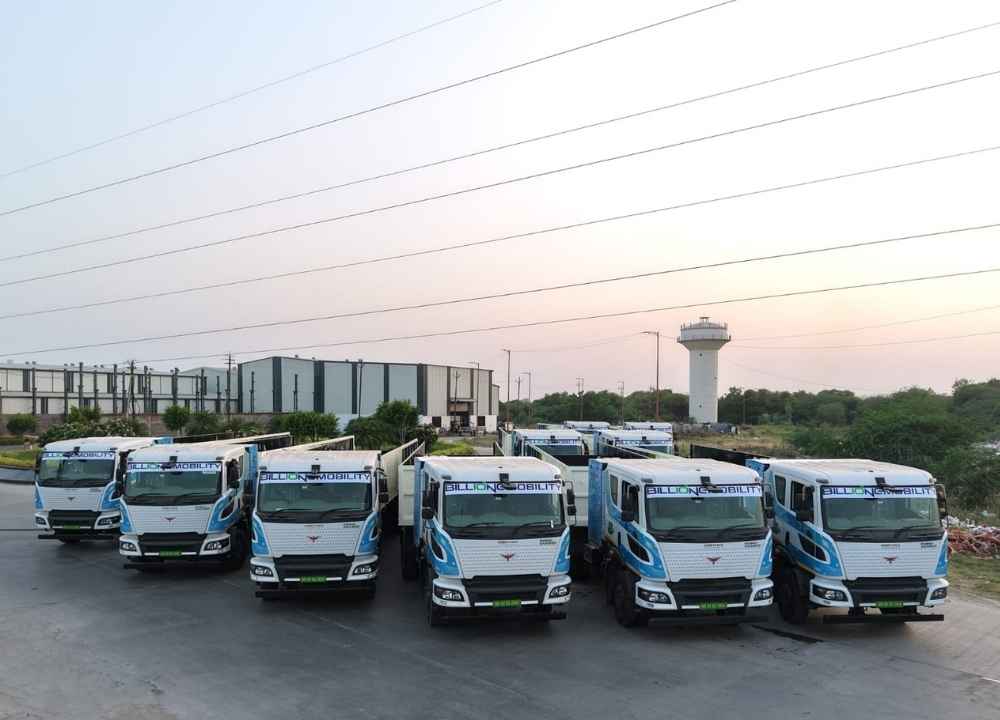
JK Lakshmi Cement has deployed more than 70 electric vehicles (EVs) across its logistics network and plans to increase the fleet to 120 vehicles by March 2027. The initiative is part of the company’s decarbonisation strategy, which focuses on reducing emissions from transportation and improving operational efficiency.
The company has achieved nearly 100% electric vehicle-based clinker dispatches from its Sirohi plant in Rajasthan to its Kalol Grinding Unit in Gujarat. The deployment marks a shift towards electric mobility for long-haul transportation in the cement sector and forms part of JK Lakshmi Cement’s efforts to reduce the environmental impact of its logistics operations.
The existing fleet of more than 70 electric vehicles operates on key routes connecting the Sirohi plant with the Kalol Grinding Unit, Palanpur Unit and Surat Grinding Unit. To support the deployment and manage transportation requirements, JK Lakshmi Cement is working with electric vehicle logistics providers SwitchLabs and Billion E.
The company plans to expand its fleet over the coming months, taking the total number of electric vehicles to 120 by March 2027. The expansion is expected to increase the use of electric mobility across its logistics network and support the adoption of cleaner transportation options for moving cement and clinker.
Vinita Singhania, Chairperson and Managing Director of JK Lakshmi Cement, said the company was integrating sustainable practices into its operations while focusing on long-term business efficiency. She said the deployment of more than 70 electric vehicles represented progress in adopting cleaner transportation solutions. The transition to electric vehicle-based clinker dispatches on the Sirohi–Kalol route, she added, was an important step in the company’s broader decarbonisation strategy.
The EV programme is part of JK Lakshmi Cement’s green logistics and sustainability roadmap. Along with the adoption of electric vehicles, the company is pursuing initiatives intended to improve operational efficiency and reduce emissions across its value chain. Its long-term target is to achieve net-zero emissions by 2047.
JK Lakshmi Cement Limited is part of the JK Organisation, which has business interests across sectors including tyres, cement, paper, power transmission, sealing solutions, dairy products and textiles. Established in 1982, the company has an annual turnover of more than ₹6,000 crore and operates in the northern, western and eastern Indian cement markets.
Its manufacturing facilities include integrated cement plants at Jaykaypuram in Sirohi district and Dabok in Udaipur district, Rajasthan, and Ahiwara in Durg district, Chhattisgarh. The company also operates grinding units at Kalol and Surat in Gujarat, Jhamri in Haryana and Cuttack in Odisha.
JK Lakshmi Cement has a combined cement capacity of approximately 18 million tonnes per annum and aims to increase this to 30 million tonnes by 2030. Its product portfolio also includes ready-mix concrete, gypsum plaster, wall putty, primer, adhesives and fly ash blocks.