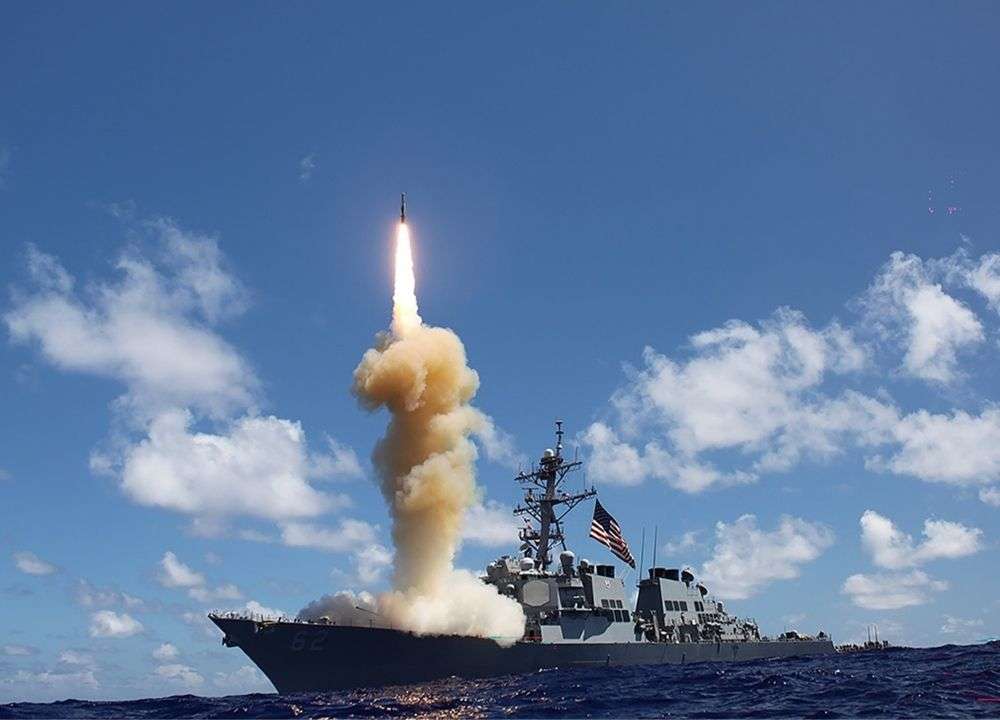
Boeing has signed new seven-year framework agreements with the US Department of War (DoW) and Raytheon, an RTX business, to increase production of key hardware for the Standard Missile-3 (SM-3) missile defence system. The agreements cover higher production of avionics and ejector assemblies for the SM-3 Block IB and Block IIA variants. These components support the interceptor’s ability to accurately engage ballistic missile threats beyond the Earth’s atmosphere.
Under the new framework, Boeing will expand its manufacturing output to support increased production of SM-3 interceptors. The systems are an important part of the United States’ sea-based missile defence architecture and are deployed to protect the US and allied nations against missile threats.
Bob Ciesla, Vice President, Boeing Precision Engagement Systems, said the agreements provide the company with a clear indication of future demand and allow Boeing to prepare its manufacturing operations for higher SM-3 production. “The SM-3 is an essential part of the layered air and missile defence architecture that protects the US and its allies worldwide,” Mr Ciesla said.
Boeing, the DoW and Raytheon, the prime contractor for the SM-3 programme, will increase production capacity while negotiations continue towards a multi-year procurement contract under the new framework agreements. The production expansion supports the US administration’s efforts to strengthen domestic defence manufacturing and expand the country’s ability to produce critical military capabilities. It also supports the Department of War’s Acquisition Transformation Strategy, which seeks to accelerate the delivery of advanced defence systems to US service members.
The SM-3 is designed to intercept ballistic missile threats during the midcourse phase of flight. Its Block IB and Block IIA variants provide capabilities for the US Navy and allied missile defence forces. Boeing supplies important components for the SM-3 system, including avionics and ejector assemblies. Increasing production of these components is expected to support higher interceptor output as demand for missile defence capabilities grows.
The new framework also builds on Boeing’s existing defence manufacturing work. The company previously entered into an agreement with the Department of War and Lockheed Martin to increase production of PAC-3 Missile Segment Enhancement (MSE) seekers, another critical component used in US missile defence systems.
Boeing said the SM-3 production effort demonstrates the company’s continued role in supporting US and allied defence requirements through advanced manufacturing and technology. The seven-year agreements provide a longer-term basis for production planning and capacity expansion. Boeing will work with Raytheon and government customers as the parties move towards future multi-year procurement arrangements.
The company’s increased production of SM-3 hardware is expected to strengthen the supply chain supporting the missile defence programme while helping meet future interceptor requirements. With the new agreements, Boeing is preparing its production network to support higher volumes of SM-3 hardware and contribute to the continued development of layered missile defence capabilities for the United States and its allies.