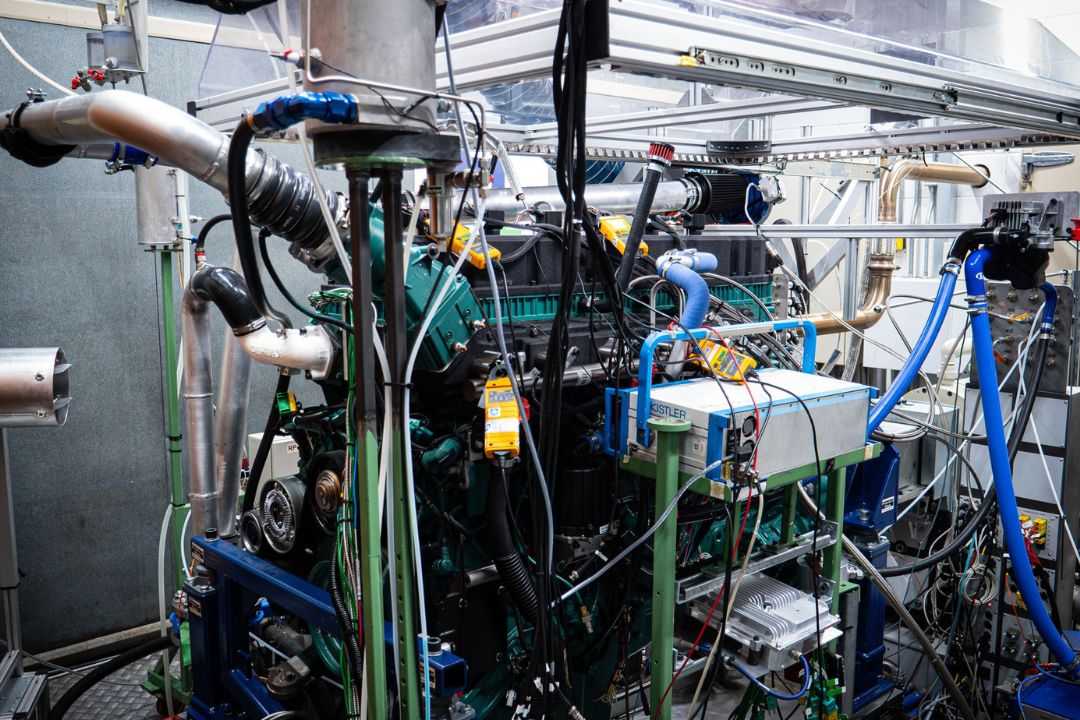
MAHLE Powertrain has announced a significant milestone under Project Cavendish, successfully converting a 13-litre heavy-duty engine to operate entirely on hydrogen fuel. The converted engine has achieved parity with its diesel counterpart in terms of maximum torque, marking a key advancement in the development of hydrogen-powered solutions for heavy-duty transport.
Project Cavendish, a £9.8 million initiative launched in early 2023, is supported by the Advanced Propulsion Centre UK and focuses on developing complete hydrogen powertrain capabilities. The programme is aligned with the UK’s broader strategy to transition towards net-zero emissions in the transport sector.
The hydrogen-powered engine has demonstrated promising emissions performance. Initial test results indicate that engine-out nitrogen oxide (NOx) levels can be maintained below 0.2 g/kWh across the full operating range when paired with existing aftertreatment systems. Particulate emissions were found to be negligible and can be effectively managed using current filtration technologies.
According to Jonathan Hall, Head of Research and Advanced Engineering at MAHLE Powertrain, the achievement highlights the growing potential of hydrogen combustion as a viable clean fuel for heavy-duty applications. He noted that matching diesel-level torque while maintaining low emissions represents a critical step in bringing hydrogen engines closer to commercial readiness.
While achieving performance targets is essential, controlling emissions remains a primary focus in hydrogen combustion development. The addition of a Selective Catalytic Reduction (SCR) system is expected to further reduce tailpipe emissions to levels significantly below forthcoming regulatory standards, including EU VII requirements. These results reinforce the feasibility of hydrogen combustion engines as a near-term solution for reducing carbon emissions in heavy-duty transport.
As part of the project, MAHLE Powertrain has upgraded its Northampton testing facility to support hydrogen engine development. The facility now serves as a hub for the design, calibration, and validation of hydrogen and renewable fuel technologies. It also provides opportunities for external partners to conduct testing, supporting broader industry adoption of hydrogen solutions.
Project Cavendish brings together leading organisations including PHINIA, BorgWarner, Cambustion, Hartridge, and Oxford Brookes University. This collaborative effort aims to accelerate the development and deployment of hydrogen combustion technologies.
MAHLE Powertrain reports increasing interest from industry stakeholders and anticipates further expansion in hydrogen and renewable fuel projects over the coming year. The company continues to play a leading role in advancing hydrogen combustion and emissions solutions for the future of sustainable heavy-duty mobility.