Manufacturing in India is changing. Technology is becoming more important, and companies are also considering how to increase diversity in the workforce. One young professional who is seeing this change closely is Mrunalini Phutane. She represents a new generation that is entering manufacturing with technical knowledge, new ideas, and a belief that the industry should become more inclusive. Despite opportunities outside, Mrunalini chose to join her family business and empower it with her technical education, a forward-thinking mindset, and a willingness to shift towards artificial intelligence from traditional operations.
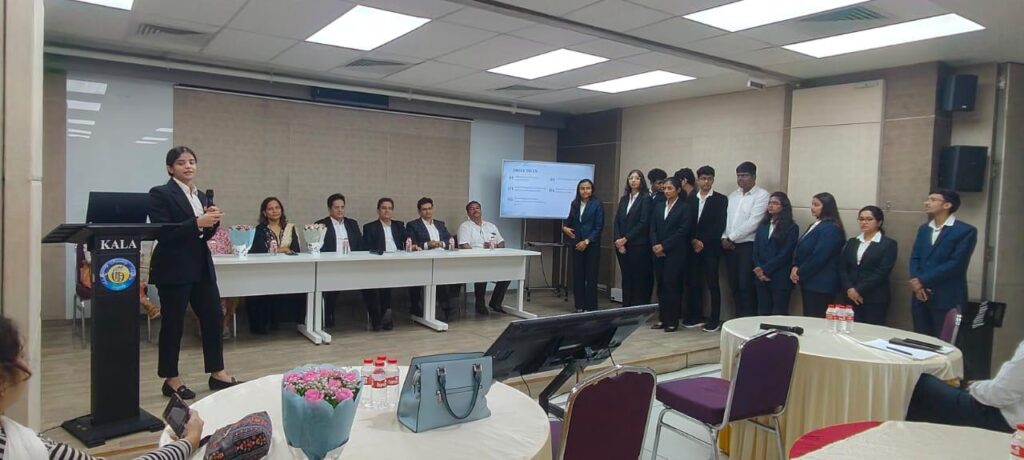
Mrunalini Phutane is currently in the last semester of her engineering degree in Computer Science with Artificial Intelligence and Machine Learning (AIML) from Pimpri Chinchwad College of Engineering. At the same time, she has started contributing to the family business, Kala Group, where she is working on AI-based applications, including automation and predictive maintenance. She is currently heading the AIML division of Kala Group.
Her journey is interesting because it connects three things together: a manufacturing family legacy, a new technology like artificial intelligence, and a mindset that engineering and manufacturing should be open to everyone, including women.
Growing Up Close to Manufacturing
Mrunalini completed her schooling from Saint Ursula’s High School in Akurdi and later studied science in City Pride Junior College for her 11th and 12th. One thing she often mentions is that all her schools and colleges were located very close to her home. Most of them were within five minutes’ distance. However, while her educational institutions were nearby, her exposure to business and engineering started much earlier at home.
She grew up in a joint family, where discussions about work, engineering problems, and new business ideas were common. The Kala Group, the company she is now associated with, was started in 1991 by her grandparents, her father, and her two uncles.
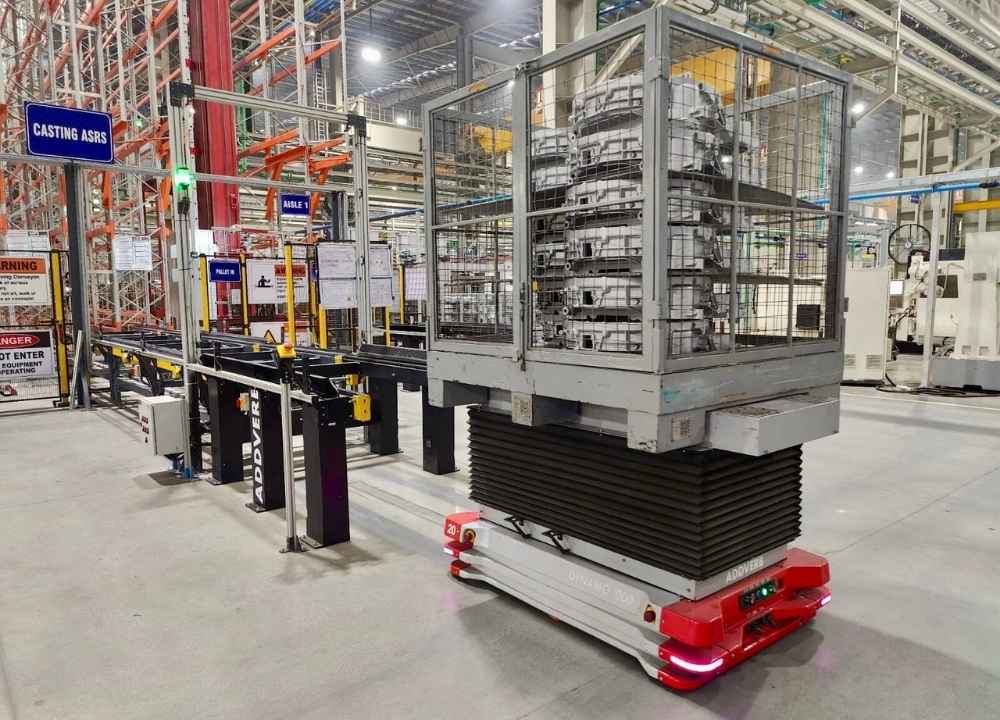
The company initially worked with Kirloskar Oil Engines. Their role was to manufacture the control panels and canopies of the generators and transform them into fully functional DG sets. The company handled processes like metal cutting, bending, powder coating, and electrical panel assembly before the generators were supplied to the market.
Over the years, the company has built strong relationships in the industry. Today, Mrunalini says, the group is considered one of the valuable GOEM partners for Kirloskar generators. Later, the business expanded and diversified into multiple sectors. The Kala Group is now involved in four major verticals: Power Solutions, Biotechnology, Defence, ENGG & Infotech.
A Family Story That Started with Hard Work
The story of Kala Group started from very modest beginnings.
Mrunalini’s father, Manoj Kumar Phutane, the Managing Director of the company, had completed a diploma in electrical engineering. Because the family needed financial support, he started working immediately as a trainee engineer on the shop floor. The family’s financial condition was not strong at that time.
While working as a trainee engineer, Manoj Phutane quickly became known for solving machine problems. Within six months, workers on the shop floor started approaching him whenever any machine issue came up. At that time, the factory had different machines, and he gained practical experience by working closely with them.
The turning point came when the family decided to start their own business instead of working for others. That thought led them to connect with Kirloskar Oil Engines, and that was the beginning of the Kala Group. Today, the company has grown into a diversified engineering group with multiple verticals.
Learning from Different Members of the Family
Mrunalini says that many people in her family have influenced her thinking. Her grandmother, Kalavati Phutane, after whom the Kala Group is named, played an important leadership role in the family and the business. She remembers her grandmother as someone who commanded respect and made strong decisions.
Her father continues to be an important role model for work discipline. She has seen him travelling for important international events like the Economic Forum in Davos and still returning to the office immediately after.
Her mother, Annapurna Phutane, though a homemaker, influenced her in a different way. She encouraged her to be confident and stand up for herself in a respectful manner.
Her two uncles also played key roles in shaping her understanding of business. Sanjay Phutane, the Executive Director overseeing marketing and sales, taught her how to communicate with people and build strong relationships. Dr Praveen Phutane, the Technical Director, has a unique background. He is a BHMS doctor who earlier ran his own clinic and later joined the family business. Mrunalini works closely under his guidance and says she has learned the importance of technical depth and accuracy.
Choosing AI When It Was Still New
Interestingly, Mrunalini did not initially plan to become an engineer.
Like many students who enter the science stream in 11th and 12th, she also had doubts about whether engineering would be the right path. During the COVID period, when she was in 12th standard, she came across Artificial Intelligence and Machine Learning. At that time, the specialisation was still new in engineering colleges.
Most students preferred traditional computer science programs because they were unsure about the future of AI. However, the concept of artificial intelligence fascinated her. She became curious about how machines could learn and make decisions.
That curiosity led her to choose AIML as her engineering specialisation.
Today, she believes that AI will become an important tool for every industry, including manufacturing. Companies that do not adapt to new technologies may struggle in the future.
Working on AI Applications in the Company
After joining the Kala Group in August, Mrunalini started working on AI-based initiatives within the company. Her current work includes automation systems, predictive maintenance, and AI-based monitoring of operations.
Initially, many people in the company treated her with respect mainly because she was the Managing Director’s daughter. However, she believes that slowly the perception has changed. As she started working on technical projects and managing teams, people began recognising her work independently.
She believes that credibility in any organisation comes from the work you do and the value you add.
The Company’s Expansion into New Areas
The Kala Group has also been expanding into new sectors in recent years. A major diversification happened around 2019. One interesting development came from a simple heat transfer formula: Q = m.c.deltaT.
While teaching Mrunalini science for her 10th-standard exams, Dr Praveen Phutane began thinking about how the concept could be applied to real-life storage systems. This led to the development of controlled atmospheric storage technology.
Today, the company manufactures controlled-atmosphere onion storage systems for government projects and has also secured a patent for this technology. The company has also entered the defence and aerospace manufacturing sector. Recently, Kala Group participated in a Defence exhibition held on 16th December, Vijay Diwas, at the House of Chiefs of Defence Staff. The event was attended by several senior leaders, including the President of India, Draupadi Murmu, and Defence Minister Rajnath Singh. The President visited the Kala Group stall and interacted with the team.
Another major milestone came when the company signed an MoU with the Maharashtra Government at the World Economic Forum in Davos, with Devendra Fadnavis involved in the signing.
AI and Opportunities for Women
Mrunalini also believes that technology can help bring more women into engineering and manufacturing roles. Traditionally, many manufacturing jobs required physical labour and long working hours on shop floors. These conditions sometimes discouraged women from entering the industry.
However, technologies like AI are changing this situation.
AI-related work is more software-based and flexible. It allows professionals to work from different locations and does not always require physical presence on the shop floor. During interviews she has conducted for AI-related roles, she has noticed that many female candidates demonstrate strong confidence and clarity when explaining their ideas. She believes that women have a strong ability to combine technical knowledge with communication and empathy, which is valuable in modern workplaces.
A Vision Beyond Business
Apart from her professional goals, Mrunalini also wants to contribute to society. Her family is already involved in social work, and her father was the head of Bhavsar Samaj. In the future, she hopes to support several social causes.
These include donations to cancer hospitals, organisations working to rescue women from exploitation, old-age homes, and animal shelters. During her college humanitarian activities, she visited an old-age home and saw how many elderly people had been abandoned by their families. That experience made a strong impression on her.
She believes success should also include the ability to support people in need.
Looking Ahead: Embracing Technology & Leadership
Mrunalini is still at the beginning of her professional journey. But her exposure to manufacturing, her technical education in AI, and her family’s entrepreneurial background give her a unique perspective. She represents a generation that is comfortable with both machines and software, as well as with both legacy industries and new technologies.
As a young professional on a leadership journey, Mrunalini believes leadership is all about managing people well. She feels that work should always be completed to a high standard and, preferably, before deadlines. At the same time, teams should not feel excessive pressure while working.
According to her, employees should feel positive about coming to work even on a Monday morning. She believes that when both work quality and employee satisfaction are balanced properly, organisations perform better.