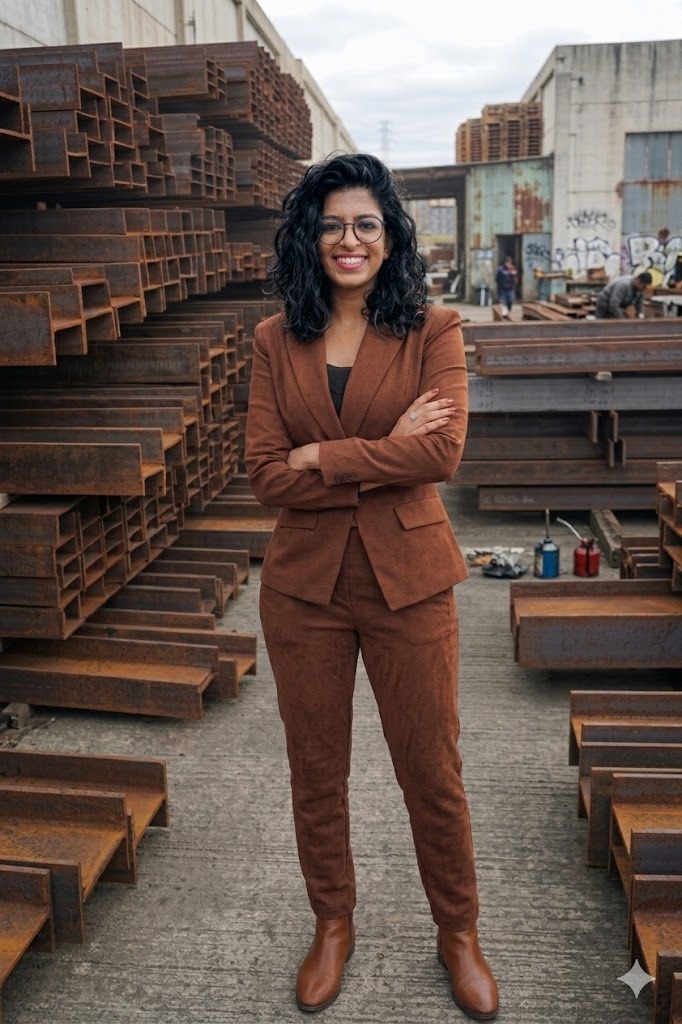
Manisha Sahai did not plan to end up in manufacturing. She studied economics, spent years in fast-moving e-commerce companies, and was very good at it. Then one role led to another, and she found herself on a factory floor. Now she electrifies India’s bus and truck fleets for a living as Vice President – Solutioning at Drivn. None of it was planned. All of it makes sense.
Drivn Transition Pvt Ltd is a Gurugram-based company with one clear mission: get India’s commercial vehicle operators off diesel and onto electric. The company owns and leases electric buses and medium-to-heavy-duty electric trucks, bridging the gaps in financing, deployment, and infrastructure that have kept fleet electrification out of reach for most operators. It has recently secured $120 million in debt from Nomura and $20 million in equity, giving it the firepower to put over 1,000 electric vehicles on the road. Manisha Sahai’s job as Vice President – Solutioning is to figure out which vehicles go on those books, what operators actually need, and what happens to the assets at the end of their lifecycle.
She has also managed projects with forty men in her team. She has stood on production floors making motors for windmills. She has worked across consumer electronics, apparel, food, and industrial products. None of it was planned.
An Economist Who Ended Up on the Factory Floor
Manisha did her undergraduate and postgraduate degrees in Economics. The conventional path from there goes through analysis, consulting, or data. Manufacturing does not appear on that map. She did land a fancy pre-placement offer, but something in her wanted to see something tangible, something she could point to and say: this exists because of what I did. So she chose an e-commerce profile.
Six years followed across Snapdeal, Swiggy, and others. Young organisations, fast-moving, gender-balanced. The work was about efficiency and economics. It suited her. She was good at asking the three questions that would become her thread across every sector she ever worked in: where does the value come from, where is the cost hiding, and what would make this system run better?
Manufacturing arrived first indirectly, through a stint in the retail arm of a large conglomerate. Then came the conscious shift: a contract manufacturing firm at a scale of about 10 billion. Same questions, completely different environment.
The production floor had long hours. Inventory checks ran at night. There were language and cultural barriers in foreign setups. Generational employees in Indian factories who saw a new face and assumed she was there to disrupt rather than improve.
“I’ve been in a very gender-neutral atmosphere for six years. When manufacturing happened, I did feel that people were surprised. Not biased, just surprised. It is a reflection of what they are used to seeing rather than any technical notion. So it is less about capability or bias, and more that they are taken aback by something they haven’t seen before.”
She did not fight the surprise. She mapped processes, led inter-border teams, and used digitalisation of production floors as a bridge. Conditioning, she says, not capability bias. And conditioning responds to consistency.
You Do Not Always Need an Engineering Degree to Lead Engineers
The question Manisha gets asked most often is how an economist operates in engineering-heavy environments. Her answer is practical and a little impatient with the premise.
You do not need to know how a compressor works. You need to know what happens to the vehicle when the compressor fails. You need to understand the triangle between OEMs, maintenance teams, and operators, and find where the friction is. The engineers who are close to the product already have the technical depth. What they sometimes need is someone who can help them channel it.
“As long as you understand the basic principles of the product and process, no one is asking you to fix the harnesses. Leverage the service engineers who are close to the product and maybe just need a bit of mentoring.”

What she brings is something else: the economics of engineering. A spectacular understanding of the bill of materials and aftermarket. The discipline to ask what something costs and whether that cost is justified. She has built working relationships with technical teams as two-way exchanges: she tells them what she does not know, they tell her what she needs to understand, and together the work gets done.
Thirteen years in, she has worked across apparel, food, industrial and electronics products, and now hybrid electric vehicles. The three questions travel with her everywhere.
On the Word ‘Bias’ and Why She Pushes Back on It
There is a word that comes up constantly in conversations about women in manufacturing, and Manisha has a specific problem with how it is used.
“Gender bias is maybe a very unfair word for the situation on the ground. It is more that people are not habituated to seeing certain things done differently on the production floor. They are not used to it. That is not the same thing as bias.”
This distinction matters because the response is different. Unfamiliarity responds to consistency and competence. It responds to management that is willing to recognise different ways of getting the same results. Bias, in the way the word is usually deployed, implies something fixed. Unfamiliarity is not fixed.
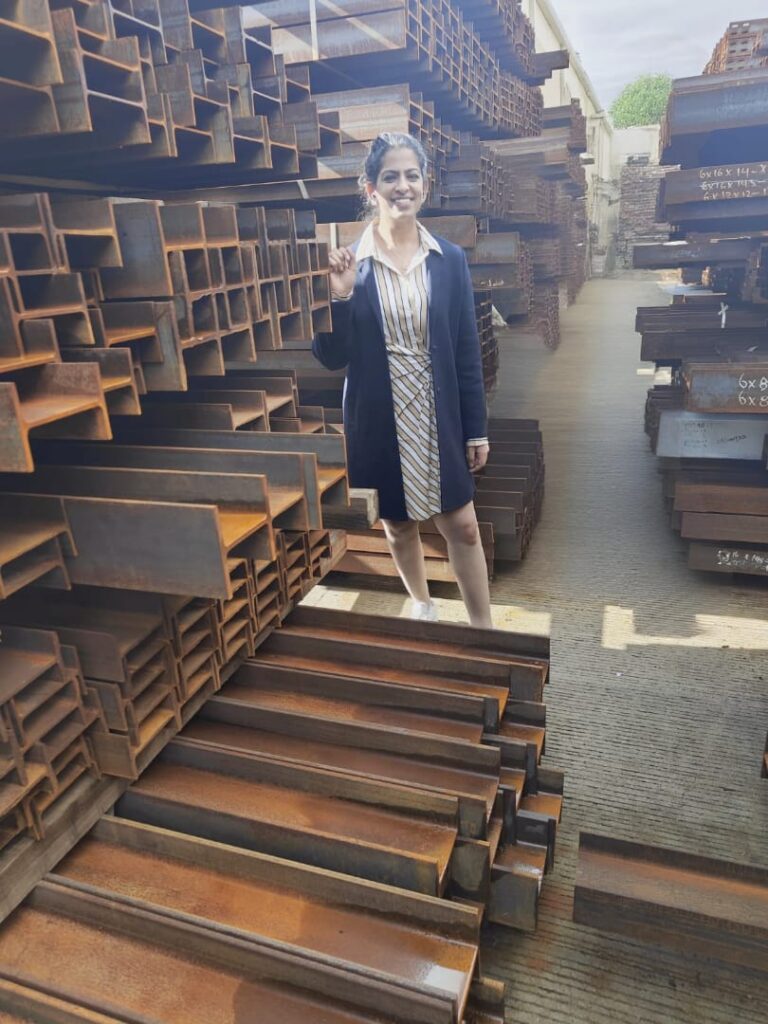
She has been on bus depot floors where service engineers work under the chassis and in pits. She has run inventory checks at night in foreign countries. She has led projects in Indian factories where change management was the real battle, not technical knowledge. Does her gender change the output? No. What she keeps coming back to is this: in a world of data and technology, very little of the real work actually requires anyone to be out in the dust and sun. It is the minds of people that create the restrictions, not the work itself.
Now She Is Electrifying India’s Buses and Trucks
At Drivn, everything Manisha has done before comes together. The company leases electric buses and trucks to operators who want to move off diesel but cannot navigate the financing, infrastructure, and asset management complexity on their own. Her role as VP Solutioning means she decides which OEMs to partner with, what assets belong on the company’s books, and what happens to those assets after eight or ten years when the batteries degrade.
This is where her operational and manufacturing background earns its keep. The finance team can structure a deal. They cannot always tell you which vehicle will hold up on a 300 km intercity route, which OEM has the most reliable after-sales network, or what a battery that can no longer run a bus is still worth in second-life energy storage. Manisha can.
The company’s target is 1,500 vehicles on the books in the next eight months. They are already at twenty percent of that. With $120 million in secured debt from Nomura and $20 million in equity, the capital is there. The work now is execution.
The Women Engineers Who Do Not Know What Is Available to Them
Manisha is direct about a problem she has watched play out too many times.
“I know so many women engineers who ended up in non-core jobs because they didn’t realise they could be working on software calibrations for machines or vehicles, or simple MES customisations. Nobody told them.”
She wants to work on both sides of this. On the leadership side, the conversation is about making shopfloors more genuinely inclusive and about giving HR a stronger voice when manufacturing projects are being staffed. On the candidate side, it is about going into colleges and placement organisations and showing students what the real range of manufacturing roles looks like today, not the version their professors learned from.
“We have moved way ahead from typical setups. The picture needs to be repainted.”
F1 Named a Corner After Two Women Engineers, She Was Paying Attention
Manisha follows Formula 1 closely. And when the Australian circuit recently named a corner after Hannah Schmitz, a strategist, and Laura Mueller, a race engineer, she noticed.
“If a motorsport like F1, which is at the highest end of all engineering and supply chain concepts, can endorse women in this way, then I think we don’t need any more testimonies about gender ratios in manufacturing. Seems like we are on the right track.”
A name on a corner of a circuit. Most people would not have noticed it. She did. That is what she does: tracks where the signal is pointing before most people know a signal exists.
Thirteen years in, half in e-commerce and half in manufacturing, Manisha Sahai is still asking the same three questions she started with. Where does the value come from. Where is the cost hiding. What would make this system run better.
The answers keep changing. She keeps finding them.