A client once asked her to sign off on plant equipment she knew was dangerous. She said no. She walked away from the project, sent an email, and told the client directly: “you will remember me as an honest person, not as someone who works as per your wish.” That is who Dr Sharmilee Pal Sarkar is.
Some stories are about women climbing the ladder. This one is about a woman who built the ladder herself. No co-founders, no safety net, no easy exits. Dr Sharmilee Pal Sarkar is the Founder and Chairperson of Jigisha Superior Engineering Services Pvt Ltd (JSES), a specialist engineering consultancy based in Thane. She holds a PhD from IIT Kharagpur and a postdoctoral fellowship from Canada. She is 45 years old, and she will tell you, quite matter-of-factly, that she got her confidence by fighting. A lot.
JSES works in piping design, corrosion management, and asset integrity management. In plain terms: the company goes into oil and gas plants, hydrocarbon facilities, and industrial sites, and tells them whether their equipment is safe to run. It certifies plants for two years, five years, twenty-five years. It tells a client which material to use so a pipeline doesn’t fail in 2045. When things are already running and showing wear, JSES tells them what to fix and how. The stakes are not abstract. Bad calls in this business cost lives.
That is the company Dr Sharmilee built. Here is how she got there.
The Girl Who Wanted Black Stains on Her Face
Sharmilee grew up in Bhilai. If you know the city, you know what that means. Bhilai is known for the Bhilai Steel Plant. They are nearly the same thing. As a child, she would watch the chimneys, the black smoke rising over the city, the engineers coming and going from the plant. Her father worked in a bank. Stable. Respectable. He probably hoped for something similar for his daughter.
She had other plans.
“In our time, engineer means something like, whenever you come back from the job, there should be some black marks on your face. I used to dream that I will be a mechanical engineer who deals with pumps and motors and gets all the black smoke on her face. That was my only dream.”
It is an unusual thing for a girl to want. It was unusual then too. But Sharmilee was good at mathematics, good at solving practical problems, and she had spotted metallurgy: a discipline that only the best students got into, a field that was genuinely hard, genuinely male-dominated, and exactly the sort of thing she was not supposed to choose.
“I wanted something challenging. Something where I could compete with boys. I didn’t want the easy way. I never wanted the easy way.”
So she took metallurgy. And she was right. It was hard, and she was good at it.
IIT, Canada, and a Word She Couldn’t Stop Thinking About
She made it to IIT Kharagpur for her MTech and PhD. Then a postdoctoral fellowship in University of Manitoba, Canada. Then back to India, to a job at Larsen & Toubro (L&T) in Mumbai, the kind of position most engineers would be happy to keep for a long time.
Somewhere at IIT, she had encountered a word she couldn’t shake: entrepreneur.
“I started reading about what it means, how people start their own things. And I felt I wish to start something where I can lead as per my own values. Where nobody can force me by their thinking.”
The L&T job was not a stepping stone by accident. She was deliberately accumulating knowledge — technical, managerial, financial — because she knew that one day she would need all three at once. A nine-to-five job, she felt, only let you use a slice of yourself. A company of your own lets you use everything.
When she finally started JSES, people assumed something had pushed her out. That she couldn’t find something better. That starting a company was a consolation prize. She is still a little sharp about this.
“Nobody can say it is due to conditions that I became this. It is my dream. I chose this path.”
Knowledge as the Great Equaliser
There is a specific kind of scepticism that women in technical fields know well. It doesn’t announce itself. It arrives as a question, or a raised eyebrow, or a very polite observation that the person across the table has twenty-five years of experience.
Sharmilee ran into it often, especially in the early years of JSES. Men who had been in the field for decades, looking at a young woman founder and wondering, quietly or not so quietly, whether she really knew what she was talking about.
“They would say, ‘Ma’am, I have twenty-five years of experience, you are quite young.’ But when I placed my profile in front of them — IIT Kharagpur, postdoc in Canada, technical expertise in the specific area we were discussing — they would go very quiet. Just one word: ‘Ma’am.’”
She says this without smugness. It is just what she observed: when you come with knowledge, nobody can overrule you. Knowledge is the only currency that actually works in these rooms. This is why she spent years earning it, and why she tells every young woman she mentors to do the same.
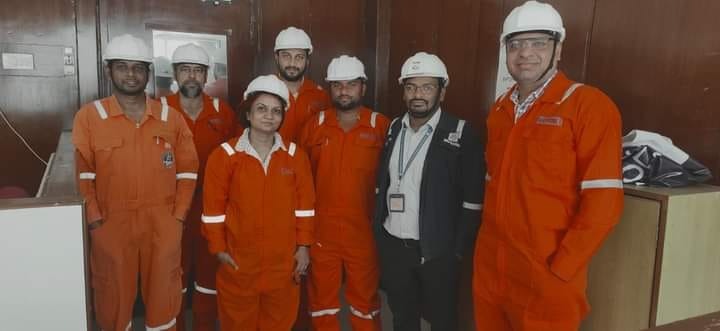
Even as a founder, she went into the field herself. Some people found this strange. The owner, in full field gear, on-site with the engineers?
“I went always with them. So that anytime they should not fail and nobody could point a finger at a lady.”
She understood the game. She played it on her own terms, but she played it. And over time, the sceptics stopped.
The Project She Walked Away From
Here is the moment that tells you everything about who Dr Sharmilee Pal Sarkar is.
A client came to JSES needing certification on plant equipment. JSES assessed the equipment. The condition was bad. Certifying it would mean signing their name to the claim that it was safe to operate. It was not. If something went wrong, people could get hurt.
She said no. JSES walked away from the project.
The client was not happy. In the email, she told him directly:
“Maybe today you are feeling bad. But definitely, you will remember me as an honest person. Not as someone who works as per your wish.”
She recounts this calmly, the way you talk about something you knew was right and would do again. There is no drama in it. She turned down money, and a client relationship, and perhaps a referral or two because her name on a document means something, and she was not going to let it mean something dangerous.
This is what JSES is built on. Not reputation. Not awards. The willingness to lose a project before losing your principles.
Motherhood and Sunday Classes
Sharmilee has a daughter sitting her Class 10 board exams this year. She has tutored her herself, from the beginning, with no outside help. She does not believe in softening the edges of what her daughter will face.
“I told her: your period may come during your exam. You have to be mentally prepared. With that pain, you have to do your best. The exam date is not going to change for you.”
This is not harshness. This is love translated into preparation. Sharmilee knows exactly what her daughter will encounter in a technical career, in a male-dominated industry, in a world that still, despite everything, asks women to prove themselves twice. She would rather her daughter be ready for it than surprised by it.
Every Sunday since 2004, she has also taught underprivileged students. Over two decades, and still going. She is a devoted follower of Swami Vivekananda, and when she talks to the girls in her Sunday classes, she gives them one consistent message:
“You are girls. You have to be better than boys. Don’t take any reservation. If you take reservation, you cannot say you are better.”
She is against reservations, full stop. Not because she doesn’t see the obstacles, she sees them clearly, names them without flinching, but because she believes the fastest way to be taken seriously is to be undeniably good. Reservations, in her view, hand the sceptics a reason to discount you. Excellence doesn’t.
Just Treat Us Like Colleagues
Ask Sharmilee what needs to change for more women to enter manufacturing and engineering, and she gives you a two-part answer. The industry needs to fix the basics. And women need to hold themselves to a standard.
On the industry side: she has visited plants with no women’s washrooms. She has seen core engineering responsibilities handed to male colleagues by default, with women quietly sidelined into support roles and then told they lack field experience. She has watched industries use “no female staff” as an excuse not to build proper facilities, and then use “no facilities” as an excuse not to hire female staff.
“We need the same responsibilities as male colleagues, to prove ourselves. If they keep giving field work to men only, how will women ever build that experience?”
But she is equally direct about what women need to bring. Not excuses. Not expectations of comfort.
“First thing: be financially independent. Otherwise you cannot make decisions as per your own wish. And when you are in core engineering and you are in the field — be there. Fully. Don’t expect a chair-and-table job in a field role. You have to prove we can do it.”
And her request to male colleagues, which she repeats on every platform she gets:
“Just treat us as colleagues. Don’t treat us as females first. Don’t give us reservation. Don’t give us special treatment. Just give us the chance to show our quality of work.”
What Fighting Gives You
Sharmilee is 45. She admits that when she was younger, she used to cry sometimes. She would look at friends who had easier lives, simpler careers, fewer battles, no lone-founder nights, and wonder why her path had to be so hard.
She does not feel that way anymore.
“Now, after 45, I think: Oh my God, they don’t have anything because they didn’t fight. I got my confidence because I already fought a lot.”
JSES is entirely hers. Every decision, every client, every project she took and every project she refused. No co-founder. No safety net. Just a metallurgist from Bhilai who watched steel plant chimneys as a girl and decided she belonged in that world, even when the world wasn’t sure about her yet.
She believes things will change for women in manufacturing. Not because the system is generous, but because women like her are not stopping.
“Within five to ten years, there will be a big change. I strongly believe this. But it should be a positive change. Not taken as granted, but earned.”
She ends with the line she lives by:
“If you are not getting the chance to fight, you are not getting the chance to learn.”
Dr Sharmilee Pal Sarkar has been fighting since Bhilai. She is still learning. And she is still winning.