For years, manufacturing competitiveness was measured by familiar metrics: cost, capacity and speed. Companies built global supply chains around regions that could manufacture at scale, optimise costs and deliver predictable lead times. This efficient model served the world well for decades. The last few years, however, have prompted manufacturers to rethink some long-held assumptions.
Another shift has been equally significant, though less often discussed. For years, supply chains were built around efficiency. Cost will always matter, but recent years have shown that resilience matters just as much. Manufacturers are looking beyond a single sourcing destination and building more diversified supply chains. The focus is not only on efficiency but also on ensuring operations can continue even when unexpected disruptions arise. Electronics companies are expanding beyond East Asia, automotive manufacturers are strengthening regional supplier ecosystems across Europe, North America and Southeast Asia, and many global OEMs have embraced a China Plus One strategy to avoid heavy dependency on a single country. The direction is clear: companies want supply chains that are not only efficient but also better prepared for disruption.
We’ve seen how the pandemic, component shortages, and logistics disruptions uncovered vulnerabilities many businesses had never faced before. Supply chains optimised for efficiency suddenly struggled with uncertainty. The dependence on a single geography, no matter how efficient, carried risks that could no longer be ignored. What changed wasn’t just the supply chain. It was the way manufacturers began defining competitiveness.
Today, the conversation has moved beyond asking, “Where can we manufacture at the lowest cost?” Increasingly, the question is, “Who can manufacture consistently, maintain quality over time and remain dependable regardless of external disruptions?” That shift is redefining the role of automation.
For a long time, automation was viewed primarily as a productivity tool. It helped manufacturers improve throughput, reduce manual intervention and optimise production. Those advantages remain relevant, but I believe the real value of automation today lies in something far more fundamental: building confidence in the manufacturing process itself.
Automation Builds Trust Through Consistency
One thing that’s become very clear over the past few years is that customers are no longer buying products alone. They’re investing in confidence. Whether it’s an automotive component, an electronic assembly or an Active LED display, customers expect the same level of performance every time. They may never see the manufacturing process behind the finished product, but they certainly experience the outcome when consistency is compromised. That’s why manufacturing discipline has become just as important as manufacturing capacity.
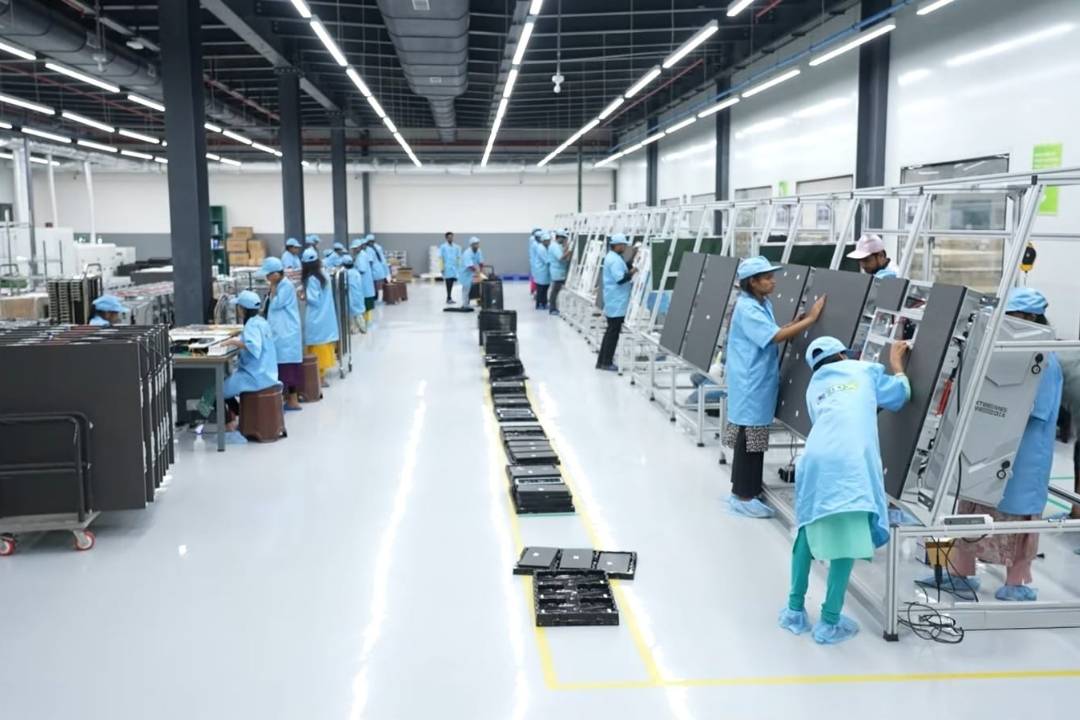
A modern production facility is expected to deliver repeatable quality across hundreds or thousands of units. That requires far more than skilled operators or advanced machinery in isolation. It demands manufacturing systems where every process is controlled, every stage is measurable, and every improvement becomes part of the production standard. For me, that’s where fully automated manufacturing creates long-term value.
The biggest advantage of automation isn’t simply speed. It’s that it allows manufacturers to build the same product with the same level of precision every single time. It improves process control, reduces variation and helps in maintaining consistent quality, even while the production volumes increase or customer requirements evolve. In today’s manufacturing environment, consistency has become a competitive advantage in itself.
When people talk about automation, the conversation often happens around speed or efficiency. In my experience, one of its greatest contributions is predictability. Customers want to know that the first product manufactured today and the thousandth product manufactured six months later will meet the same quality standards. Achieving that level of consistency requires disciplined processes rather than isolated quality inspections.
I’ve always believed that quality shouldn’t bank on identifying defects after production. It should be built into the manufacturing process itself. From precision assembly and process monitoring to automated inspection and validation, every stage becomes part of a system designed to minimise variation rather than simply detect it. This approach also strengthens resilience across the supply chain. When processes are better controlled, issues are identified much earlier, long before they affect the customer.
Increasingly, customers are also looking beyond the finished product. They want greater visibility into how products are manufactured, how quality is maintained and how consistently processes are followed. Traceability, process transparency and data-driven quality assurance are becoming integral to modern manufacturing because they provide customers with greater confidence in every product they receive. The result is a production environment that is not only more efficient but also significantly more dependable. Across global manufacturing, dependability has become one of the strongest differentiators any manufacturer can offer.
Technology Does Not Replace Manufacturing Expertise
One of the biggest misconceptions surrounding automation is that it reduces the importance of people. In my experience, the opposite is true. Machines excel at performing repetitive tasks with exceptional accuracy. They execute predefined processes consistently, regardless of production volume. But manufacturing has never been only about execution. Every successful manufacturing operation depends on engineering judgement.
People determine how products should be designed, how processes can be improved, how quality standards should evolve and how manufacturing systems respond to changing customer requirements. Automation enables those decisions to be implemented consistently, but it cannot replace the experience required to make them. The best manufacturing facilities recognise this balance.
Automation handles precision and repeatability. Now this allows engineers, production teams and quality specialists to focus on innovation, process optimisation and solving increasingly complex manufacturing challenges. Rather than replacing human expertise, automation enables people to spend more time improving the system instead of compensating for its limitations. I believe the future of manufacturing will belong to organisations that combine both strengths effectively.
Global supply chains are becoming more diversified, and that presents a significant opportunity for countries that can consistently deliver high-quality manufacturing. The gradual expansion of manufacturing by global companies, including Apple, into India reflects this broader shift towards diversifying production beyond a single geography and building more resilient supply chains. It also reinforces an important reality: manufacturing competitiveness today is driven not simply by labour costs but by highly automated, standardised production processes that can be replicated while maintaining consistent quality at scale. As manufacturers look for dependable long-term production partners, automation is becoming a key enabler of confidence, enabling processes to be transferred and scaled without compromising quality.
India already possesses many of the fundamentals needed to grasp this opportunity. “Our engineering talent pool is deep, domestic demand is growing and manufacturers’ appetite to invest in advanced production capabilities is on the rise. The next step is to strengthen manufacturing capability alongside manufacturing capacity. This means investing in automated production, but also in strong quality systems, talented people, supplier development and continuous process improvement. Together, these create confidence among global customers looking for dependable long-term manufacturing partners rather than simply alternative sourcing destinations.
Equally important is developing a broader manufacturing ecosystem. I don’t believe any single company can transform an industry on its own. Sustainable development is possible if the ecosystem is strengthened collectively by manufacturers, suppliers, technology providers, educational institutions and policymakers. As that ecosystem matures, India’s position within global supply chains will naturally become stronger.
The Future Will Belong to Trusted Manufacturers
I’ve always believed manufacturing has been about more than creating products. Today, it’s equally about creating trust. Customers expect far more than competitive pricing or production capacity. They want confidence that every product will meet the same standards, every delivery will uphold the same quality and every manufacturing partner will continue to perform reliably over the long term.
Fully automated manufacturing plays an essential role in meeting those expectations because it enables precision, repeatability and process discipline at a scale that modern supply chains demand. However, automation is not the destination. It is one part of a larger manufacturing philosophy built on engineering excellence, continuous improvement and an unwavering commitment to quality. The manufacturers that do succeed will not necessarily be those that produce the greatest volumes as global supply chains keep evolving. These are the ones that will always win customer confidence with reliable products, disciplined processes and the ability to deliver the same quality every time.
Automation is changing manufacturing, and it will continue to do so. But what customers remember is whether you deliver every single time. They want consistent quality, reliable execution and partners they can trust for the long haul. That’s what develops long-term relationships, and that’s what will be important as manufacturing continues to grow.