Coating plays a critical role in the world of manufacturing. From cutting tools that shape metal parts to moulds used in plastic injection systems, the surface characteristics of components determine their durability, performance, and lifecycle. In the last two decades, High Power Impulse Magnetron Sputtering (HiPIMS) has emerged as a leading method for advanced surface engineering, offering improvement in coating quality that traditional techniques struggle to match.
Indian toolmakers mustn’t lag when it comes to gathering more knowledge concerning the HiPIMS technology. After all, the Indian manufacturing sector directly contributes 25% to the Indian GDP, while the tool-making industry contributes 10%.
So, if Indian toolmakers aim to compete globally, understanding HiPIMS will help them to stay ahead. Now that German companies like CemeCon are expanding in the Indian market, the chances of the Indian tool business and manufacturing industry achieving new heights are no longer a dream.
What Is HiPIMS?
HiPIMS is a technical advancement of a coating process called sputtering, used to deposit films of material onto surfaces in a controlled vacuum environment. HiPIMS delivers very short, high-power pulses that create a plasma with a high density of ionised particles, allowing for more precise control of the coating process. This results in a dense, smooth, and strongly adherent coating.
Why HiPIMS Matters in Manufacturing?
The market share of cutting tools with functional coating increased from 67% to 86% in the past two decades. Now, that’s quite a surge. The reason is simple. Surface coatings enhance wear resistance, hardness, thermal stability, and corrosion resistance, extending tool life and increasing productivity. HiPIMS excels because it produces coatings with a denser microstructure than traditional physical vapor deposition methods.
Several industries require high precision, where HiPIMS coatings can significantly reduce tool wear and thermal degradation, enhancing product quality and reducing tool replacement costs.
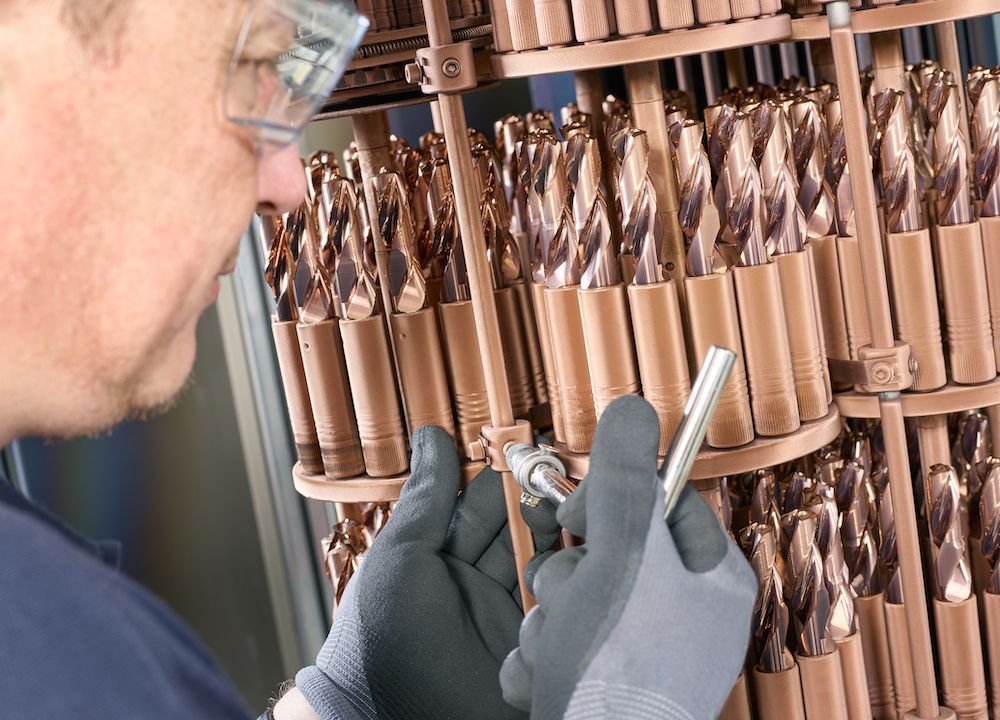
Moreover, with HiPIMS, one can uniformly apply a coating even on complex geometries, such as drill bits, milling cutters or micro-tools with intricate features, where traditional coatings often fail to reach adequately.
Advantages Of HiPIMS Over Traditional Coating Techniques
The differences between HiPIMS and traditional coating have significant practical impacts on manufacturing outcomes:
- Superior coating quality and adhesion: HiPIMS generates a highly ionised plasma, and atoms are driven onto the surface with more energy, resulting in stronger bonding and a denser microstructure than what conventional DC magnetron sputtering can achieve.
- Enhance tool performance: A dense coating means hardness and improved resistance to heat and wear. Thus, improving the tool performance while making it ideal for demanding and challenging tasks.
- Reduced thermal load: With the pulsed nature of HiPIMS, applying coating at lower substrate temperatures and reducing heat-related distortion in sensitive tools become smoother.
- Versatility across materials: HiPIMS can help deposit a wide range of materials, including titanium aluminium-nitride and aluminum-chromium nitride, which are popular for wear-resistance coatings.
HiPIMS Around the Globe and In India
HiPIMS is gaining traction worldwide in sectors where high-precision coatings are directly proportionate to performance, such as automotive machines, aerospace components, and electronics manufacturing. Research is also exploring new applications such as optical thin films and advanced functional surfaces for biomedical and energy technologies.
In India, the machine and the tooling industry are the cornerstone of the manufacturing ecosystem. Yet, the tooling segment in India still faces structural challenges. Many MSMEs struggle with limited access to advanced technologies, outdated machinery, and, of course, a lack of investment. Therefore, there is a rapid adaptation of high-end processes, like HiPIMS. No wonder German company CemeCon’s presence in India is becoming so significant. After all, when it comes to modern, sophisticated, cutting-edge technology, built-in process knowledge for premium coating, combined with highly qualified and skilled human power, nothing beats CemeCon’s CC800® HiPIMS, making them the manufacturer’s first choice.
What Indian Toolmakers Need to Know?
Indian toolmakers must understand that HiPIMS represents a transformative technology that enables previously impossible manufacturing capabilities. First, HiPIMS coatings offer more consistent tool performance, especially when machining difficult materials.
Second, HiPIMS technology can create multi-purpose coatings that work effectively across various materials. Solutions like MultiCon® can machine everything from soft to hard materials, including stainless steel, cast iron, and aluminium. This versatility reduces the need for multiple specialized tools, lowering production costs.
Third, to remain competitive globally, Indian manufacturers must invest in understanding and implementing this technology now. Leading Indian precision tool manufacturers are already incorporating HiPIMS technology into their production processes. This technological adoption aligns with India’s push toward self-reliance in advanced manufacturing.
Finally, toolmakers should explore strategic partnerships with coating technology providers like CemeCon, who has been offering CC800® HiPIMS on an industrial scale for 10 years. These collaborations can provide access to specialized knowledge and equipment without requiring massive upfront investments. As India’s manufacturing sector grows more sophisticated, particularly in automotive, aerospace, and medical industries, such partnerships will become increasingly valuable for maintaining competitive advantages.
By embracing HiPIMS coating technology, Indian toolmakers can deliver higher-quality products with extended tool life, positioning themselves effectively in the global precision manufacturing market.