
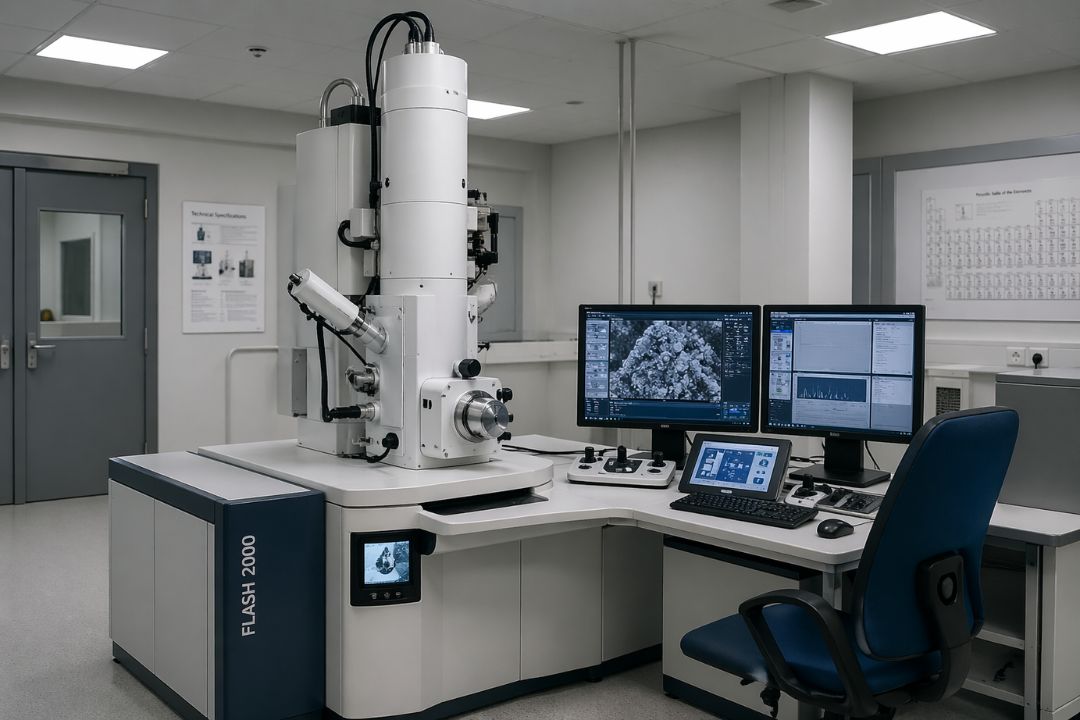
India has an abundance of scientific equipment but has a lack of ownership. This is a distinction that is easily overlooked and explains how our high-quality laboratories often do not deliver on their full potential. India has developed a great deal of scientific infrastructure across multiple institutions over the last 10 years, the first phase of which (creating the infrastructure) has largely been completed. The second phase (operating that infrastructure as a system) is now where the gap exists.
The parts exist in the system but do not integrate to form a high-performing system. The equipment is not broken, the system is broken. The system appears to be in place; you can see it from the outside: there are operators, booking/usage portals, maintenance contracts, and certified facilities. However, once we look deeper at how these parts of the system are functioning, small disconnects lead to the accumulation of the following:
– Equipment exists but is not always available for access and use by multiple people.
– Booking/usage systems exist; however, usage is not always consistent or predictable, leading to under-utilisation of the bunker/s.
– Capacity exists in scientific and technological resources, yet it is very rarely shared with those who are not located in close proximity to the hub of utilisation).
– Certification exists; however, there is currently no mechanism for demand aggregation.
Individually, the different parts work effectively as independent systems. However, collectively they do not form a high-performing system. This is not a funding issue or a technology issue, but a design issue and an accountability issue.
The structural gap
The structure gap today has responsibilities across different roles:
- Scientist doing research
- Operators managing how equipment gets used
- Vendor repairing equipment
- Administration keeping track of compliance
However, there is nobody that has ultimate responsibility for overall performance.
There is nobody that has accountability for the following questions:
- Why is the instrument not running at full capacity?
- Why can it only be accessed from one department?
- Why isn’t there any industry using it?
- Why is downtime not accounted for?
If performance is split between individuals, then performance becomes optional.
The Chief Equipment Officer case
A Chief Equipment Officer (CEQO) is needed in publicly funded laboratories across India. The CEQO will be a performance owner, not just another layer of administration. The mandate is simple but not easy: Each major instrument will continue to operate as an efficient, dependable and usable system; no matter when or where it is used.
The CEQO will combine the different forms of operation that exist today. The first approach involves improving operational discipline by managing and maintaining uptime and through better and more efficient maintenance and calibration.
By implementing predictive maintenance plans where possible and by implementing round-the-clock accessibility wherever possible. While at the same time improving the utilisation of all major instruments by converting bookings into actual scheduled usage and reducing idle time.
- Opening access nationally and across multiple institutions.
- Treating unutilised capacity as a loss and quantifying it.
- Creating value through the following methods:
- Structuring access for MSMEs, industry, and startups.
- Positioning facilities as service platforms when appropriate.
- Establishing predictable engagement rather than usage that is ad hoc.
The shift from assets to a portfolio model.
Scientific Infrastructure is a portfolio.
- Some instruments are in high demand and can provide revenue.
- Some instruments are both strategic and vital to research.
- Some instruments have been underutilised but could be revived.
Therefore, the need to develop a new way of understanding how to manage scientific infrastructure through:
- Improving utilisation (where there is demand)
- Protecting strategic capability
- Reviving/redeploying dormant assets
This way of thinking is/should be, routine for systems that perform well; however, it is currently not part of laboratory management.
Discipline we have abdicated
For example in aviation, power, and manufacturing sectors, performance of assets is tracked on a continual basis.
- Downtime is visible.
- Efficiency is measurable.
- Accountability is established.
However, the scientific infrastructure has not yet been subject to the same level of discipline, though it is as important as the above, but it has never been constructed with a single point of accountability. The CEQO model addresses that gap.
- This will not be a Request for More Money
- It will be a Request for More Clarity
- A single point of accountability
- Clear, measurable performance
- A system to monitor uptime, usage and access
With the above in place, many current inefficiencies will start to be corrected.
The Next Phase
India has invested in building the backbone of its science and technology infrastructure. The next question is whether we will be equally serious about HOW we will govern this. By developing a national policy with clear accountability (Chief Equipment Officer model), we will fundamentally change the performance of this framework. Not by adding layers of complexity, but rather by removing layers of ambiguity.
Ultimately, the distinction between having a piece of machinery (or tool) and having an integrated system that delivers service is NOT a question of the technology in the items involved. It is a question of accountability.







