

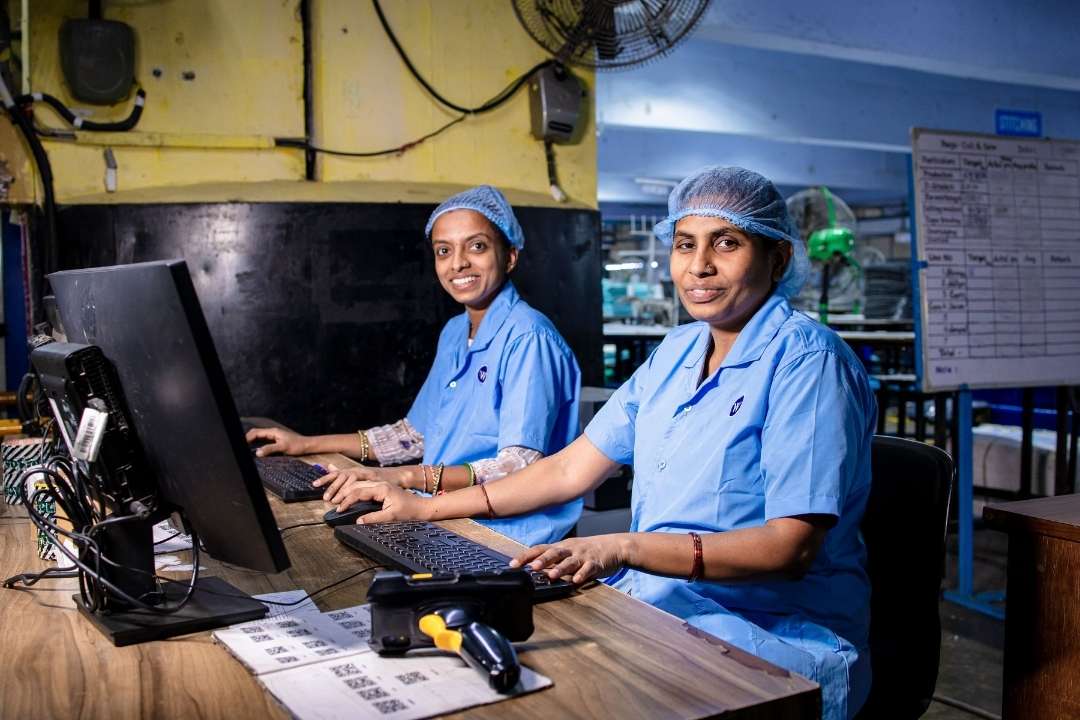
The Udaiti Foundation has released a new report highlighting the need to increase women’s participation in India’s pharmaceutical manufacturing sector as the industry prepares for its next phase of expansion. Titled Gender-Smart Manufacturing: A Leadership Playbook for Building Inclusive Shopfloors, the report presents practical recommendations for companies to create more inclusive manufacturing workplaces and bridge the gap between the growing pool of qualified women professionals and their limited presence on factory shopfloors.
The report notes that while women account for over 38% of the talent pipeline in the pharmaceutical sector, they represent only around 12% of the manufacturing workforce. Based on discussions with industry leaders, factory workers and field visits across pharmaceutical manufacturing clusters, the playbook outlines strategies that companies can adopt to improve recruitment, retention and career growth for women in manufacturing roles.
India’s pharmaceutical industry is expected to reach a market size of nearly USD 130 billion by 2030. Supported by government initiatives such as the Rs. 10,000 crore Biopharma SHAKTI scheme and the Production Linked Incentive (PLI) programme, the sector is projected to add more manufacturing capacity over the next five years than it did during the previous decade. The report says this expansion presents an opportunity to build a more diverse and inclusive workforce from the outset.
Pooja Sharma Goyal, Founding CEO of The Udaiti Foundation, said India’s pharmaceutical industry has built a strong global reputation through quality, precision and operational excellence, yet women continue to remain underrepresented in manufacturing roles. She noted that the share of women employees in NSE-listed pharmaceutical companies has increased from 8% to 12% over the past five years, but overall participation on manufacturing shopfloors remains low. According to the report, although nearly three-fourths of hiring managers identify gender diversity as a priority, only a small proportion have well-defined strategies to achieve those goals.
The report recommends action across three key areas. The first focuses on recruitment and skill development. It states that hiring practices and social barriers often limit women’s entry into manufacturing roles. The playbook highlights initiatives such as Dr. Reddy’s Laboratories’ SMT Programme, which provides technical education and hostel facilities for local women candidates, and Cipla’s Neev Programme, which combines technical training with paid work opportunities. The report notes that women accounted for 34% of participants in the programme during 2023-24.
The second area addresses retention and career progression. Marriage, maternity and caregiving responsibilities continue to affect workforce participation, especially when supported by inflexible work schedules and limited managerial support. The report highlights programmes such as Hindustan Unilever’s Partnership Workshops, which have helped improve employee engagement and significantly reduce attrition through stronger workplace support systems. It also cites Dr. Reddy’s bridge programmes that enable women to move from packaging and quality roles into production operations.
The third pillar focuses on workplace infrastructure and organisational culture. According to the report, many factory environments continue to be designed around traditional workforce models, limiting opportunities for women. Examples include Tata Motors’ Omega Line, where workstation redesign and semi-automation improved accessibility, and Good Business Labs’ STITCH programme, which reduced employee turnover by 15% while improving production line efficiency.
The Udaiti Foundation believes the lessons emerging from pharmaceutical manufacturing can also benefit sectors such as electronics, chemicals, auto components and food processing, where women remain underrepresented in core manufacturing roles. The report concludes that increasing women’s participation in industrial employment will play an important role in supporting India’s long-term economic growth and its vision of becoming a developed economy by 2047.
The Udaiti Foundation is dedicated to advancing women’s economic empowerment through three interconnected focus areas. The foundation collaborates with governments, industry and civil society organisations to improve women’s access to quality employment, support the growth of women-led enterprises, and strengthen infrastructure that promotes safe mobility and secure housing for women.









