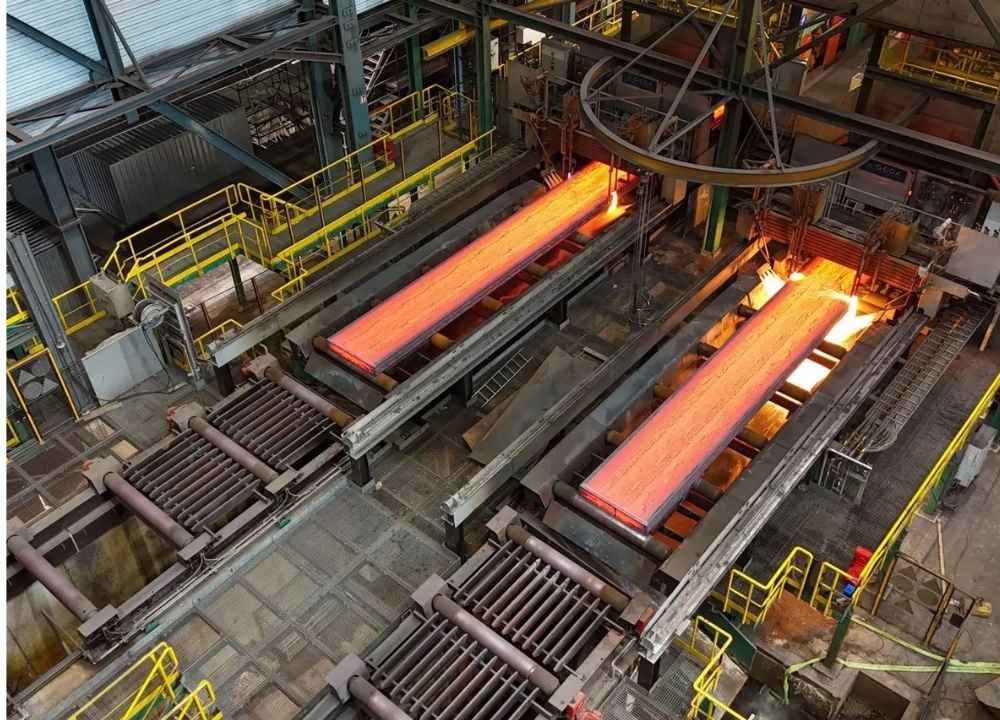
thyssenkrupp Steel has completed the modernization of continuous slab caster No. 4 at its Duisburg site in Germany, marking an important step in its strategy to expand production of premium steel grades. The company issued the final acceptance certificate for the upgraded caster in April 2026 following the successful completion of the project. The modernization has improved slab quality and production flexibility, allowing thyssenkrupp Steel to strengthen its offering of multi-phase steels, high-strength steels and materials for electric mobility applications.
The project separated the former combined casting and rolling line into two independent units. The continuous caster was upgraded while the hot-strip mill was modernized separately. This configuration is expected to improve utilization of upstream melt shop capacity, increase process flexibility and provide greater control over slab logistics and production.
Chris Lindner, Head of Upstream Operations at thyssenkrupp Steel, said the benefits of the new facility became visible during the early ramp-up phase. The initial results confirmed the plant’s ability to produce new steel grades and supported the company’s modernization plans.
The upgraded two-strand caster includes advanced mechanical and automation systems. These include the DynaWidth system for rapid slab-width adjustment and DynaFlex hydraulic oscillation technology designed to improve strand-surface quality. The Level 2 CC Optimizer automation system includes Dynacs 3D for controlling secondary cooling. The plant also features EcoStar Spiral rolls, which enable dry casting in selected sections of the caster. By reducing or eliminating spray cooling in these areas, the slabs can maintain a suitable temperature for direct rolling.
Direct charging of slabs can eliminate the need for reheating furnaces in appropriate production conditions, helping reduce energy consumption. Maintaining the correct temperature is particularly important for high-strength and high-silicon steels, which can be sensitive to cracking when processed outside their required temperature range. The modernization also reduces maintenance requirements by limiting secondary cooling in the horizontal strand containment area.
The project was completed under a demanding schedule while production continued at the site. Up to 1,000 workers were involved during peak construction periods. Several components were pre-assembled and tested before installation to reduce downtime and speed up commissioning. Olaf Meininghaus of Primetals Technologies said the project demonstrated the value of the long-standing cooperation between thyssenkrupp Steel and Primetals Technologies.
The upgrade forms part of thyssenkrupp Steel’s wider modernization programme. The company produces around 11 million tonnes of crude steel annually and employs approximately 26,000 people worldwide. It aims to produce five million tonnes of CO₂-neutral steel annually by 2030 and achieve climate-neutral production by 2045.