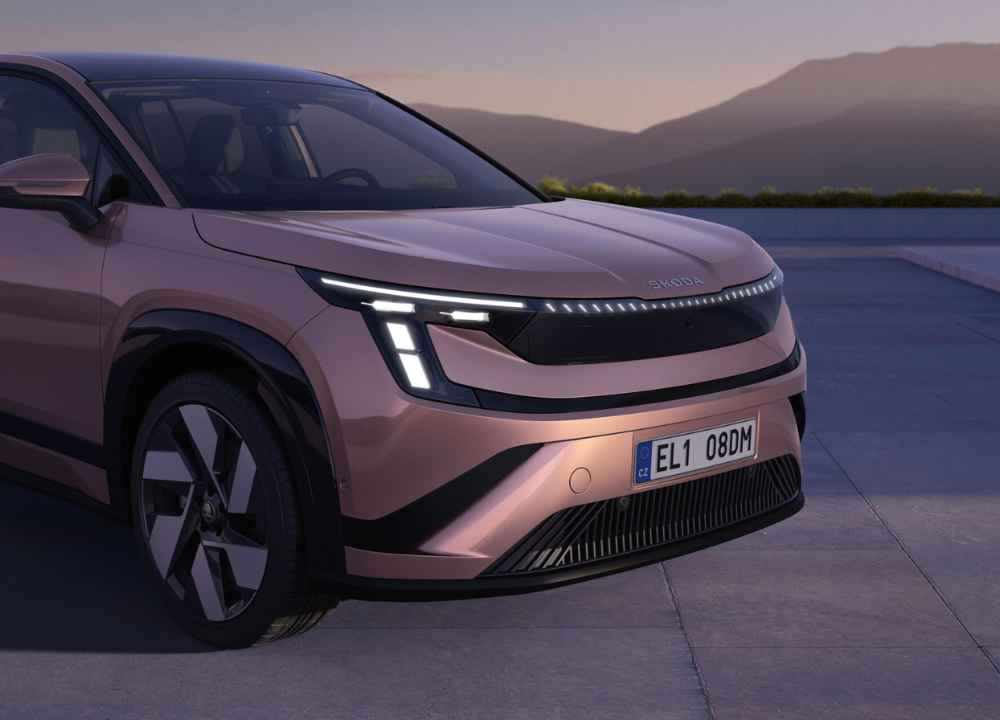
The all-electric Škoda Peaq has received a five-star safety rating from the European New Car Assessment Programme (Euro NCAP), following its evaluation under the organisation’s 2026 assessment protocol. The tested left-hand-drive Peaq Selection 90 achieved a score of 94% in Crash Protection, the highest recorded by Euro NCAP in this category. It also became the first model to receive full points for occupant protection across all assessed crash configurations.
The vehicle scored 92% in Post-Crash Safety, 78% in Crash Avoidance and 65% in Safe Driving. Škoda Auto Chief Development Officer Johannes Neft said the five-star result continues the company’s strong record in vehicle safety. He said safety had been a priority from the beginning of the Peaq’s development and that the rating reflected the expertise and work of the teams involved.
In Crash Protection, the Peaq received full points for occupant protection in offset frontal, full-width frontal, side mobile-barrier, side-pole and rear-impact tests. These assessments covered the driver, front passenger and rear occupants, as well as children aged six and 10 in the relevant configurations. The vehicle also performed well in tests assessing protection for vulnerable road users, including head, pelvis and leg impacts.
Both five-seat and seven-seat versions passed the child-seat installation assessment. They support i-Size and ISOFIX child restraints, as well as seat-belt-secured systems, in forward- and rear-facing configurations in the front and rear seats. The Peaq scored 92% in Post-Crash Safety. It received maximum points for providing four-page rescue sheets in 23 official EU languages and a 100-page emergency rescue guide in English, German, Spanish and French. Its airbag control unit includes an event data recorder, while the eCall system automatically shares information such as vehicle location, impact speed, impact type and the number of belted occupants with emergency services when restraint systems are deployed. A multi-collision braking system helps limit the severity of secondary impacts.
The vehicle also met thermal-propagation requirements for more than 20 minutes and passed the new submergence tests. Both front side windows remained operational for more than two minutes after the vehicle entered the water. In Crash Avoidance, the Peaq achieved 78% following assessments across approximately 1,000 test cases involving cars, powered two-wheelers, cyclists and pedestrians. These included frontal, lane-departure and low-speed collision scenarios.
The 65% Safe Driving score reflects features including occupant-size detection, which adjusts front-airbag deployment and seat-belt load-limiter force. An interior camera monitors seat-belt use and supports driver-attention and drowsiness assistance. The Peaq also received maximum points for its haptic buttons and voice controls, which reduce reliance on the touchscreen for driving, comfort and infotainment functions. Its Traffication app uses cloud-based communication to alert drivers to local hazards.
Euro NCAP is a consortium of transport ministries, motoring organisations, insurance associations and research institutes from several European countries. Established in 1997 and based in Leuven, Belgium, it conducts independent safety assessments of new vehicles.