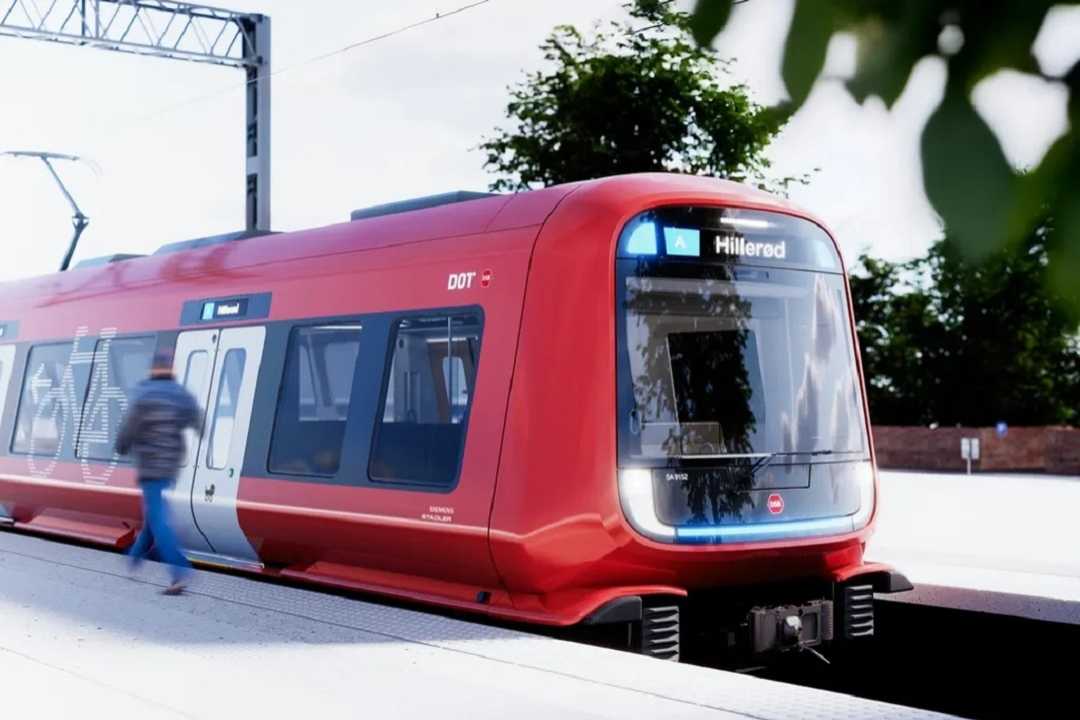
Danish State Railways (DSB) has awarded a framework contract to a consortium consisting of Siemens Mobility and Stadler for the delivery of 226 fully automated four-car trainsets for Copenhagen’s S-Bane suburban rail network. The agreement also includes an option for up to 100 additional trains and is valued at approximately three billion euros.
The project will create the world’s largest open railway system operating with automated train technology. Siemens Mobility will lead the consortium and will provide key electrical and control components including propulsion systems, braking technology, onboard power supply, train control systems, passenger information systems, and bogies. Stadler will manufacture the train carbodies, supply the couplers, install interior fittings and seating, provide air-conditioning systems and doors, and carry out final assembly of the vehicles.
Michael Peter, Chief Executive Officer of Siemens Mobility, said the project represents a major step in modernizing Copenhagen’s public transport system. He added that the consortium will supply not only the trains but also advanced digital solutions such as Railigent X and an air-free brake system designed to improve operational efficiency and sustainability.
The new train fleet will support a significant modernization program for the S-Bane network, which has operated for more than 90 years. By introducing fully automated train operations, DSB plans to increase service frequency and expand capacity across the network.
During peak hours, trains will operate at intervals of up to seven and a half minutes per line, while central sections of the network will see trains arriving as frequently as every one and a half minutes. The higher frequency will increase departures on several routes by as much as 35 percent and is expected to accommodate up to ten million additional passenger journeys each year. In 2025, the S-Bane network carried approximately 111 million passengers.
Each train will be approximately 56 meters long and will provide seating for 120 passengers along with 36 folding seats and space for around 300 standing passengers. The design emphasizes accessibility and passenger comfort, with level boarding through sliding steps, wide aisles, and spacious entry areas to improve passenger flow during busy periods.
Flexible interior spaces will allow passengers to store bicycles, wheelchairs, and prams, while seating areas with tables will accommodate commuters who need workspace during travel. Modern passenger information systems, improved ride stability, and reduced noise levels are also expected to enhance the travel experience.
The trains will incorporate Siemens Mobility’s air-free braking technology, which reduces system weight and lowers carbon emissions by more than 50 percent by replacing traditional pneumatic systems with a more efficient design. In addition to the rolling stock contract, DSB has signed a 30-year technical support and spare parts agreement with the consortium, with options to extend the arrangement by two additional five-year periods. The agreement includes digital maintenance tools, cybersecurity services, and predictive monitoring platforms intended to improve reliability and long-term fleet performance.
Siemens Mobility is also responsible for upgrading the 170-kilometer S-Bane network with advanced signaling technology that will enable fully driverless operations. The automation program will be introduced in phases beginning in 2030, with full automation expected by 2033.
Siemens Mobility, a separately managed company of Siemens AG, has been advancing intelligent transport solutions for over 175 years. Its portfolio includes rolling stock, rail automation, electrification, turnkey systems, and digital solutions that enhance passenger experience and ensure lifecycle value. In fiscal 2024, Siemens Mobility reported revenue of €11.4 billion and employed around 41,900 people worldwide.