

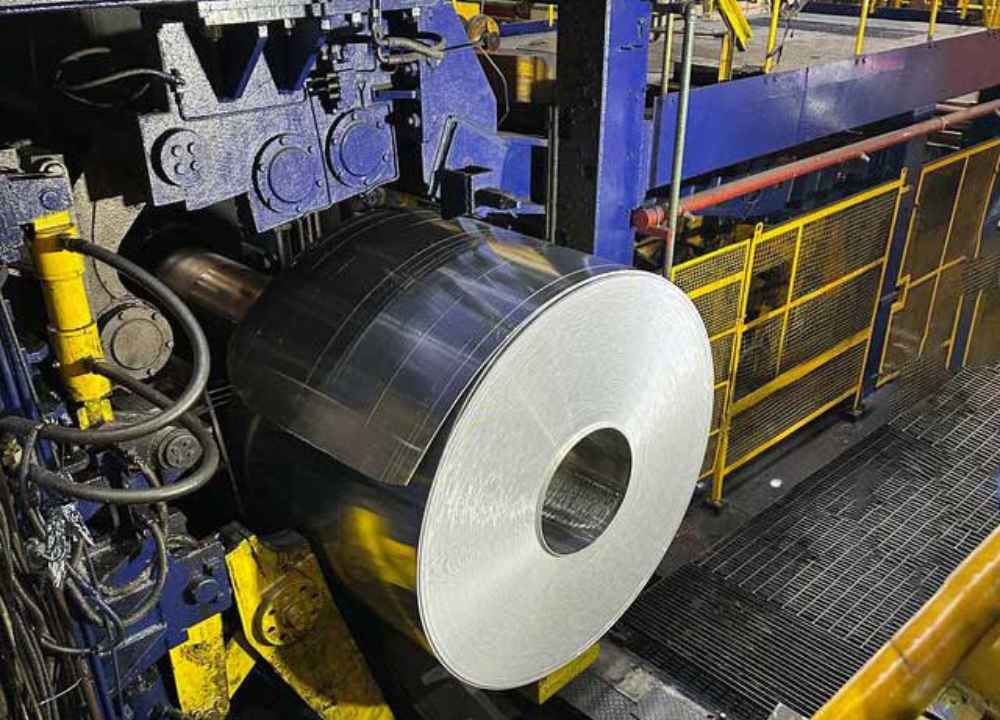
Primetals Technologies has completed the installation and commissioning of a new trimmer chopper unit at an aluminium hot mill in India. The customer has signed the Final Acceptance Certificate (FAC), formally confirming the completion of the project. The modernisation was designed to improve edge trimming, scrap handling and the processing of wider aluminium strips. The new equipment has been integrated into the existing exit table arrangement and adapted to fit the current foundation, eliminating the need for additional foundation modifications.
This approach helped shorten the installation period and reduce the shutdown time required for the hot mill line. It also limited additional capital expenditure by allowing the new system to use the existing infrastructure. The project included a new edge trimmer and a separate chopper system. The edge trimmer comprises two moving cutter heads mounted on a fabricated base plate designed to fit the existing foundation. Each cutter head extends across the material width, allowing the system to process wider aluminium strips and meet future production requirements.
The equipment also supports off-centre trimming through remote adjustments by the operator. This feature allows the trimming position to be changed without requiring physical modifications to the equipment, providing greater flexibility during production. The separate chopper system cuts the trimmed scrap into smaller pieces during the rolling process, making it easier to collect and recycle. Working together, the trimmer and chopper systems are designed to produce consistent trimmed edges while supporting efficient scrap disposal.
According to the project specifications, the Primetals Technologies trimmer system can process aluminium strips ranging from 1,000 mm to 2,200 mm in width. The trimming line has a maximum strip cutting speed of 539 metres per minute. The system is designed to handle aluminium alloys from the 1xxx, 2xxx, 3xxx, 5xxx, 7xxx and 8xxx series. Its ability to accommodate different alloy groups and strip widths provides flexibility for a range of production requirements.
The installation forms part of the ongoing modernisation of aluminium processing facilities, where manufacturers seek to improve product quality while making efficient use of existing infrastructure. By adapting the equipment to the current mill layout, the project addressed production requirements without extensive structural changes.
The customer’s signing of the Final Acceptance Certificate marks the formal completion of the installation and commissioning process. The upgraded system is intended to support the mill’s current operations while providing the flexibility to process wider products as market requirements evolve.








