

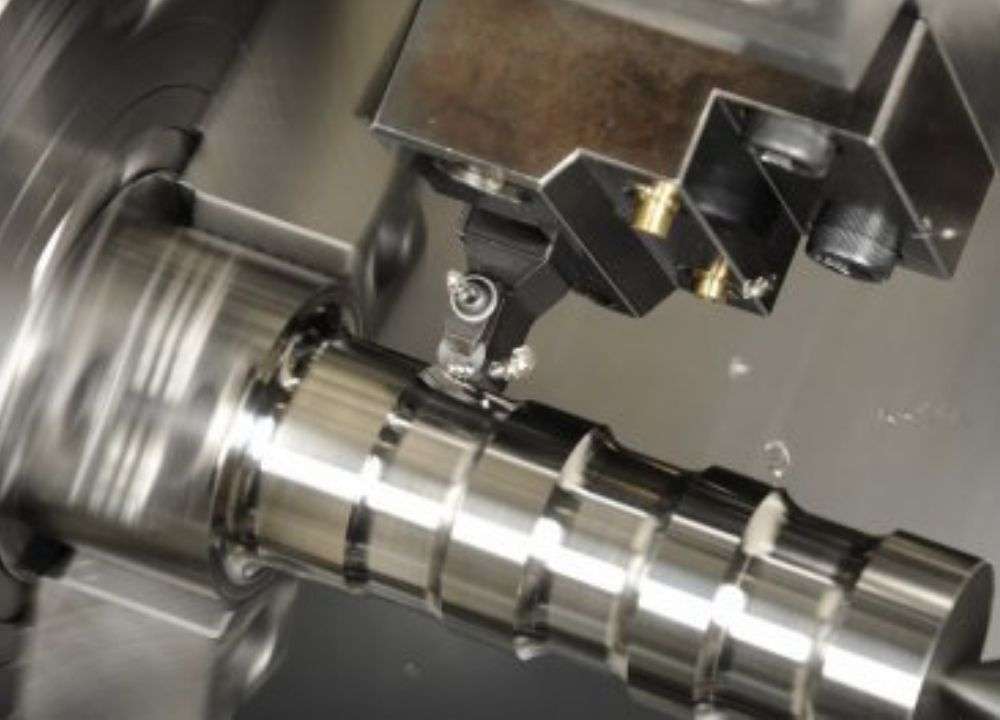
Ceramic machining requires manufacturers to rethink conventional cutting practices, particularly the long-established approach of reducing cutting speed when tool wear, instability or process challenges occur. NTK Cutting Tools, with decades of experience in ceramic cutting technology, highlights the importance of operating ceramic inserts within the cutting conditions for which they are designed.
Unlike carbide machining, where heat is generally treated as a major contributor to tool wear, ceramic machining can benefit from the high temperatures generated during high-speed cutting of heat-resistant superalloys (HRSA) and cast irons. In nickel-based alloys, rising temperatures can significantly reduce the material’s resistance to deformation. At around 800°C, the material begins to soften, making it easier to machine. Ceramic cutting materials, meanwhile, retain their hardness and wear resistance at temperatures that can rapidly degrade conventional carbide grades.
This creates a different relationship between heat, cutting forces and tool life. As the cutting zone becomes hotter, the workpiece can become easier to cut while the ceramic cutting edge maintains its strength. The result can be lower cutting forces, higher material removal rates and improved productivity.
For this reason, ceramic machining recommendations can involve cutting speeds that appear unusually high to operators accustomed to carbide tooling. A ceramic roughing application, for example, may require an increase in cutting speed from 250 m/min to 900 m/min. Reducing the speed significantly during initial trials can prevent the cutting zone from reaching the thermal conditions needed for the technology to perform effectively.
In one rough milling application on Inconel 718, increasing cutting speed from approximately 400 m/min to more than 1,000 m/min significantly reduced machining time while also producing lower wear than slower cutting conditions. However, successful ceramic machining involves more than simply increasing spindle speed. Machine rigidity, secure workholding and toolholding, minimal tool overhang and vibration-free conditions are critical. In milling, smooth tool paths and reduced interruptions help minimise impact loads on the cutting edge. In turning, stable engagement and consistent cutting conditions allow ceramic grades to operate effectively.
Coolant selection also depends on the application. Ceramic milling is typically performed dry because intermittent coolant can create thermal shock from repeated heating and cooling. In turning, coolant can often be used successfully because the cutting edge remains continuously engaged.
NTK Cutting Tools offers ceramic solutions for HRSA and cast iron applications, including SiAlON grades for high-speed HRSA roughing and grades developed for grey and ductile cast irons. The company’s ceramic portfolio is designed to help manufacturers achieve higher productivity and material removal rates where conventional carbide tooling may not deliver the required performance. The central principle is clear: when ceramic machining encounters difficulties, reducing cutting speed should not automatically be the first response. Process stability, rigidity and application conditions are often more important to achieving reliable results.








