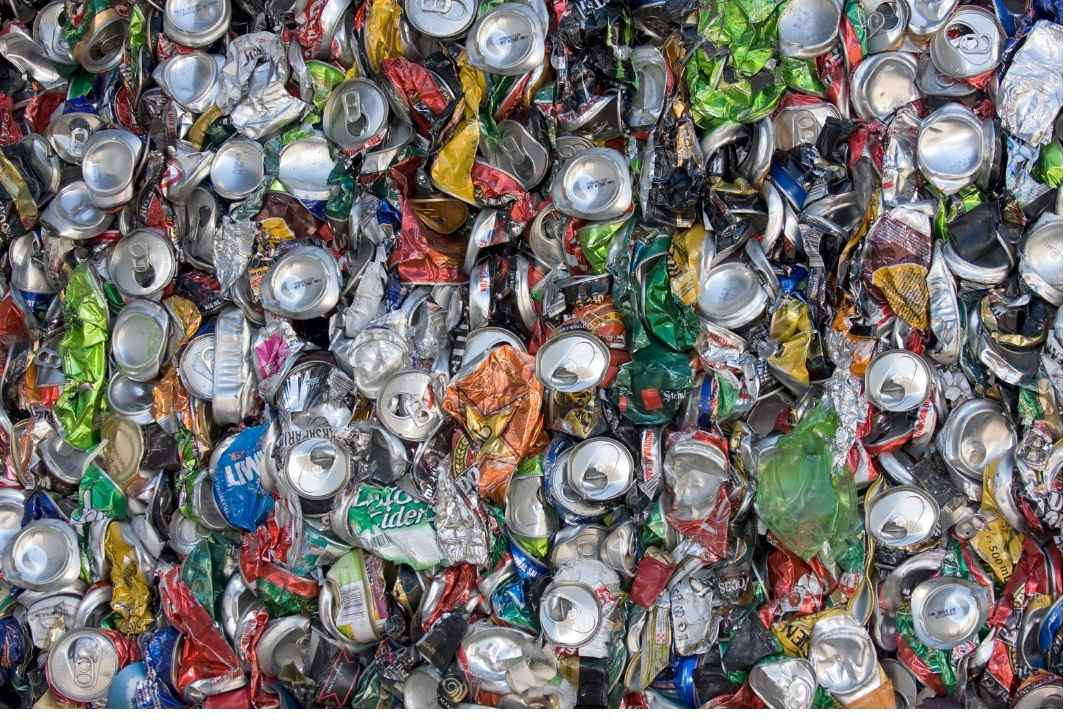
Calling for an urgent policy intervention to strengthen India’s aluminium recycling ecosystem and support thousands of MSMEs, the Material Recycling Association of India (MRAI) has urged the Prime Minister’s Office (PMO) to abolish the existing 2.5 per cent Basic Customs Duty (BCD) on aluminium scrap. The association said the duty has increased raw material costs for recyclers and downstream manufacturers despite the country’s continued dependence on imported aluminium scrap to meet industrial demand.
In its representation to the PMO, MRAI highlighted that India’s secondary aluminium production has grown from 0.85 million tonnes in FY16 to nearly 2.2 million tonnes in FY26 and now accounts for around 35 per cent of the country’s aluminium consumption. The sector supports nearly seven lakh jobs directly and indirectly, with women comprising almost 46 per cent of the skilled workforce engaged in sorting, segregation and processing.
India currently depends on imports to meet nearly 80–85 per cent of its aluminium scrap requirement, making uninterrupted access to imported scrap indispensable for sustaining domestic manufacturing and the growth of the recycling industry. MRAI also pointed out that aluminium scrap remains the only major base metal scrap that continues to attract import duty in India, whereas copper, zinc and lead scrap have already been exempted. Countries such as Thailand, Malaysia, Indonesia, Japan and South Korea permit duty-free imports of aluminium scrap, giving their recycling industries a significant cost advantage.
Sanjay Mehta, President, Material Recycling Association of India (MRAI), said, “India has a unique opportunity to emerge as a global hub for aluminium recycling and advanced material recovery. Removing the 2.5 per cent Basic Customs Duty on aluminium scrap will strengthen thousands of MSMEs, generate employment, improve resource security and enhance the competitiveness of downstream manufacturing. Aluminium scrap should be recognised as a strategic industrial raw material rather than treated as waste.”
He added, “Aluminium recycling is a globally accepted manufacturing practice that delivers products of better quality and performance as those produced from primary aluminium, while significantly reducing energy consumption and carbon emissions. Through rigorous processes of sorting, segregation, smelting and alloying, supported by skilled manpower and advanced technology, imported aluminium scrap is transformed into high-quality alloy ingots, billets, castings and other value-added products that conform to stringent domestic BIS and international standards.
These products are extensively used by leading companies across the automotive, engineering, steel and packaging sectors, including Tata Motors, Maruti Suzuki, Honda, TVS Motor, Tata Steel, JSW Steel. Their continued reliance on aluminium products manufactured from recycled scrap is the strongest testimony to the quality, consistency and reliability of India’s aluminium recycling industry.”
Dhawal Shah, Senior Vice President, MRAI, said, “It is important to recognise the growing strategic role of recycled aluminium in India’s industrial and sustainability agenda. India predominantly imports processed aluminium scrap and there has been no reported evidence indicating any significant influx of substandard material into the domestic market. Further he cautioned that several major aluminium scrap exporting regions, including the European Union, the United States, the GCC countries and parts of Africa, are increasingly adopting measures to retain aluminium scrap for domestic value addition. With nearly 80–85 per cent of India’s aluminium scrap requirement met through imports, ensuring uninterrupted access to this strategic raw material has become a matter of industrial competitiveness and resource security.
“In the previous Union Budget, the Government rationalised import duties on almost all ferrous and non-ferrous scrap categories, recognising the economic, environmental and employment benefits generated by the recycling industry, but aluminium scrap remained an exception. Recognising these concerns, the Ministry of Mines constituted a Joint Working Group (JWG) comprising representatives of the primary aluminium and recycling industries to examine, inter alia, the for removal of the existing 2.5 per cent Basic Customs Duty on aluminium scrap. At its meeting held on 17 June 2026, after detailed deliberations, the Group agreed that removal of 2.5% duty on aluminium scrap should be considered in the larger national interest.
Today, recycling is recognised globally as an indispensable pillar of critical minerals and resource security strategies. Aluminium scrap consumption across the automotive and transportation, construction and packaging sectors is growing at around 8.6 per cent CAGR, while domestic scrap availability continues to remain limited. Demand from foundries, rolling mills and extruders is expected to keep imports on an upward trajectory during CY2026. A balanced policy that considers the interests of all stakeholders while ensuring adequate availability of quality recyclable raw materials will best serve India’s long-term manufacturing objectives.”
Supporting the industry’s position, Mohan Agarwal, MRAI Member and Chairman & Managing Director, CMR Green Technologies Ltd, said Imported aluminium scrap remains an indispensable raw material for India’s recycling industry, as domestic scrap generation is presently insufficient to meet the rapidly growing demand from the automotive, construction, engineering and packaging sectors. With global OEMs increasingly prioritising low-carbon materials and ESG-compliant supply chains, demand for recycled aluminium is expected to grow. NITI Aayog’s Roadmap for Aluminium Sector Decarbonisation recognises recycled aluminium as one of the most effective pathways towards achieving India’s Net Zero 2070 goals and projects that secondary aluminium will account for nearly 45 per cent of the country’s aluminium demand by 2028. Compared to primary aluminium production, recycled aluminium consumes up to 95 per cent less energy and generates up to 90 per cent lower CO₂ emissions, making it a critical enabler of India’s low-carbon manufacturing transition.
MRAI Member Jayant Jain, Director, G R Metalloys Pvt Ltd, said Aluminium scrap should be recognised as a strategic raw material. The existing 2.5 per cent Basic Customs Duty creates an inverted duty structure whereby competing countries import aluminium scrap duty-free, undertake value addition and export finished aluminium products to India at preferential or nil duty under various FTAs. Removing this anomaly will strengthen domestic manufacturing, encourage investment in recycling, generate employment and support the objectives of Make in India and Atmanirbhar Bharat.
MRAI has requested the Government to remove the existing 2.5 per cent Basic Customs Duty on aluminium scrap (HSN 7602) and sought an opportunity to present its recommendations before the Prime Minister’s Office, stating that the reform would strengthen MSMEs, improve raw material availability and enhance the competitiveness of India’s aluminium recycling and downstream manufacturing sectors.