Mercedes-Benz has outlined further steps to advance decarbonisation and strengthen the circular economy across its business, including production, product development and supply chains. At its Sustainability Dialogue x Sustainability Update in Sindelfingen, the company presented greater detail on its CO₂ reduction pathway under Ambition 2039 and announced new initiatives to reduce emissions from key materials, particularly aluminium and steel.
Mercedes-Benz aims to reduce CO₂ emissions from its own production by 90%, emissions during the vehicle usage phase by 80%, subject to market conditions, and emissions across all relevant value chain stages by 70% by 2039, compared with 2019. Beyond 2039, the company intends to continue its reduction efforts and achieve net zero over the following decade. This means reducing emissions by at least 90% against 2019 levels and permanently neutralising the remaining emissions.
“Even under challenging market conditions, Mercedes-Benz places sustainability at the heart of its strategy, alongside resilience and competitiveness. With the increased transparency of Ambition 2039, we are highlighting new milestones on our decarbonisation path to translate sustainability into operational reality: tangible, measurable, and firmly embedded in our products. The latest example is our all-electric GLC, which has reduced its CO₂ emissions by around two-thirds compared to its non-electric predecessor,” said Olaf Schick, Member of the Board of Management of Mercedes-Benz Group AG, Integrity, Governance & Sustainability.
From 2027, the company’s sustainability strategy will focus on four areas: decarbonisation, circular economy, safety and people. Mercedes-Benz plans to increase the use of secondary raw materials to 40% within the next decade. It also plans to launch 14 all-electric vehicles between 2025 and 2027. Renewable electricity already accounts for all externally sourced electricity worldwide, while renewable energy covers 51% of total energy consumption at Mercedes-Benz Cars production sites and 39% at Mercedes-Benz Vans.
The company has achieved cumulative energy savings of approximately 570 GWh across its global production network over the past two years. In Germany, 20 wind turbines with a combined capacity of 140 MW are expected to begin generating electricity at the Papenburg test track by mid-2027. A long-term agreement with Iberdrola will also secure more than 140 MW of renewable electricity from the Windanker offshore wind farm from 2027. Together, these projects could meet approximately half of Mercedes-Benz’s annual electricity requirements in Germany.
To advance lower-carbon aluminium sourcing, Mercedes-Benz has joined the aluminium sector of the First Movers Coalition, committing to source at least 10% of its annual primary aluminium requirements in line with the coalition’s criteria by 2030. The company has also signed a binding, long-term offtake agreement with Hydro covering at least 10% of its primary aluminium requirements. The agreement provides for a phased reduction in the material’s carbon footprint to 3.5 kg CO₂e per kg by 2028 and 3.0 kg CO₂e per kg from 2030. It also includes Hydro CIRCAL, containing at least 75% post-consumer recycled material, with a footprint of no more than 2.0 kg CO₂e per kg. Its deployment is scheduled to begin in 2027.
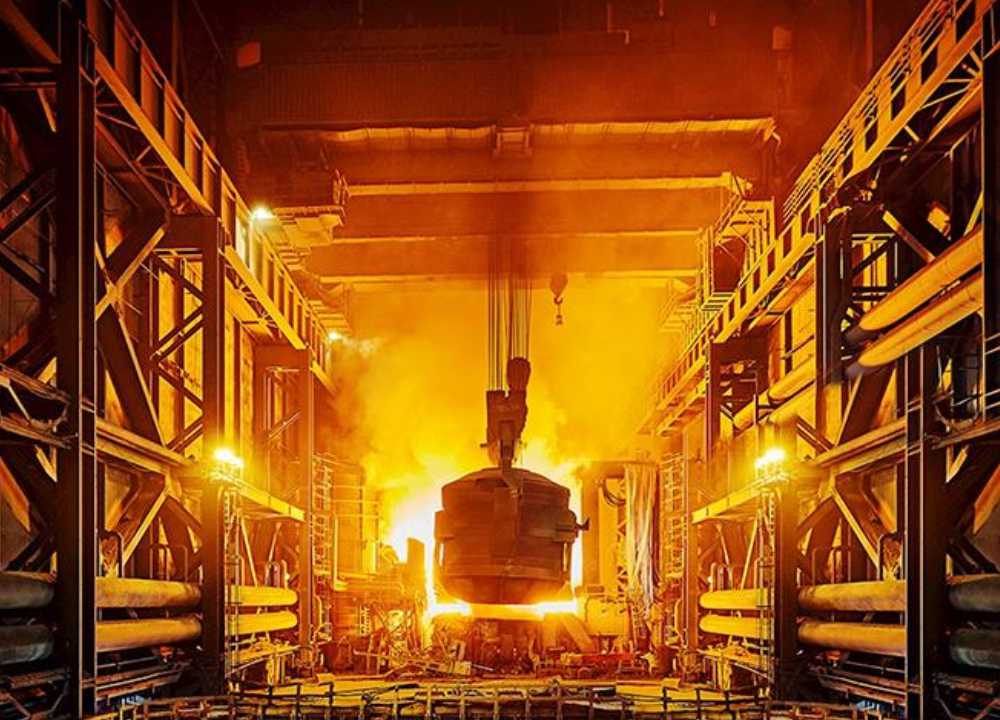
In steel, Mercedes-Benz has completed a pilot project involving Anglo American’s Kumba Iron Ore division and HyIron. Fine iron ore from South Africa’s Sishen mine was converted directly into reduced iron using hydrogen and HyIron’s rotary kiln technology. The material was subsequently used to produce steel and a demonstrator component for the Mercedes-Benz EQS. Following the successful technical demonstration, Mercedes-Benz and HyIron signed an MoU to advance validation towards industrial scaling.
The company said responsible sourcing, supply chain transparency and resource efficiency are central to strengthening its competitiveness and resilience. Its fourth raw materials report provides information on due diligence and traceability across 24 critical raw materials, with a particular focus on steel. The report is accompanied for the first time by an interactive “Transparent GLA” format showcasing 19 raw materials in selected components of the new GLA.