

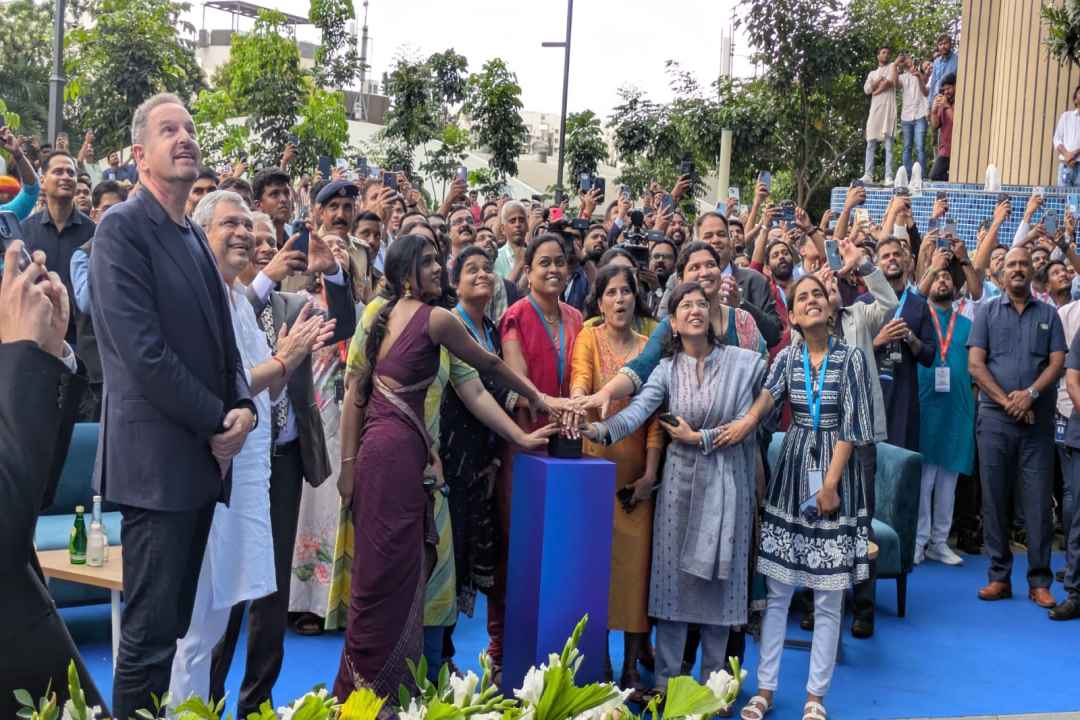
Union Minister for Railways, Information & Broadcasting, and Electronics & IT, Ashwini Vaishnaw, today inaugurated a new development centre of ARM in Bengaluru. The facility will focus on designing advanced semiconductor chips, including the cutting-edge 2 nanometre (nm) chips used in artificial intelligence servers, drones, and mobile phones.
During the inauguration, the Minister emphasized the strategic importance of this new centre. He stated that the chips developed here would be among the most sophisticated in the world, and would play a key role in powering next-generation technologies across multiple sectors. He called the event a major step forward in India’s journey toward self-reliance in semiconductor design and innovation.
Highlighting the country’s long-term vision for the sector, Shri Vaishnaw noted that the government’s aim goes beyond chip design alone. “Our objective is to create a complete semiconductor ecosystem—from design and manufacturing to developing the equipment and materials required,” he said. He added that Prime Minister Narendra Modi has laid out a roadmap that looks 20 years ahead, giving India’s engineers and youth an unprecedented opportunity to lead in this space.
The Minister also pointed out the sharp rise in demand for semiconductor chips, driven by the rapid expansion of electronics manufacturing. He noted that over the past 11 years, India’s electronics sector has grown six times and is now valued at ₹11.5 lakh crore. Exports have increased eightfold, making electronics one of the country’s top export categories.
What began as basic assembly of mobile phones and laptops has now expanded into designing components, developing complete products, and moving toward in-house production of critical elements. According to the Minister, this structured approach has helped India progress from assembly to innovation. As the global semiconductor industry moves toward the trillion-dollar mark, the need for highly skilled talent continues to grow. He highlighted that 278 academic institutions across India are currently involved in chip design education, and 28 chips from 25 of these institutions have already been successfully taped out.
Looking ahead, the next phase of India’s Semiconductor Mission will prioritize local production of the tools and materials essential for chip fabrication. Earlier in the day, Shri Vaishnaw met with industry representatives to discuss manufacturing of high-precision components required for semiconductor equipment. Carborundum Universal Ltd (CUMI) presented several advanced materials used in this area, underlining the growing collaboration between Indian manufacturers and the semiconductor ecosystem.








