In a significant milestone for India’s defence manufacturing drive, Defence Minister Rajnath Singh and Uttar Pradesh Chief Minister Yogi Adityanath jointly flagged off the inaugural batch of BrahMos missiles produced at the BrahMos Integration and Testing Facility in Lucknow on October 18, 2025. This advanced facility, part of the Uttar Pradesh Defence Industrial Corridor, was virtually inaugurated by the Defence Minister on May 11 this year. Within just five months, the unit has delivered its first operational consignment of missiles.
Speaking at the event, the Defence Minister described BrahMos as more than a weapon system—calling it a testament to India’s growing defence manufacturing capability. Equipped with high-precision targeting, a conventional warhead, and supersonic speed, the missile has become a key asset for the Armed Forces. “It combines speed, accuracy, and firepower, making it one of the most formidable missile systems globally,” he stated.
Highlighting the role of the missile in Operation Sindoor, Mr Singh noted that BrahMos has proven its effectiveness beyond the testing stage and now serves as a symbol of operational readiness and strategic reach. “Every part of Pakistan is now within range. The operation was a glimpse of what India is capable of. Victory is no longer an exception—it’s becoming a pattern,” he said.
He emphasized that India is now demonstrating its strength not only in safeguarding its borders but also as a reliable partner in global defence and technological cooperation. He cited exports to countries like the Philippines as proof that “Made in India” is no longer just a slogan, but a respected brand internationally. “India is no longer merely a consumer but an emerging contributor on the world stage. This aligns with our national goal of achieving full self-reliance and global leadership by 2047,” he added.
Mr Singh also revealed that in the past month alone, BrahMos Aerospace has signed defence export contracts worth nearly ₹4,000 crore with two foreign nations. The Lucknow facility, he said, is expected to generate an annual turnover of around ₹3,000 crore, along with ₹500 crore in GST collections, further contributing to both regional and national economies.
Built across 200 acres at a cost of ₹380 crore, the Lucknow centre is designed to produce up to 100 missile systems annually. Beyond its strategic significance, the facility is expected to serve as a major engine for economic growth and job creation in the region.
Commenting on global supply chain disruptions in the defence sector, Mr Singh stressed the importance of developing domestic capabilities for critical components. “We must ensure our supply chains are internal and robust—from seekers to propulsion systems—so that our manufacturing isn’t held hostage by foreign suppliers,” he said. He called for stronger integration of MSMEs into the defence manufacturing ecosystem and emphasized that the UP Defence Industrial Corridor can only succeed if smaller enterprises grow alongside major industry players.
Mr Singh noted that facilities like the one in Lucknow not only enhance India’s defence preparedness but also deliver economic benefits. “Every missile we manufacture generates taxes that can fund schools, hospitals, and public welfare programs. National security and economic development are advancing together,” he said.
Addressing the gathering, the Uttar Pradesh Chief Minister described the BrahMos missile as a symbol of India’s technological independence. He expressed gratitude to the Prime Minister and Defence Minister for selecting Lucknow as a hub for this cutting-edge project, calling it a major step toward self-reliance in defence. “The missiles made here assure not just security, but also prosperity,” he said.
He further reported that more than 15,000 youths have been employed across the six nodes of the Defence Industrial Corridor, underlining the project’s broader socio-economic impact. The BrahMos facility, he noted, is one of the corridor’s flagship achievements, handling full-scale assembly, integration, and testing entirely within India.
With this successful dispatch, Uttar Pradesh has established itself as a pivotal player in the “Make in India, Make for the World” campaign. The Lucknow unit is the first in the corridor to handle the full missile manufacturing lifecycle, bolstering both national defence capability and industrial growth.
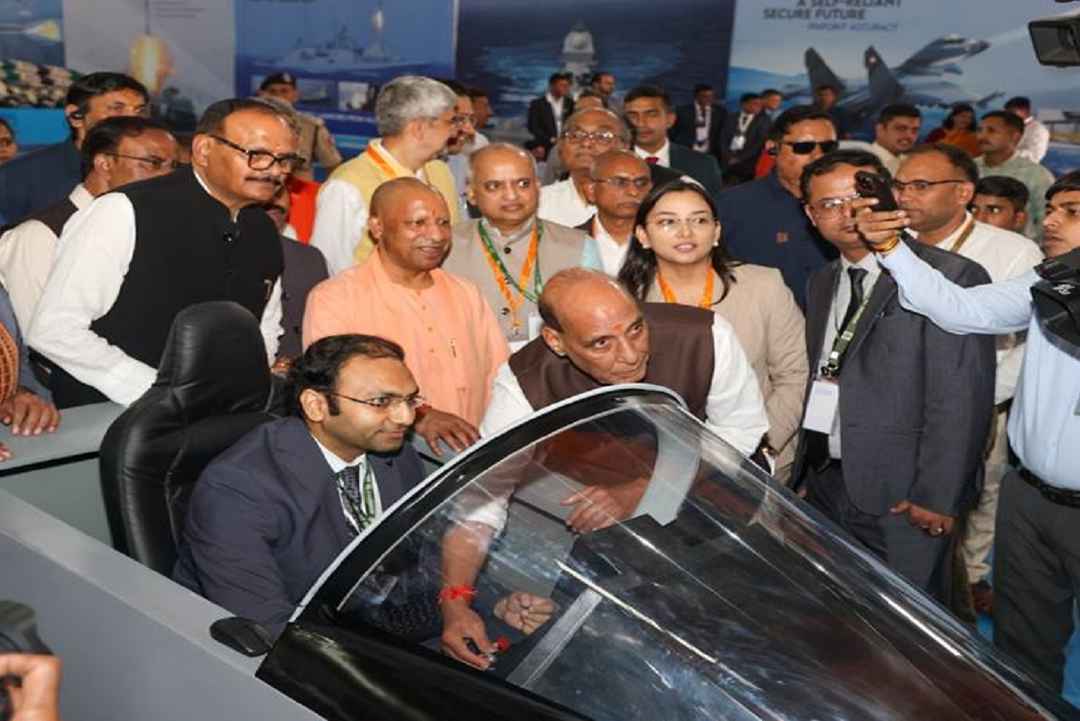
During their visit, Mr Singh and Mr Adityanath also inaugurated the Booster Building and observed a live demonstration of the booster docking process. They toured several key departments including Airframe and Avionics, Pre-Dispatch Inspection, Warhead Sections, and reviewed the BrahMos simulator system. The event also included a display of the mobile autonomous launcher, showcasing the technological sophistication of the facility.