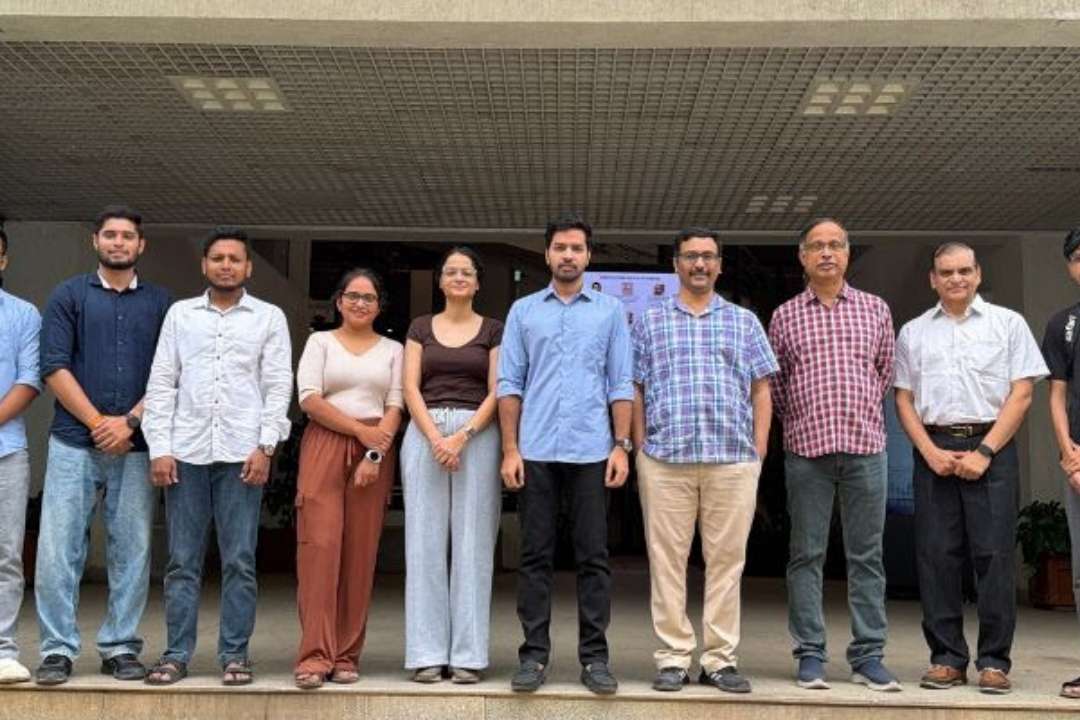
The Applied AI Research Centre (INAI) at the International Institute of Information Technology Hyderabad (IIIT-H) has developed an artificial intelligence-powered traffic enforcement system that is helping police identify traffic violations and generate e-challans more efficiently. The solution, named VIOLA, has shown encouraging results during its pilot phase and is expected to strengthen road safety through technology-driven enforcement.
India accounts for nearly 11 percent of global road accident fatalities, making road safety a major national concern. While better vehicles, stricter regulations and public awareness campaigns have improved safety standards, traffic violations continue to contribute significantly to accidents.
Recognising this challenge, INAI focused on using artificial intelligence to improve enforcement. According to Govind Krishnan, who leads translational AI initiatives for mobility at INAI, the causes of road accidents are already well understood. The priority now is to use technology to address these issues and improve compliance with traffic rules.
The VIOLA platform builds on earlier research conducted by Prof. Ravi Kiran S. from IIIT-H’s Centre for Visual Information Technology (CVIT), whose work on AI-based helmet detection formed the foundation of the project. INAI’s applied AI team expanded the technology by adding advanced traffic violation detection capabilities and converting it into a deployable solution for law enforcement agencies.
The initiative draws insights from INAI’s iRASTE (Intelligent Solutions for Road Safety through Technology and Engineering) programme, undertaken in collaboration with government and industry partners. The study identified poor road infrastructure and unsafe driving practices, including riding without helmets, triple riding, wrong-side driving and dangerous overtaking, as major contributors to road accidents.
Unlike conventional traffic enforcement systems that depend on fixed CCTV cameras, VIOLA uses low-cost dashcams installed inside police patrol vehicles. Each patrol vehicle is equipped with four dashcams costing around ₹8,000 to ₹10,000 each. As the vehicles carry out their routine patrols, the cameras record traffic movement across a much wider area than fixed surveillance systems.
The recorded footage is processed using AI models that detect traffic violations, identify vehicle registration numbers through Automatic Number Plate Recognition (ANPR), and prepare digital evidence. The verified cases are then forwarded to the Telangana Police’s existing e-Challan system. Before any challan is issued, every violation is reviewed by police personnel to ensure accuracy. This human verification process ensures that artificial intelligence serves as a decision-support tool while final enforcement authority remains with the police.
According to the project team, the pilot has delivered promising results. Nearly 96 percent of the AI-generated violations submitted to the police have been approved after verification. The system has also become one of the leading contributors to e-challan generation for the Telangana Police within a short period.
The research team believes that deploying the system across a larger fleet of patrol vehicles could significantly expand traffic monitoring without the need for costly fixed infrastructure. Since the solution integrates with the existing e-Challan platform, it complements current enforcement methods rather than replacing them.
INAI is now working to enhance VIOLA by adding features such as vehicle speed detection and identifying road infrastructure issues, including potholes, damaged roads and missing lane markings. The expanded capabilities are expected to support both traffic enforcement and road maintenance, contributing to safer roads through data-driven decision-making.