Hindustan Zinc Limited (BSE: 500188 | NSE: HINDZINC) has restored 1,105 hectares of land, an area equivalent to more than 1,500 football fields, as part of its ongoing work on land rehabilitation, plantation and biodiversity conservation. The company has been restoring mining and operational areas through land reclamation, plantation, biodiversity development and sustainable land-use practices. These activities form part of Hindustan Zinc’s Sustainability Goals 2030 and its efforts to manage the environmental impact of its operations.
Amarendu Prakash, CEO, Hindustan Zinc, said, “The future of mining will increasingly be defined not only by the resources we produce, but by how responsibly we manage the natural resources entrusted to us. At Hindustan Zinc, rehabilitation, water stewardship and decarbonisation are integral to the way we operate and grow. As we scale our business, our focus is to ensure that growth and environmental responsibility move together, backed by measurable outcomes, technology and long-term action.”
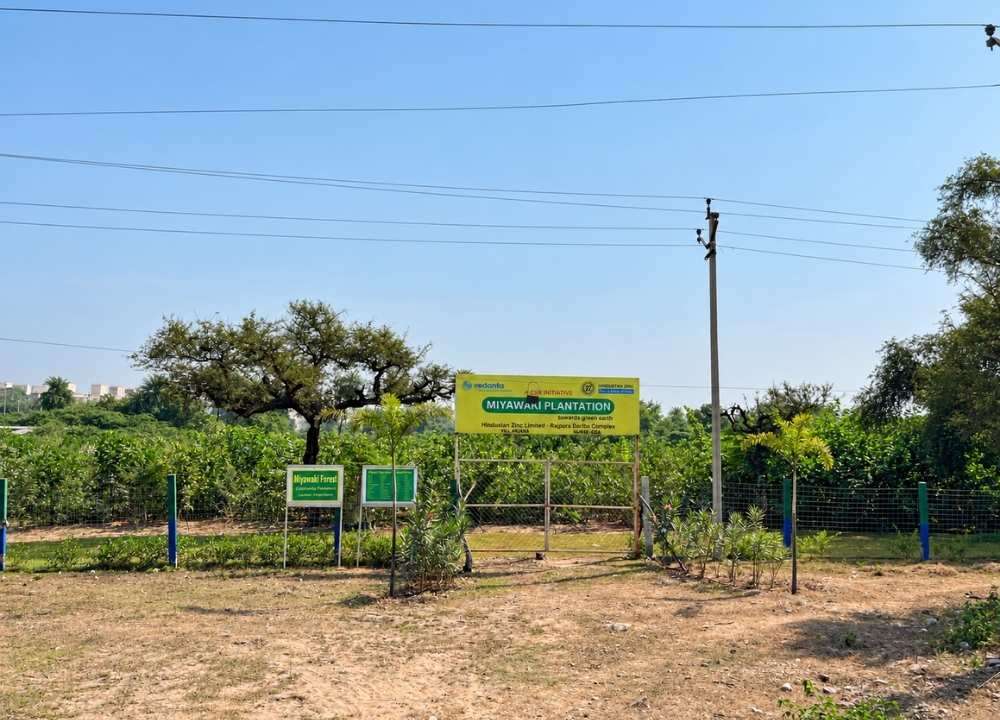
As part of its plantation and ecological restoration work, Hindustan Zinc has planted 8.5 lakh saplings since 2020, including 1.14 lakh saplings in FY26. The company has developed Miyawaki plantations at Rajpura Dariba, Chanderiya, Debari and Kayad. Its Green Zawar programme also promotes plantation and environmental awareness among nearby communities.
Hindustan Zinc has partnered with The Energy and Resources Institute (TERI) for a 250-hectare ecological restoration project at the Chanderiya Lead-Zinc Smelter Complex in Rajasthan. The project includes rehabilitation of a 22.5-hectare Jarofix yard and development of natural forest areas.
Water management is another part of the company’s environmental programme. Hindustan Zinc is a certified 3.32 times Water Positive organisation, compared with 2.41 times earlier, and follows Zero Liquid Discharge practices across its operations. Operating in water-stressed areas of Rajasthan, the company meets more than 30% of its water requirement through treated sewage. Under its Sustainability Goals 2030, Hindustan Zinc aims to reduce freshwater consumption by 50% from its 2020 baseline and use 100% low-quality water for its smelting operations.
The company is also increasing the use of renewable power. Renewable energy accounted for approximately 18% of its power consumption in FY26, and Hindustan Zinc is targeting 70% renewable power by FY28. The target is supported by a 530 MW renewable Power Delivery Agreement.
Hindustan Zinc’s climate targets include reducing Scope 1 and 2 emissions by 50% and Scope 3 emissions by 25% by 2030, compared with its 2020 baseline. The company is working towards achieving Net Zero emissions by 2050 or sooner. Hindustan Zinc has also launched EcoZen, a low-carbon zinc product with a reported carbon footprint 75% lower than the global average.
The company has been recognised as the world’s most sustainable metals and mining company by the S&P Global Corporate Sustainability Assessment for three consecutive years. In 2025, Hindustan Zinc became the first Indian company to join the International Council on Mining and Metals (ICMM).
Hindustan Zinc Limited, a Vedanta Group company, is the world’s largest integrated zinc producer and among the top 10 silver producers globally. The company supplies products to more than 35 countries and has around 74% share of India’s primary zinc market.
Hindustan Zinc has a focus on zinc, lead and silver production and is working on energy transition, water management, land restoration and community development. Its social initiatives reach approximately 2.6 million people. The company is also developing low-carbon products and renewable energy solutions as part of its environmental programmes.