

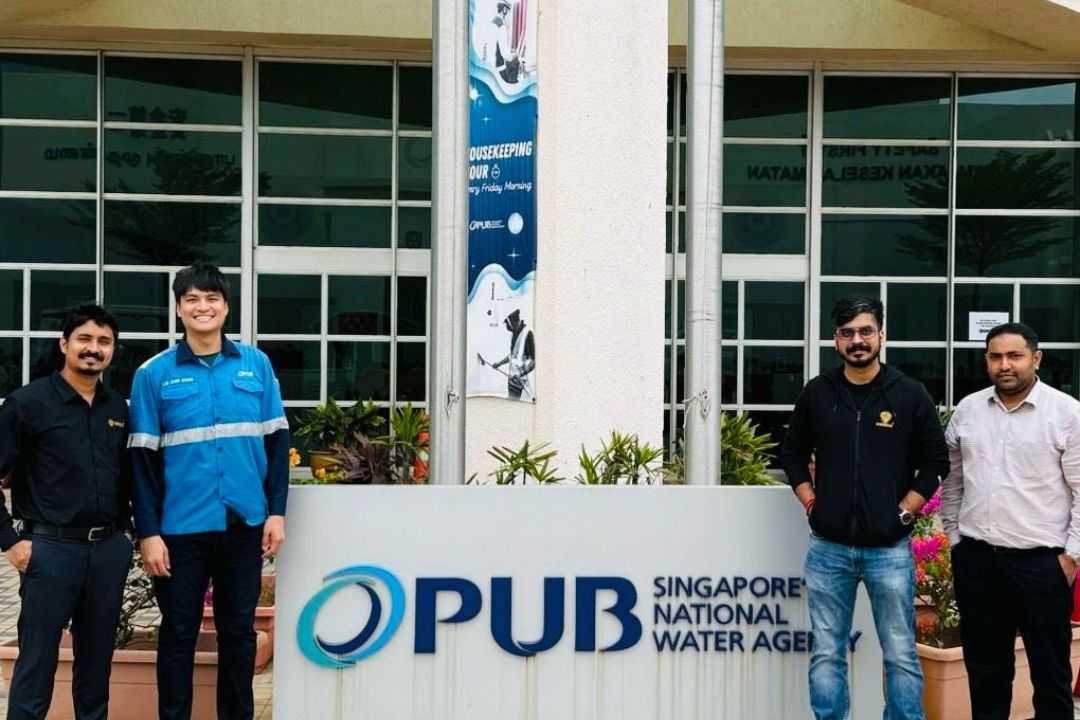
Genrobotics, an Indian deep-technology company known for developing robotic solutions for hazardous infrastructure work, has secured a major contract from Singapore’s national water agency, PUB. The agreement marks a significant international achievement for the company, which was selected after a competitive global evaluation that included more than 600 participating firms.
The contract was awarded following a detailed technical assessment conducted by a government-appointed expert panel. The evaluation process reviewed engineering capabilities, operational performance and the ability of the technology to function reliably in demanding environments. Genrobotics’ robotic systems will now be deployed in Singapore’s sewer and water management network, supporting the city-state’s efforts to strengthen urban infrastructure maintenance and worker safety.
The selection highlights the growing global recognition of Indian engineering and robotics innovation. Genrobotics’ solutions were assessed on their precision, durability in hazardous environments and ability to support data-driven infrastructure management. The company’s platforms are designed to operate in toxic or confined spaces where manual intervention can be dangerous, allowing essential maintenance tasks to be performed safely and efficiently.
Vimal Govind M K, Chief Executive Officer and Co-Founder of Genrobotics, said the contract represents a major milestone for the company and for India’s robotics sector. “Securing this project in competition with more than 600 international firms demonstrates the global competitiveness of robotics technology developed in India,” Mr Govind said. “Our systems are built to operate in the most complex and hazardous environments. Singapore’s decision to adopt our technology reinforces the reliability and performance of our platforms in critical infrastructure operations.”
Singapore becomes the latest addition to Genrobotics’ growing list of international markets. Since 2022, the company has maintained a national-level collaboration with Indah Water in Malaysia. It has also expanded operations in the United Arab Emirates, South Africa and the United Kingdom, supporting infrastructure maintenance and automation projects.
In India, the company’s robotic systems are deployed across 23 states and more than 100 cities. Genrobotics currently serves over 140 clients globally, and this extensive operational experience has helped refine its robotic platforms for high-reliability applications.
The company has developed a diversified robotics ecosystem aimed at addressing several global challenges, including labor shortages, aging infrastructure and increasingly strict safety regulations. Its work spans three key areas.
The first area focuses on mechanized sanitation and clean technology. Genrobotics gained global recognition for Bandicoot, the world’s first robotic scavenger designed to eliminate the need for humans to enter hazardous sewer systems. In Singapore, the company’s technology will be used for robotic sewer inspection and cleaning, supporting real-time monitoring and efficient water infrastructure management.
The second vertical involves healthcare robotics. Genrobotics is developing robotic systems designed to assist rehabilitation and clinical care, responding to the rising demand for technology-enabled healthcare solutions in aging populations.
The third area centers on industrial automation in hazardous sectors such as oil and gas. These robotic platforms are designed to operate in dangerous industrial environments where automation can significantly reduce risks to human workers.
Although sanitation robotics remains the company’s primary revenue generator, its healthcare and industrial automation segments are experiencing increasing institutional adoption. From its early focus on eliminating manual scavenging through the Bandicoot platform, Genrobotics has expanded into a broader robotics ecosystem addressing multiple high-risk applications.
The company currently holds six granted patents in India and has more than 21 patent applications pending. Its technology development strategy emphasizes rugged, cost-effective robotics designed specifically for hazardous and mission-critical environments, reinforcing its commitment to engineering solutions under the “Make in India” framework.








