FLIR is highlighting an integrated approach to data center reliability that combines perimeter security, electrical equipment monitoring, thermal inspections and rack-level temperature management. For data center operators, operational risks can emerge at multiple points across a facility. A security breach at the perimeter, overheating electrical equipment or rising temperatures in high-density computing racks can all threaten uptime if problems are not detected early.
FLIR said thermal imaging can help operators identify developing issues across different parts of a data center and provide maintenance teams with information needed to take preventive action. At the perimeter, thermal imaging can detect people and vehicles in complete darkness without relying on visible lighting. A layered security system can combine radar with thermal and visible-light cameras to detect, verify and track activity.
FLIR’s R-190/R-290 radar systems can identify movement around the perimeter, while FH-Series bi-spectral cameras and Elara DX-Series thermal and visible PTZ cameras can provide visual verification and tracking. These systems can be connected through FLIR Latitude VMS, giving security and operations teams a common view of detected events. FLIR Nexus can further connect sensors and systems across the site.
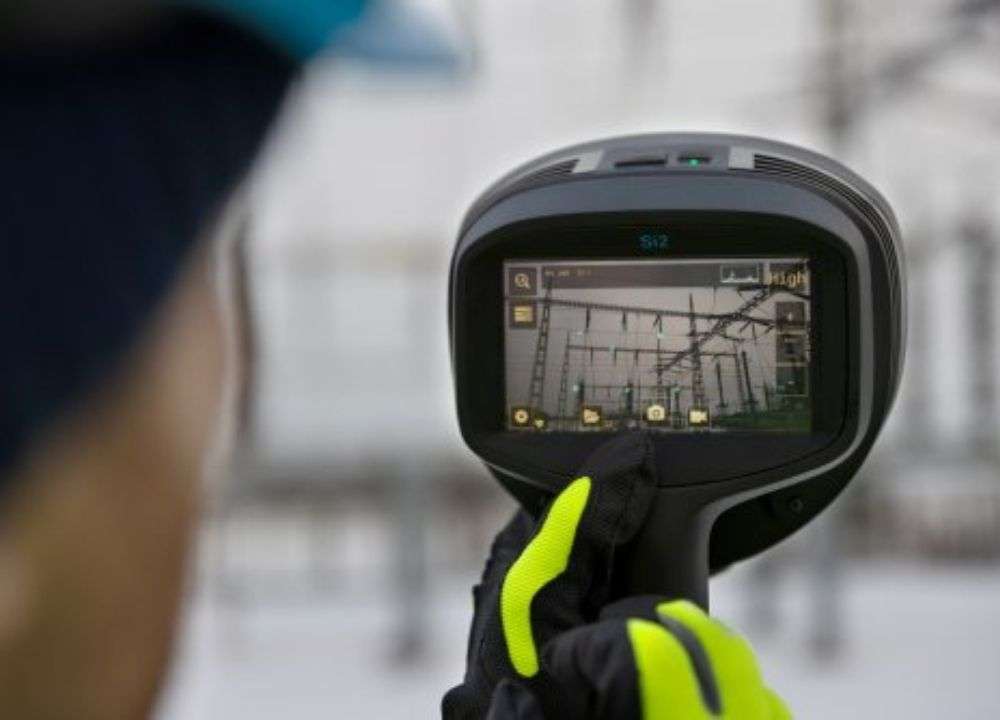
The approach extends to electrical infrastructure. Data center substations and transformers are critical to continuous operations, making early detection of abnormal temperatures important. Fixed radiometric thermal cameras can monitor transformers, electrical connections and other energized equipment continuously.
Thermal monitoring can identify unusual heat patterns associated with deteriorating connections or other electrical problems before they result in equipment failure. Maintenance teams can then investigate and schedule corrective work before an issue develops into an unplanned outage.
Inside data halls, thermal monitoring becomes increasingly important as computing workloads grow. GPU-intensive systems can consume substantially more power than conventional server racks, generating higher levels of heat in smaller areas. FLIR said fixed thermal monitoring can provide visibility between scheduled maintenance inspections. Handheld thermal cameras can then be used for detailed examination when a potential problem is identified.
Tools such as the FLIR i65 and Assetlink software can support route-based inspections, documentation and analysis. Reference images can help maintenance teams compare thermal conditions over time and identify changes that may require attention. Infrared windows can also allow technicians to inspect energized electrical equipment while maintaining appropriate safety practices.
FLIR noted that security and operations teams often purchase thermal technologies separately because they work with different budgets. However, the risks addressed by these systems are closely connected because both security incidents and equipment failures can ultimately affect data center uptime.
The company said bringing these capabilities into a broader reliability strategy can provide operators with better visibility across the entire facility, from the perimeter and substations to electrical infrastructure and high-density data halls. With data center capacity expanding and computing demands increasing, FLIR said early detection, continuous monitoring and coordinated response will become increasingly important for maintaining reliable operations and reducing the risk of costly interruptions.