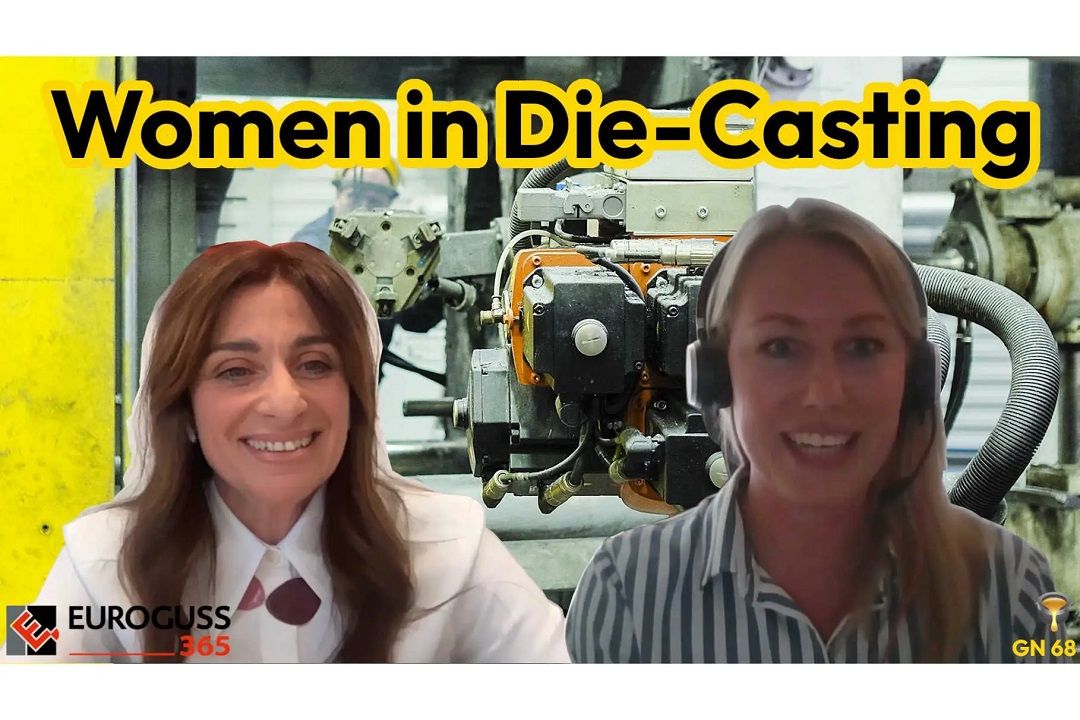
A notable shift in the die-casting sector is gaining momentum, highlighted during EUROGUSS 2026, where the inaugural “Women in DieCasting” session exceeded expectations with nearly 50 attendees, including a significant number of male participants. The strong turnout reflects a broader industry recognition: diversity is no longer optional—it is central to future competitiveness.
Speaking on the Goldcasting podcast, Isabel Jeschek, Director of Market Strategy & Communications at Handtmann, emphasized that the initiative was designed to address leadership as a whole, rather than a specific group. “This is not about representation alone; it is about equipping leadership teams with the range of perspectives needed to navigate change,” she noted.
Tiziana Tronci, CEO and Head of New Products Development at Gefond Srl, reinforced this perspective. She highlighted that diversity extends beyond gender to include varied professional backgrounds, experiences, and ways of thinking. According to Tronci, organizations that embrace this broader definition are better positioned to innovate and adapt.
The urgency behind this shift is driven by structural changes within the industry. Europe’s automotive sector, a key customer base for die-casting, has experienced sustained decline since the pandemic, with limited prospects for recovery to previous levels. At the same time, internal data indicates that machine utilization in some operations has dropped to around 50 percent, signaling intensifying competition for reduced demand.
Industry leaders stress that relying on traditional approaches is no longer sufficient. Instead, companies must explore new markets, rethink business models, and accelerate innovation. Diversity, in this context, is viewed as a practical enabler of fresh ideas and strategic flexibility.
Ms Tronci’s own experience illustrates this impact. Transitioning into the family business after a career in fashion and communications, she introduced new perspectives that helped expand Gefond’s portfolio into predictive maintenance software, opening opportunities beyond conventional casting markets.
Ms Jeschek added that diverse teams foster more rigorous decision-making. While such discussions may take longer, they often produce stronger outcomes, particularly in periods of uncertainty. “The best decisions emerge when different viewpoints are actively considered,” she said.
Both leaders agree that meaningful change requires commitment from the top. Investment in people, skills, and forward-looking strategies must accompany technological advancements. As the industry undergoes transformation, diversity is increasingly recognized as a critical leadership capability shaping long-term resilience and growth.