Covestro (India) has contributed ₹43.24 lakh to the Cuddalore District Administration to support two community development initiatives focused on water conservation and solid waste management. The projects aim to address pressing environmental and sanitation needs while delivering long-term benefits to local communities.
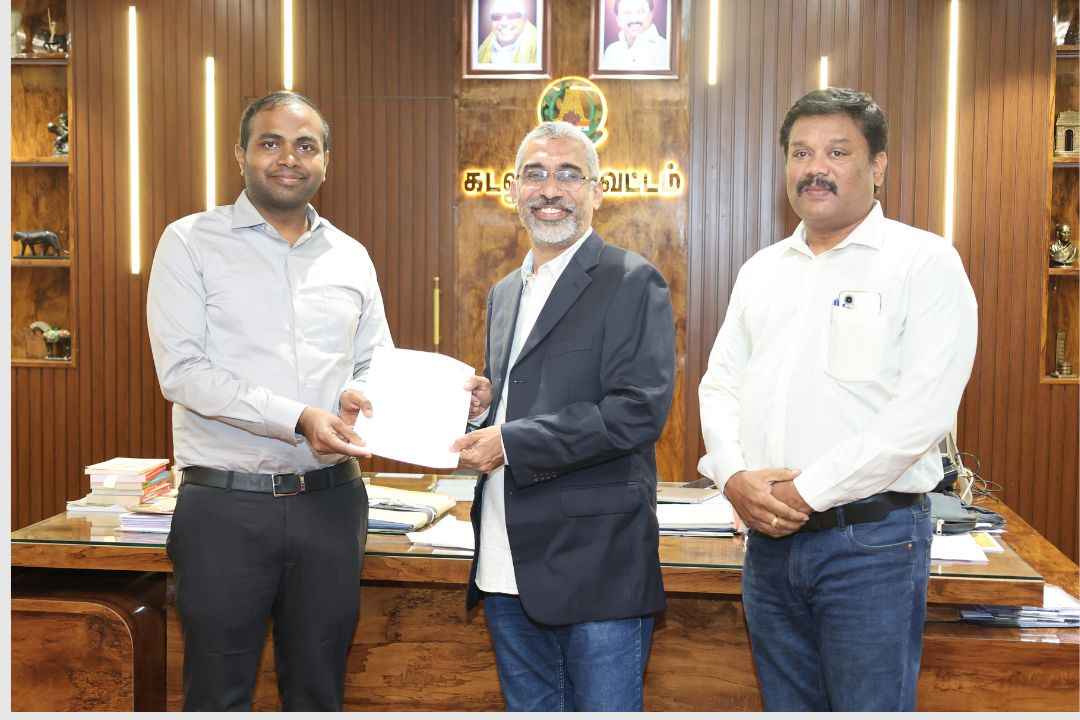
The contribution was formally handed over during a meeting at the District Collector’s Office on February 4, 2026, by Covestro (India) Cuddalore Site Head, Jeganathan Kanmani. The funding includes ₹23.24 lakh allocated for desilting irrigation tanks across the Alambadi, Thondankurichi, and Parur panchayats, and ₹20 lakh for the procurement of Light Commercial Vehicles to support waste collection and transportation in the district.
The desilting initiative is expected to rejuvenate irrigation infrastructure serving nearly 800 hectares of agricultural land. By improving water storage capacity and groundwater recharge, the project will support farming resilience and help mitigate the effects of seasonal floods and droughts faced by the region.
The waste management component will strengthen municipal sanitation efforts through improved waste transportation capacity. The addition of Light Commercial Vehicles is expected to benefit more than 500 households by enhancing collection efficiency, reducing environmental pollution, and improving overall hygiene standards.
The initiative builds on Covestro’s ongoing community engagement in Cuddalore, where the company has previously supported infrastructure such as overhead water tanks, Anganwadi centres, school classrooms, and environmental projects including lake desilting and cleanliness drives.
Covestro is a global supplier of high-performance polymer materials serving industries such as mobility, construction, electronics, healthcare, and telecommunications. With a strong focus on circularity and climate action, the company is working toward climate neutrality for Scope 1 and Scope 2 emissions by 2035, and Scope 3 emissions by 2050.