

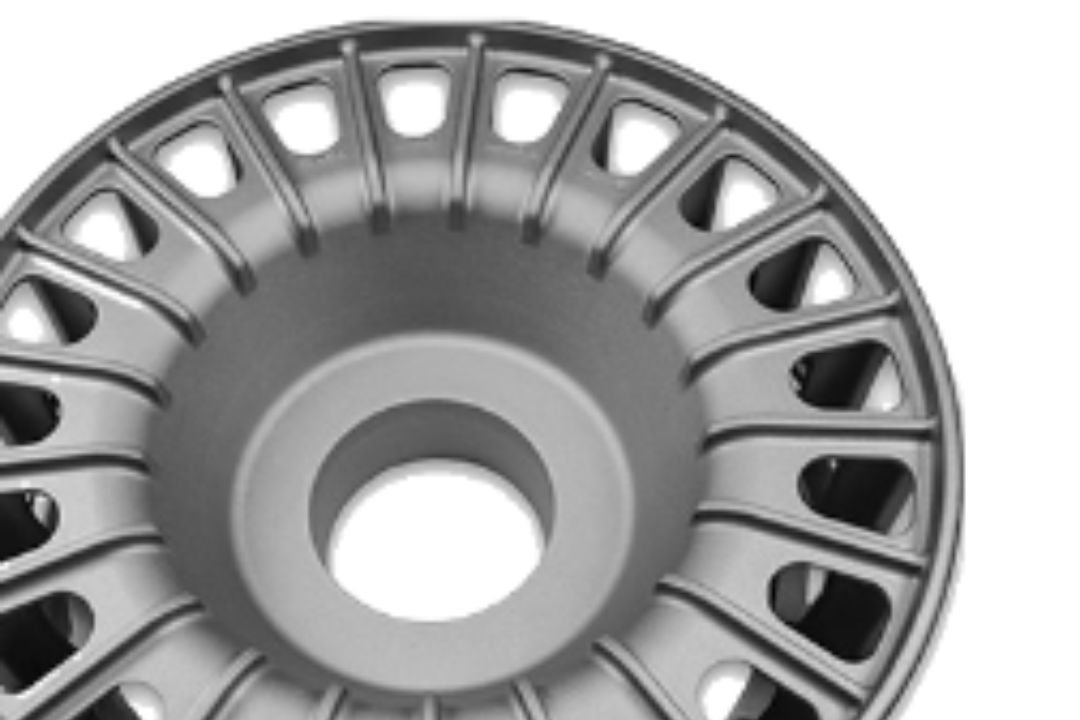
Charter Casting has released new industry data highlighting a significant shift in heavy equipment manufacturing, as companies increasingly transition from traditional steel weldments to advanced ductile iron casting solutions. Based on a survey of more than 300 decision-makers purchasing iron and steel products, the findings reveal that 56% of manufacturers have already replaced steel weldments with complex iron castings across multiple projects. Notably, 99% of respondents reported measurable benefits from this transition, signaling a growing industry-wide movement.
According to Charter Casting, the shift is driven by the need for improved efficiency, performance, and simplified manufacturing processes. Traditional fabrication methods, which involve cutting and welding multiple steel components, are increasingly viewed as labor-intensive and less adaptable to modern production demands.
Shane Bonner, President of Charter Casting, stated that manufacturers are recognizing the limitations of legacy fabrication methods and are embracing advanced casting solutions to reduce complexity and enhance performance. He emphasized that this “silent shift” represents a fundamental transformation in how heavy equipment components are designed and produced.
The study highlights several key advantages of ductile iron castings. Around 78% of respondents cited durability and strength as critical factors, particularly with Austempered Ductile Iron (ADI), which performs well in high-stress environments. Additionally, 40% pointed to improved vibration damping, while over 40% noted better quality consistency compared to manual welding processes.
A shortage of skilled welding professionals is also accelerating the transition. Industry projections indicate a significant workforce gap in the coming years, prompting manufacturers to adopt solutions that reduce reliance on labor-intensive welding. Despite strong interest, companies continue to face challenges in transitioning to casting solutions.
Concerns include high upfront tooling costs, potential quality risks, and uncertainty around performance. Charter Casting addresses these barriers through engineering-led collaboration, helping customers convert multi-part steel assemblies into single, optimized iron components. The report also highlights a renewed focus on domestic manufacturing, with 70% of respondents prioritizing “Made in the USA” capabilities to ensure supply chain reliability amid global disruptions.
With operations in Wisconsin and Illinois, Charter Casting provides end-to-end support, from design and engineering to manufacturing and finishing. Backed by Charter Manufacturing, the company continues to drive innovation in precision-engineered iron solutions, helping customers improve performance while reducing total costs.









