The Centre for Print Research (CFPR) at the University of the West of England’s Bridge Studios is using a hybrid metal manufacturing system to explore a new approach to jewellery and advanced materials research. The project, known as neo-gemstone, is led by researcher Sofie Boons and examines how crystal seeds can be embedded within platinum structures during the manufacturing process. The research aims to grow rubies and sapphires from residual crystal material and gemstone waste directly within specially engineered metal settings.
The process presents a significant manufacturing challenge. The crystal seed must be positioned precisely inside the metal structure and remain undamaged while the surrounding component is built. Earlier approaches involving conventional casting and powder-bed metal printing did not provide the required combination of accessibility and positional control.
Traditional platinum casting involves pouring molten metal into a ceramic mould. This can make it difficult to maintain the position of a delicate crystal seed, particularly when molten metal, high temperatures and complex geometries are involved. Powder-bed fusion presents a different challenge, as the component remains buried in metal powder during the build and cannot be accessed until the printing process is complete.
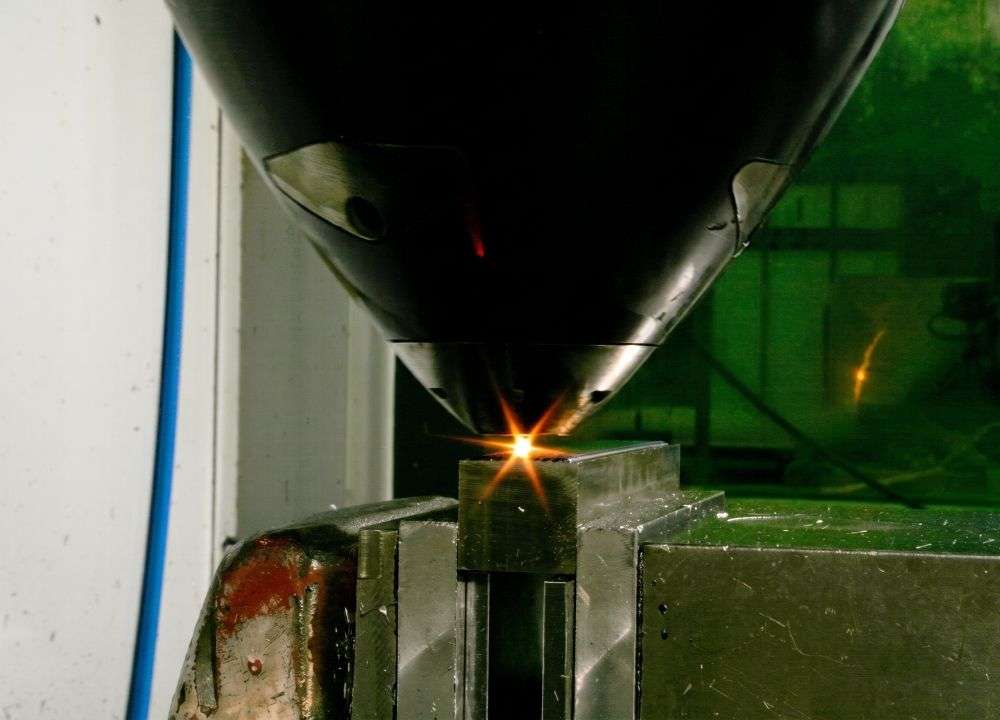
To address these limitations, CFPR developed its system around a Meltio Engine integration kit installed on a HAAS 5-axis CNC machine. The setup combines wire-laser metal deposition with in-process CNC machining on a single platform. Unlike powder-based processes, wire-laser deposition builds the component in an open environment using platinum wire fed into a laser-generated melt pool. This allows researchers to pause the manufacturing process at a specific point, manually place or adjust a crystal seed, and then continue building the metal structure around it.
The same machine can then carry out subtractive machining without moving the part to another workstation. This reduces intermediate handling and avoids re-fixturing that could affect the position of the embedded seed. Researcher Michael White has also developed a material recovery system to capture platinum lemel and machining by-products. A localised vacuum extraction system, controlled through the CNC program, collects material for reprocessing during manufacturing.
The neo-gemstone project remains a research initiative, but the underlying capability could have applications beyond jewellery. The ability to pause an additive manufacturing process, embed a component or material with precision and complete machining on the same platform could support future applications involving sensors, markers and other embedded materials.
The project also demonstrates how hybrid wire-laser deposition and machining technologies can be explored in applications outside traditional aerospace, defence and industrial manufacturing, opening new possibilities for advanced materials research. Founded in 2019, Meltio is headquartered in Linares, Spain, and develops advanced metal additive manufacturing solutions based on its patented wire-laser metal deposition technology. The company’s systems are installed in more than 60 countries through a global network of over 55 partners and are used by more than 70 universities, research institutions and technical centres worldwide.