BorgWarner Inc has been awarded an expanded series-production contract for its advanced battery management system (BMS) with a major global original equipment manufacturer. The company has supplied the system to this customer since 2023, and the latest agreement broadens its application to additional B-segment and C-segment passenger vehicles, along with light commercial vehicles. Production for battery-electric (BEV) and plug-in hybrid electric vehicle (PHEV) models under the expanded program is scheduled to begin in 2029.
Dr Stefan Demmerle, Vice President of BorgWarner Inc and President and General Manager of BorgWarner PowerDrive Systems, said the extended collaboration reflects strong confidence in the company’s field-tested technology already operating in production vehicles worldwide. As the automaker rolls out new electrified models, BorgWarner will enhance system compatibility to support efficient scaling while ensuring high standards of safety, durability and performance.
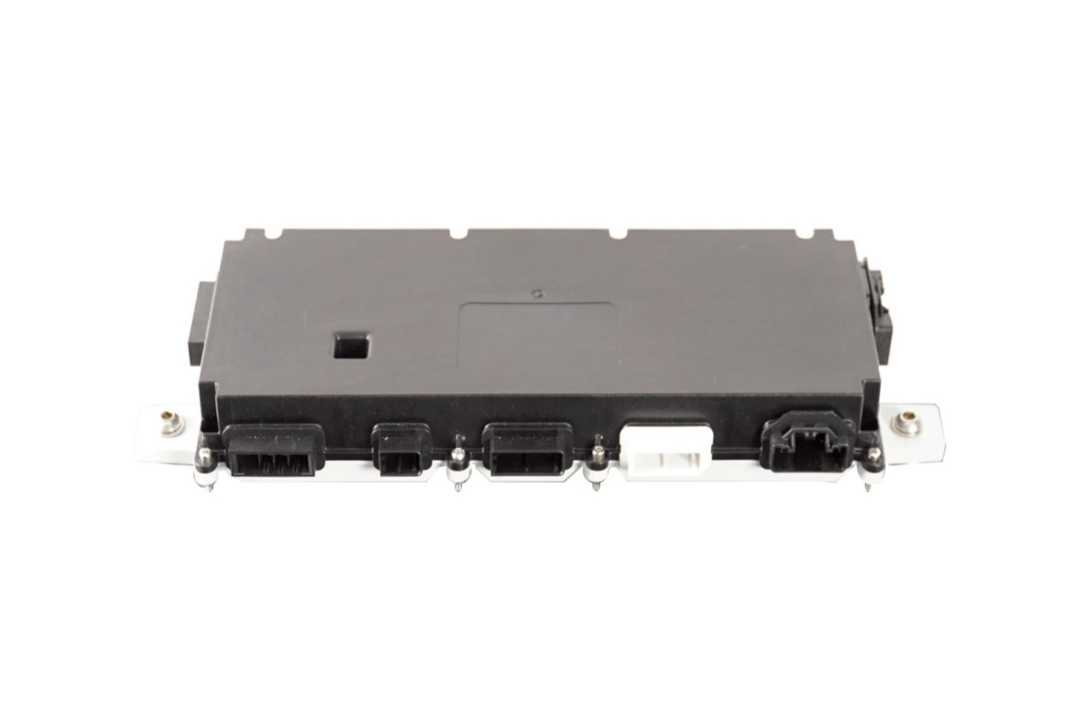
BorgWarner’s BMS features a modular architecture centered on a battery monitoring unit (BMU) linked to multiple cell monitoring units (CMUs) installed at the module level. The integrated system tracks state of charge, battery condition and temperature, measures individual cell voltages, and performs passive cell balancing to maximize efficiency and extend battery life.
Designed to meet demanding vehicle requirements, the system enables fast direct current (DC) charging communication and incorporates advanced controls and diagnostics aligned with stringent safety benchmarks, including Automotive Safety Integrity Level D (ASIL D). Its scalable platform accommodates a broad range of BEV and PHEV battery configurations, supports systems operating up to 800 volts, and offers compact module-level components for flexible packaging. The electronics architecture is also adaptable for future feature enhancements.
Backed by decades of expertise in automotive electronics, the expanded production program reinforces a design already validated in mass production. This collaboration helps customers broaden their electrified vehicle portfolios while relying on established functionality and a dependable global supply network.