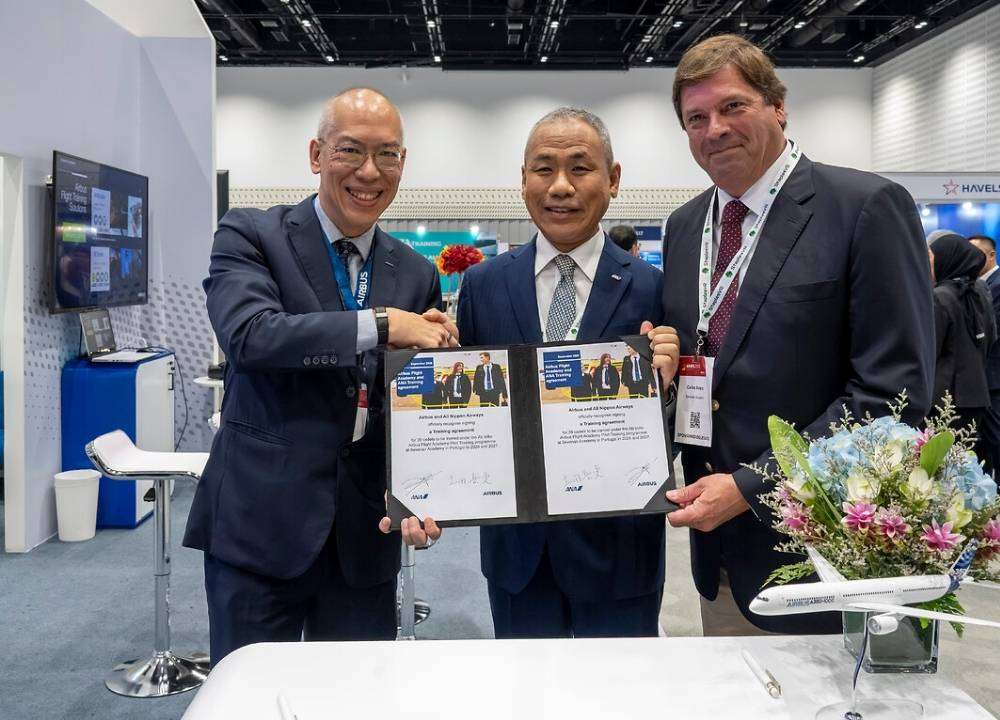
Airbus and All Nippon Airways (ANA) have signed a comprehensive flight training agreement to support the development of the airline group’s next generation of commercial pilots. The new agreement further expands the long-standing relationship between Airbus and ANA, which has continued for nearly four decades. The programme has been introduced as the global aviation industry faces growing demand for highly trained and skilled commercial pilots.
Under the agreement, Airbus will provide an ab-initio pilot training programme for cadets from the ANA Group and its partner airlines. The training will be conducted at Sevenair Academy in Ponte de Sor, Portugal. The programme is designed for aspiring pilots with no previous flight experience and will guide them through all stages of training required to become licensed pilots. The first group of 19 cadets is expected to begin training later this year.
By joining the Airbus training network, ANA’s future pilots will follow a unified training curriculum based on Airbus flight training concepts, methods and modern learning tools from the beginning of their aviation careers.
The programme will focus on developing the technical knowledge and practical skills required to operate in modern and complex aviation environments. It will also follow Airbus’ Competency-Based Training and Assessment approach, which focuses on building the core skills needed for safe and effective flight operations.
Takeshi Tsuchida, Executive Vice President of Flight Operations at ANA, said the airline waspleased to gain access to Airbus’ latest pilot training programme. He said the training incorporates current safety insights and will help cadets develop the essential skills needed to manage complex operational situations and carry out flight duties effectively.
Thomas Aoudia, Head of Operations and Business Development at Airbus Training Services, said ANA is recognised globally for its focus on safety, precision and training. He said the Airbus programme is designed to develop important pilot competencies from the earliest stages of training while providing a consistent learning experience from the first flight through to airline operations.
The agreement comes at an important time for the aviation sector. According to the latest Airbus Global Services Forecast, the global aviation industry will require around 633,000 new pilots over the next 20 years. The Asia-Pacific region alone is expected to require approximately 104,000 new pilots during this period.
With air travel continuing to grow across the region, airlines are increasingly focusing on building a strong pipeline of trained professionals to meet future operational requirements. Through the new training agreement, Airbus and ANA aim to create a reliable and high-quality pathway for future pilots while supporting the long-term development of Japan’s aviation sector. The initiative is expected to help ANA prepare its future workforce and maintain its focus on safety and training excellence as the airline industry enters its next phase of growth.