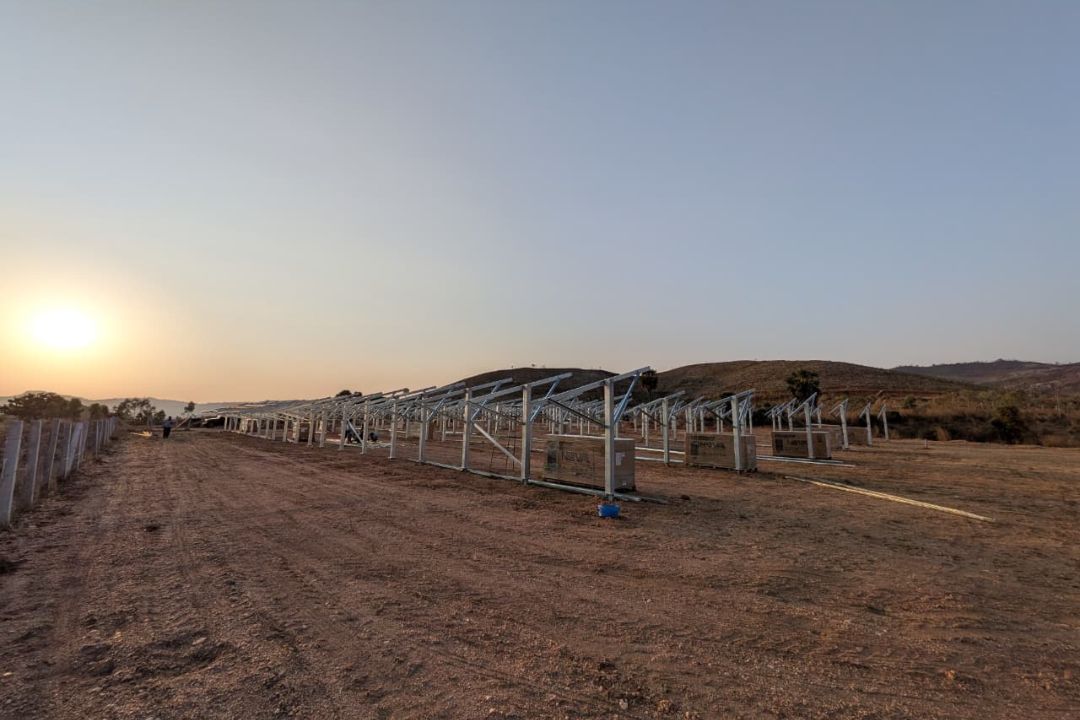
A new agrivoltaic solar initiative has been launched in Thirumala Raju Puram (Palyam), marking a significant step toward integrating renewable energy with agriculture under Project Chittoor. The initiative is being developed by the Atria Group in collaboration with Atria Renewable Private Limited.
The project introduces field-integrated agrivoltaic systems that enable solar panels to be installed above active farmland, allowing simultaneous crop cultivation and energy generation. Each installation spans approximately 1 to 1.5 acres and supports an installed capacity of around 300 kW, ensuring that farming operations continue without disruption.
Designed as a long-term rural regeneration effort, Project Chittoor addresses persistent challenges faced by farmers, including fluctuating incomes, climate-related risks, inconsistent power supply, and rising input costs. By combining agriculture with solar energy production, the model creates an additional, stable income stream for farmers without reducing cultivable land.
The electricity generated will be used to power shared agricultural infrastructure such as irrigation pumps, borewells, cold storage units, dryers, and processing facilities within farming clusters. This localized energy approach reduces reliance on grid electricity, lowers operational costs, and improves overall efficiency. Surplus energy generated at the cluster level is expected to create an additional revenue opportunity for participating communities. The elevated solar panels also offer partial shading benefits, helping reduce heat stress and water evaporation for certain crops, thereby improving resilience during high-temperature periods.
Spanning nearly 600 acres, Project Chittoor aims to deploy an agrivoltaic capacity of approximately 6 MW over time. The initiative envisions clean energy becoming an integral part of farm infrastructure, alongside irrigation, storage, and processing systems.
By enabling dual-use of land for both food and energy production, the project presents a scalable and sustainable model for rural development. It demonstrates how renewable energy can be seamlessly integrated into agriculture to enhance productivity, stabilize farmer incomes, and strengthen local ecosystems.