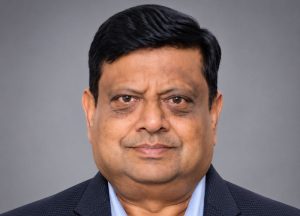
Kuno Thorup Due arrived in the Middle East with three decades of expertise and a very specific set of convictions about what good machining looks like. As Technical Director of Tech Center Middle East, he carries with him a specific and deeply held conviction: that what you see in your CAM software should be exactly what happens on the machine. And that GibbsCAM, more than any other CAM platform he has worked with, makes that possible.
His path to the Middle East came through Okuma. A long-standing relationship with the Japanese machine tool builder led to an offer to represent the brand in the region. For Kuno, bringing GibbsCAM alongside was never in question. The two had been his combination of choice for years, and the logic was simple: if the goal was to deliver on a promise of genuine manufacturing performance, GibbsCAM was the software that could back it up.
A Philosophy Forged in the 1990s
Kuno’s understanding of advanced machining goes back to the early days of multitasking. In the 1990s, when multi-spindle, multi-turret machines began arriving on shop floors, the CAM software available at the time was simply not built for them. Toolpath generation was one thing. But multitasking demanded something more: pre-positioning, spindle handoffs, simultaneous operations across multiple flows. No CAM system of that era handled it properly.
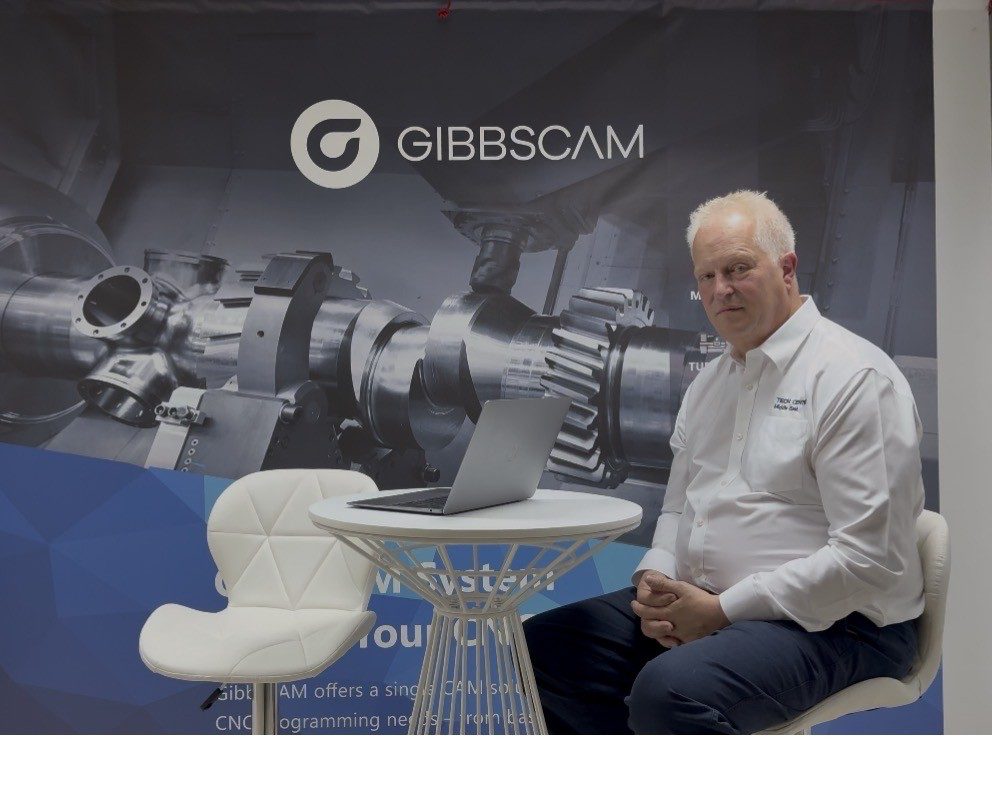
Kuno Thorup Due, Technical Director, Tech Center Middle East
Then he found GibbsCAM. What stood out was the software’s intent as much as its capability. GibbsCAM was being developed as a genuine virtual copy of the manufacturing process. And crucially, it was built in a way that allowed developers and technically skilled users to create custom features matched to the exact requirements of specific machines and specific parts.
A moment that sharpened this further came in 2014, when GibbsCAM launched its UKM system. For Kuno, it represented a step change. Suddenly, what was happening inside GibbsCAM was a genuine virtual copy of what the machine required. That alignment between software and machine became the foundation of his entire approach to training, to post-processor development, and to how he supports customers in the field.
The Middle East: A Market with Room to Move
The manufacturing landscape in the Middle East is, by Kuno’s assessment, where Northern Europe was in the late 1990s. The intent among manufacturers is good. The appetite for improvement is genuine. But the mindset around what modern machining can deliver remains conservative, and the processes on many shop floors still rely heavily on operator intervention rather than the kind of stable, uninterrupted production cycles common in European facilities.
The dominant sectors are oil and gas, which means large, complex components machined from steel, stainless steel, Inconel, and super duplex materials. Jobs that demand consistency, repeatability, and a CAM strategy built for the full complexity of the part, toolpath and everything beyond it.
There is also a strong push for in-country production across the region. Manufacturing capability that was previously outsourced is being brought home, and skilled operators are hard to find. Both trends point in the same direction: less dependency on operator-level decisions, more reliance on programming that gets it right before the machine runs.
Kuno sees the parallel with Europe clearly. The same work of informing customers about what multitasking can genuinely deliver, the same conversations about combining capable machines with powerful software, the same gradual shift in how manufacturers think about the relationship between CAM and production. He has done this before. He knows how long it takes and what it requires.
Post-Processing as the Measure of Real Success
One of Kuno’s strongest convictions is about post-processors. He makes the point directly: any CAM system can produce a convincing simulation. The video always looks good. The real test is whether the machine does what the CAM system showed. And for that, the post-processor is everything.
As a post-processor developer, Kuno works at the level of the machine specification. Every feature a customer has paid for in their machine tool needs to be supported at the same level in GibbsCAM. That means spindle speed variation, hypersurface controls, custom functions that add accuracy and performance to the overall process beyond axis movement. It also means handling memory limitations on complex machines, optimising how programs are read and executed to keep the machining process moving efficiently.
GibbsCAM’s architecture makes this possible in a way that most CAM platforms do not. The ability to mix custom requirements with stable, reliable post-processors means Kuno can build solutions specific to Okuma’s functionality without compromising on overall predictability. For customers, it means the setup they see in GibbsCAM is genuinely what they will encounter on the machine.
One Person, the Complete Package
What Tech Center Middle East offers is unusual. Kuno can deliver the machine, install it, run the training, and then sit down and build the post-processors based on what the customer actually needs. Everything from the machine tool to the CAM configuration to the operator interface can be adjusted, modified, and refined during the same visit. If something is not working the way the customer wants it, it gets changed while he is there.
He is also building toward more complex turnkey solutions. His background includes cell-based automation involving robots, feeding systems, cleaning systems, and documentation systems, all coordinated through a single post-processor capable of managing restarts and responding to signals from external equipment. GibbsCAM’s ability to handle multiple analogue inputs, inform operators on machine status, and allow the process to jump to the right point after an interruption is central to making that kind of solution work reliably.
In the Middle East, the work so far has focused on establishing GibbsCAM’s reputation for quality and reliability. The more advanced automation solutions are coming. The groundwork being laid now is what will make them land well.
GibbsCAM as a Complete Manufacturing Tool
Kuno is direct about a perception he regularly has to work against. Most customers in the region treat CAM software as a support tool, something that helps generate programs but sits secondary to the machine and the operator. His view is different. Used properly, with all the necessary settings configured and the full capability of the platform applied, GibbsCAM is a complete manufacturing tool. The machine and the software are equals in the process.
Part of his role is educating customers to expect more from the combination. That if the programming is right, the machine runs. That operator intervention should be the exception. That the complexity of a part is a problem to be solved in GibbsCAM, before the machine runs.
Training reflects this too. Because GibbsCAM is designed to mirror the machine environment so closely, learning the software and learning the machine happen together. Operators do not need to be experts in CAM theory. They need to understand the machine, and GibbsCAM’s interface will feel familiar. That is a significant advantage in a market where skilled operators are scarce and training time is at a premium.
Built on Listening
Before signing the reseller agreement, Kuno was trained by GibbsCAM in the US. What stayed with him was that the team listened. He shares observations from the shop floor, they engage with them, and the software has evolved to reflect that kind of input over time.
For someone whose entire value proposition rests on deep technical knowledge and the confidence to apply it in front of customers, that kind of responsiveness matters. It means the tool keeps pace with the demands of the work, and that the partnership is genuinely collaborative.Tech Center Middle East is still in its early stages in the region. But the combination Kuno has assembled, GibbsCAM, Okuma, and his own accumulated expertise across three decades of advanced machining, is exactly the kind of package a market on the edge of a significant technology shift needs. He has seen this before. He knows what comes next.