

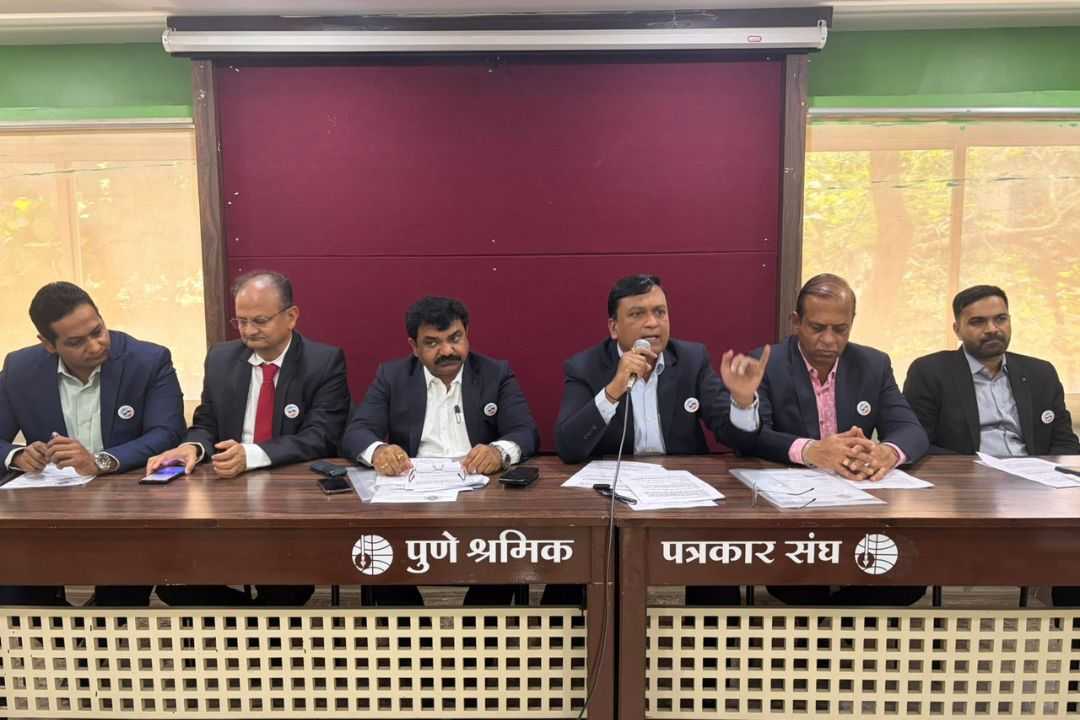
The Pune RMC Association has announced a temporary and structured operational pause across all Ready-Mix Concrete (RMC) plants in the region, effective from midnight of April 15, 2026. During this period, the manufacturing and dispatch of RMC will remain suspended as part of an industry-wide initiative aimed at strengthening compliance, safety, and policy alignment.
The Association clarified that this move is not a strike but a proactive step toward improving operational standards and ensuring long-term sustainability of the sector. The RMC industry plays a critical role in modern infrastructure development, supporting projects such as metro systems, highways, bridges, industrial corridors, and housing developments. As one of the most widely used construction materials after water, concrete remains indispensable to urban and industrial growth.
However, the industry is currently facing multiple challenges, including complex approval processes involving various authorities, evolving compliance requirements, traffic restrictions affecting timely delivery, and rising operational costs. According to the Association, the issue lies not in regulation itself but in the lack of coordination and uniform implementation across governing bodies.
Over the past nine months, the Association has engaged extensively with key authorities, including the District Collector’s Office, Police Commissionerates, Maharashtra Pollution Control Board (MPCB), Pune Municipal Corporation (PMC), Pimpri-Chinchwad Municipal Corporation (PCMC), and Pune Metropolitan Region Development Authority (PMRDA). Despite sustained dialogue and formal representations, a unified regulatory framework is yet to be established.
During the operational pause, RMC plants will undertake a series of internal upgrades, including compliance audits, transit mixer safety checks, dust control enhancements, workforce safety training, and standardization of documentation and operating procedures. The initiative is aimed at aligning plant operations with evolving regulatory expectations while improving transparency and efficiency.
As part of this effort, the Association will introduce a Quality and Safety Certification Framework for member plants. This framework is expected to help developers, contractors, and public agencies identify facilities that meet defined operational and compliance benchmarks.
The Association has also urged the state government to consider key policy measures, including the implementation of a single-window clearance system, a uniform RMC policy framework for Maharashtra, scientific traffic time-slotting for transit mixers, practical environmental compliance guidelines, and clear classification of batching plants.
In the interim, developers and infrastructure stakeholders have been advised to source concrete only from certified RMC plants to ensure quality, safety, and regulatory adherence. The Pune RMC Association reiterated that this temporary pause represents a constructive step toward strengthening industry standards and building long-term trust among stakeholders, while supporting the region’s infrastructure growth in a responsible and sustainable manner.









