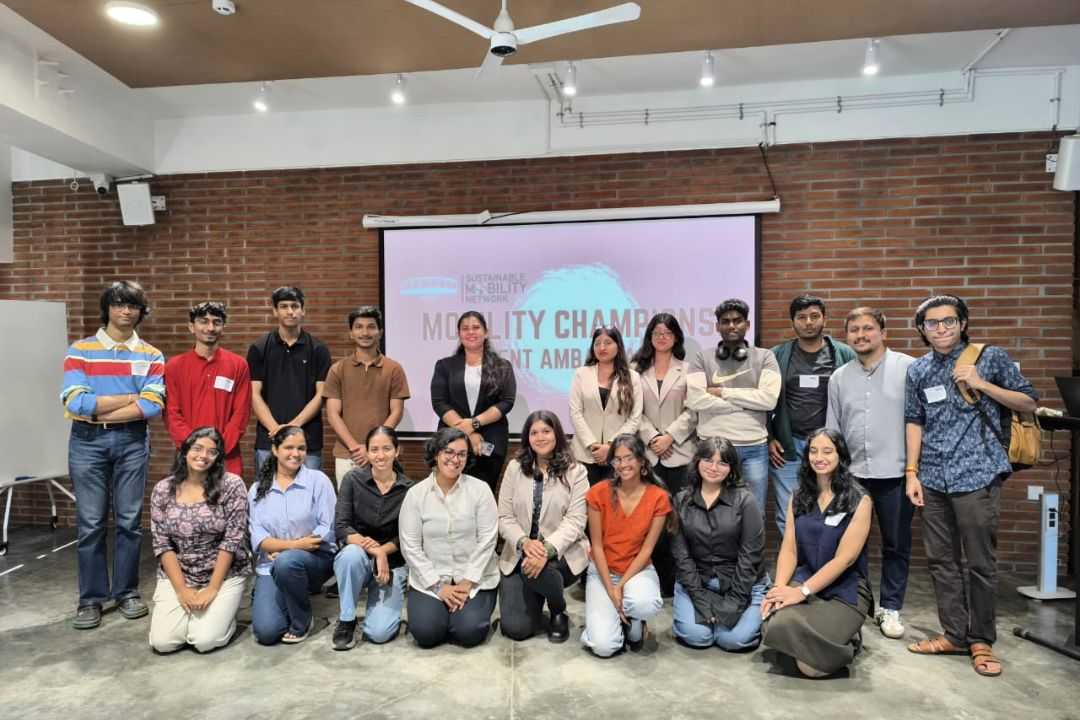
As Indian cities continue to expand public transport systems, a growing effort is underway to ensure that the voices of everyday commuters—especially those most dependent on these systems—are not overlooked. The Mobility Champions Student Ambassadors Programme, led by the Young Leaders for Active Citizenship (YLAC), is entering its fourth year with a renewed focus on community-driven urban mobility solutions.
The initiative brings together undergraduate students from leading institutions including Delhi University, OP Jindal Global University, Ashoka University, and Christ University. These students are working directly with communities across Delhi NCR and Bengaluru to identify everyday mobility challenges and translate them into actionable insights.
Since its inception, the programme has built a strong foundation of grassroots engagement. Previous cohorts have conducted over 88 accessibility audits and more than 370 community surveys, while also driving petitions calling for practical improvements such as audio announcements on buses, tactile pathways, and better last-mile connectivity. Digital outreach efforts have generated over 1.6 lakh impressions, amplifying public awareness around inclusive mobility.
One of the programme’s notable outcomes came last year, when research conducted by a student team led to updates in Ashoka University’s accessibility app, prompting institution-wide communication and improvements in campus accessibility. This example highlights how student-led work can influence decision-making at an institutional level.
The 2026 cohort is building on these efforts with campaigns focused on critical urban mobility gaps. In Delhi, students are collaborating with civil society organisations such as the Association of People with Disability (APD), Nipman Foundation, OMI Foundation, Safetipin, and Raahgiri Foundation. Their work this year addresses pedestrian infrastructure, women’s safety in last-mile travel, accessibility of metro systems for persons with disabilities, and the promotion of non-motorised transport options. In Bengaluru, partnerships with APD, the Council for Active Mobility, and Bengawalk are enabling students to assess walkability and cycling conditions, document commuter experiences, and support advocacy linked to the Active Mobility Bill.
Early findings from this year’s fieldwork point to persistent issues including damaged footpaths, poor lighting, and inaccessible transit points. These challenges continue to shape the daily experiences of commuters who rely most on public infrastructure. As the programme progresses through 2026, it is creating a steady pipeline of research, advocacy, and community engagement. The initiative underscores the role of youth in contributing to more inclusive, responsive, and people-centric urban planning in India.