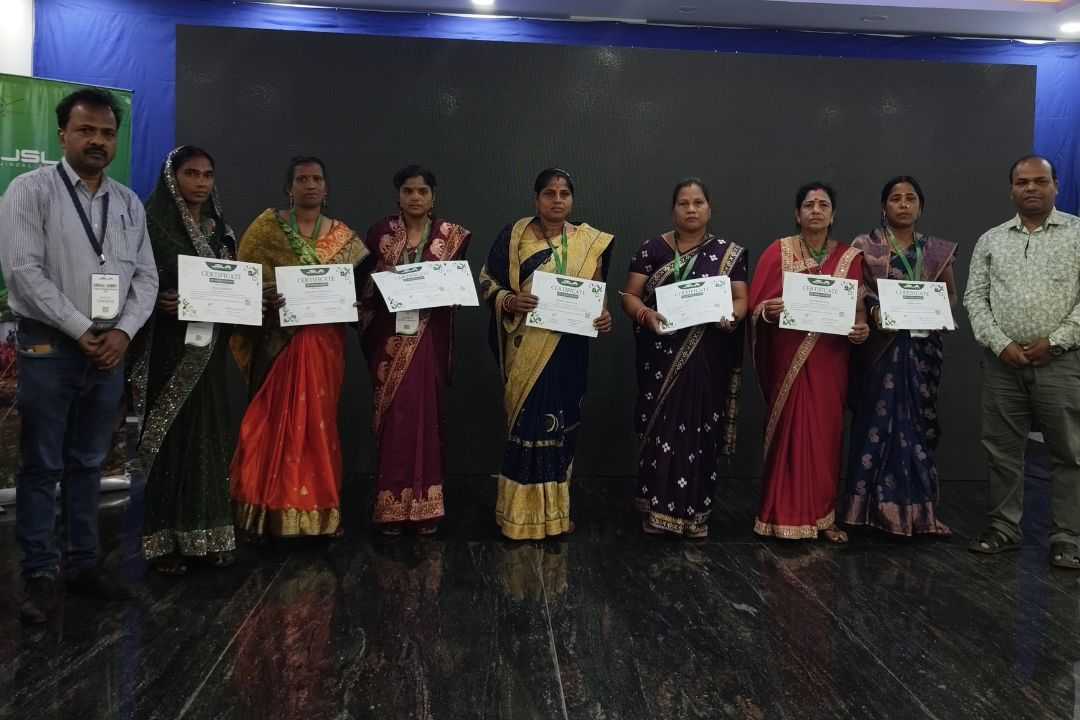
Jindal Stainless organised the second edition of its Stainless Swachhata Abhiyaan (SSA) Summit at the Danagadi block in Jajpur, Odisha, bringing together government officials, community leaders, self-help groups and students to discuss sustainable waste management practices. More than 200 participants attended the summit, which focused on the theme “Mo Gaon, Swachh Gaon” (My Village, Clean Village). The initiative aims to encourage community participation in building structured waste management systems in villages surrounding the company’s largest manufacturing facility in Jajpur.
The event was attended by Pradipa Kumar Sethy, Block Development Officer of Danagadi; Deepak Agrawal, Unit Head – Jajpur, Jindal Stainless; Manas Ranjan Sahani, District Sanitation Coordinator; Diptimanta Mallick, Block Resource Coordinator; Sukanta Kumar Rath, Deputy General Manager – CSR, Jindal Stainless; Maitreyee Deb, Environment Head, Jindal Stainless; and Ashish Sachdeva, Founder President of Green Dream Foundation.
Their participation reflected collaboration between local administration, community organisations and corporate CSR programmes to strengthen rural sanitation systems. Speaking about the initiative, Abhyuday Jindal, Managing Director of Jindal Stainless, said the company remains committed to supporting the development of communities around its operations.
“At Jindal Stainless, we believe the communities around us should grow alongside our business. Through initiatives like the Stainless Swachhata Abhiyaan Summit, we seek to encourage community participation in sustainable waste management practices and promote cleaner, healthier surroundings across Odisha,” he said.
Deepak Agrawal, Unit Head – Jajpur, emphasised the importance of community ownership in long-term sanitation efforts. He highlighted that women-led Self-Help Groups have played a central role in implementing waste management activities at the grassroots level.
The Stainless Swachhata Abhiyaan initiative aligns with the Government of India’s Swachh Bharat Mission and is implemented in collaboration with Green Dream Foundation. The programme promotes door-to-door waste collection, waste segregation at source, operation of Material Recovery Facilities, community awareness campaigns and the remediation of legacy waste sites.
Currently, the programme covers 1,000 households across the villages of Solei, Singagadhia and Danagadi, benefiting more than 2,500 residents each day. Women-led Self-Help Groups manage several parts of the waste management chain, including collection, segregation, storage and connections with recycling partners.
The initiative also creates livelihood opportunities while strengthening environmental awareness within rural communities. Through programmes such as Stainless Swachhata Abhiyaan, Jindal Stainless continues to advance its broader commitment to environmental sustainability, community development and inclusive growth in areas surrounding its operations.
Jindal Stainless, India’s largest stainless steel manufacturer, continues to invest in sustainable manufacturing practices and infrastructure innovation, supporting long-term industrial growth and efficiency. Jindal Stainless reported an annual turnover of ₹40,182 crore (USD 4.75 billion) in FY25 and is progressing toward a 4.2 million tonne annual melt capacity by FY27. The company operates 16 manufacturing and processing facilities across India and overseas locations including Spain and Indonesia, supported by a global presence in 12 countries as of March 2025.
Its portfolio includes slabs, blooms, coils, plates, sheets, precision strips, wire rods, rebars, blade steel, and coin blanks. Established in 1970, the company operates integrated facilities to maintain cost efficiency and operational effectiveness. Stainless steel is produced using electric arc furnace technology, enabling significant emission reductions and high recyclability.