The Indian Institute of Technology (IIT) Mandi, in collaboration with the Defence Research and Development Organisation (DRDO), organised a one-day workshop on Armament Research and Development at its North Campus, strengthening ties between academia and defence research agencies. The event brought together senior scientists from several DRDO laboratories, along with IIT Mandi faculty members, to identify joint opportunities in advanced defence technologies.
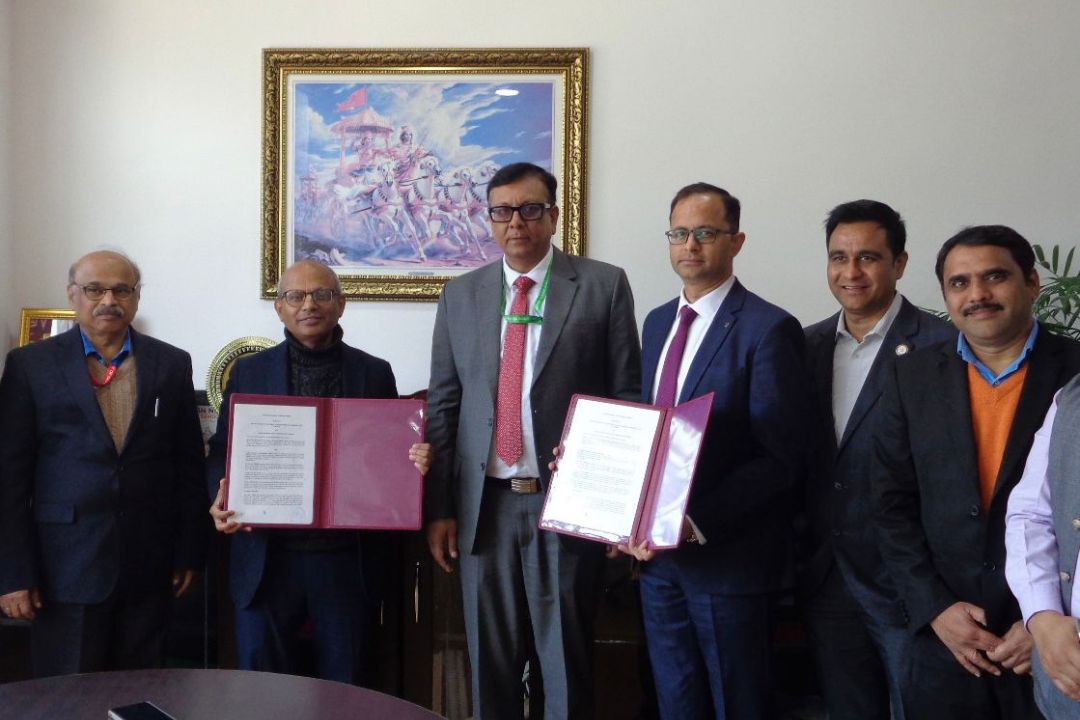
Scientists participated from the High Energy Materials Research Laboratory (HEMRL), Armament Research and Development Establishment (ARDE), Terminal Ballistics Research Laboratory (TBRL), Centre for Fire, Explosive and Environment Safety (CFEES), and the Defence Institute of High-Altitude Research (DIHAR). As part of the collaboration efforts, IIT Mandi signed a Memorandum of Understanding with DIHAR to pursue joint research initiatives and manpower training programmes.
The inaugural session included addresses by Prof Laxmidhar Behera, Director, IIT Mandi; Dr Prateek Kishore, Director General (Armament and Combat Engineering), DRDO; and Dr AP Dash, Director, HEMRL, Pune. The speakers highlighted the need for continued collaboration between academic institutions and defence R&D organisations to accelerate indigenous capability building and strengthen national self-reliance.
The programme began with a welcome address by Prof Shyam Masakapalli, Dean (SRIC), IIT Mandi, who highlighted research outcomes achieved by the institute through DRDO-supported projects over the years. Dr Ashish Jauhari, Coordinator, Armament Research Board (ARMREB), DRDO Headquarters, introduced ARMREB and explained its role in encouraging academic participation and building focused research capacity in armament technologies.
Prof Laxmidhar Behera said IIT Mandi is committed to advancing indigenous research in critical defence areas and that partnerships with DRDO help ensure academic innovation results in practical solutions that strengthen self-reliance and technological leadership. Dr. Prateek Kishore said collaborations with academic institutions are essential in building robust domestic armament capability, as they bring scientific depth and innovation into the defence research ecosystem.
Following the inaugural session, the workshop moved into detailed technical discussions, featuring presentations by ARMREB panel coordinators covering key domains such as armament design mechanisms and ballistics, materials for armament applications, sensors and electronics, combustion, detonics and shockwaves, safety, test and evaluation, and high energy materials. Each segment concluded with interactive discussions, reinforcing the exchange of ideas between researchers and defence scientists. The workshop further reflects IIT Mandi’s focus on building a strong academic–defence research ecosystem and contributing to the national objective of self-reliance through advanced indigenous defence innovation.